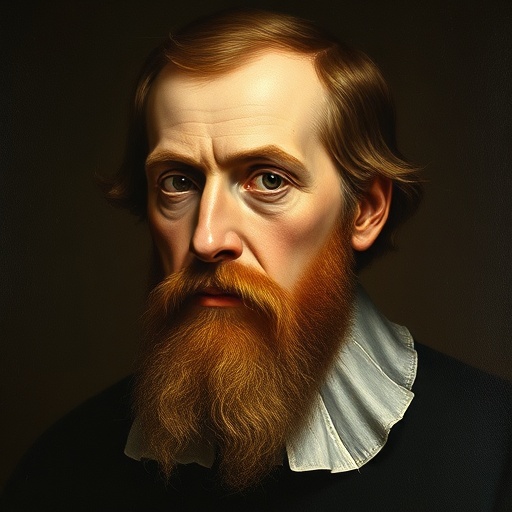
John Calvin — "The natural gifts were corrupted in man through sin, but his supernatural gifts …"
The natural gifts were corrupted in man through sin, but his supernatural gifts were stripped from him.
The natural gifts were corrupted in man through sin, but his supernatural gifts were stripped from him.
Click any product to generate a realistic preview. Up to 3 at a time.
* Initial load can take up to 90 seconds — revising the preview in another color is nearly instant.
"The seed of the Word of God takes root and grows fruitful only in those whom the Lord, by his eternal election, has predestined to be his children and heirs of the heavenly kingdom. To all others who,…"
"The reprobate, though they have the outward call of the Gospel, yet are not inwardly illuminated by the Spirit."
"Without knowledge of God, there is no true knowledge of self."
"There is no worse screen to block out the Spirit than confidence in our own intelligence."
"Ignorance is the mother of superstition."
French theologian whose Institutes of the Christian Religion (1536) systematized Protestant Reformed doctrine, including predestination. Closely associated with Martin Luther (Reformation founder, Calvin's predecessor). For an intellectual contrast, see Jacobus Arminius, Dutch Reformed theologian (1560-1609) — Arminius's rejection of strict double-predestination founded Arminianism — the theological tradition modern Methodism, most evangelicalism, and Pentecostalism descend from. The Calvinist-Arminian debate has divided Protestantism for 400 years.
Found in 1 providers: gemini
1 source checked
Calvin distinguishes two categories of human gifts lost at the Fall. Natural gifts — reason, will, social instincts — were damaged but not destroyed; they still function imperfectly. Supernatural gifts — true knowledge of God, righteousness, holiness — were completely removed. Humans retained capacity for logic, art, and governance but lost all ability to know or please God on their own. Only divine grace can restore what was wholly stripped away.
This reflects Calvin's doctrine of Total Depravity, central to his Institutes of the Christian Religion. As a trained lawyer turned reformer governing Geneva, Calvin built a framework emphasizing human inability and divine sovereignty. His Geneva theocracy relied on natural reason for civil order while insisting salvation required supernatural grace alone — explaining why he rejected any human role in meriting salvation and grounded everything in God's unconditional election.
The 16th-century Reformation erupted over exactly this question: how much had sin damaged humanity's capacity for salvation. Calvin wrote as the Council of Trent formulated Catholic responses defending human cooperation with grace. His sharp distinction — corruption versus total loss — defined Reformed theology against both Rome and Lutheran moderates. In Geneva, where church discipline governed civic life, this doctrine justified placing human institutions under divine law rather than human moral optimism.
AI-generated insights based on extensive research and information for context. Factual errors? Email [email protected].
Your cart is empty