What it means
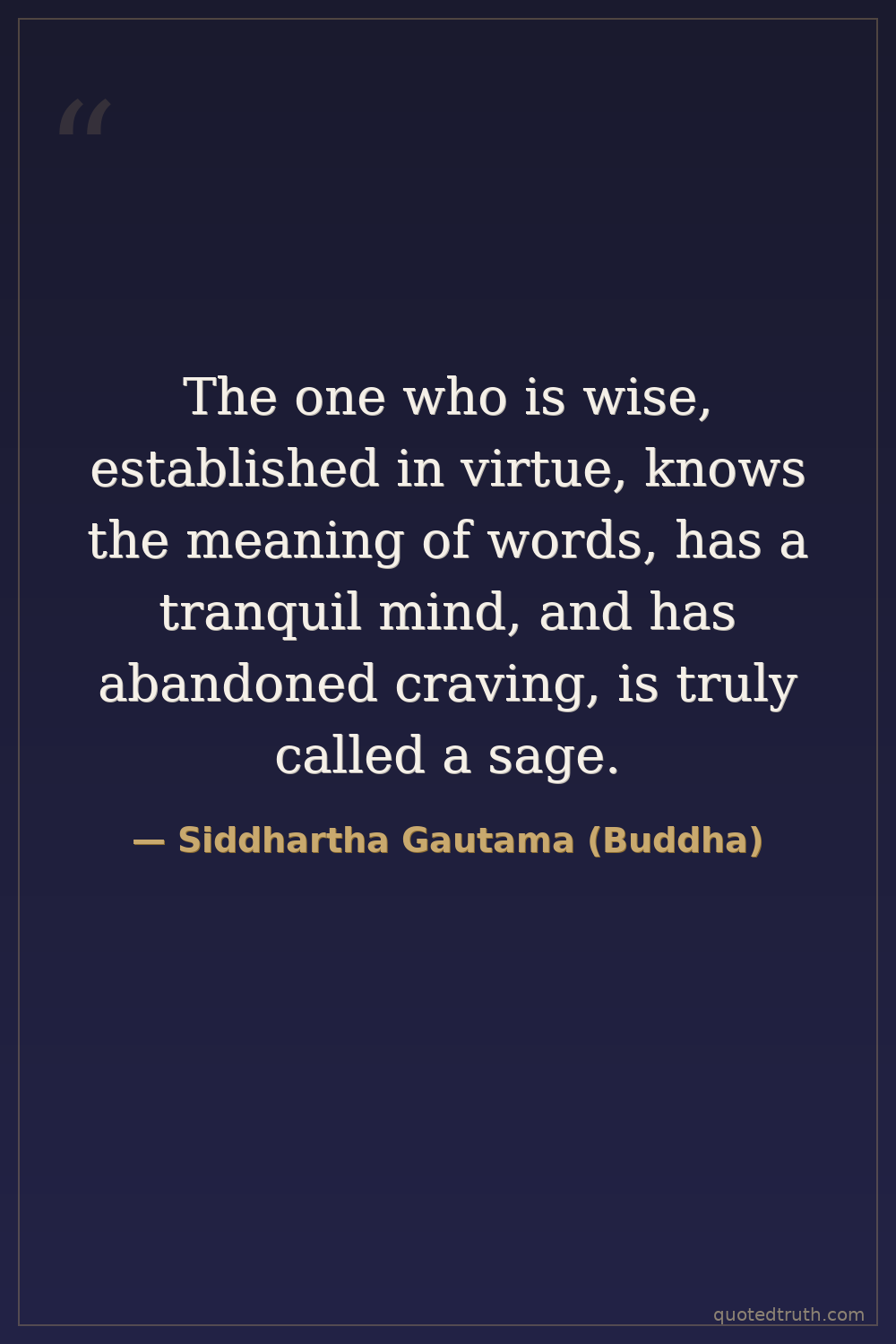
A true sage isn't defined by titles, wealth, or social standing, but by a specific combination of inner traits. Genuine wisdom shows up as ethical behavior, precise understanding of language and ideas, a mind that stays calm under pressure, and freedom from the constant wanting that drives most people. Strip away any one of these and the label doesn't fit. The quote reframes sagehood as a practical checklist of cultivated qualities rather than an honorific.
Relevance to Siddhartha Gautama (Buddha)
This directly mirrors the Buddha's own trajectory: a prince who abandoned palace luxury, tested extreme asceticism, and arrived at a Middle Way grounded in ethical conduct (sila), mental discipline (samadhi), and wisdom (panna). His core teaching diagnosed craving (tanha) as the root of suffering, and his enlightenment under the Bodhi tree embodied the tranquil mind he describes. As a teacher for 45 years, he also prized precise language, insisting students grasp the meaning behind terms rather than memorize them.
The era
In 5th-century BCE northern India, the Shramana movement was challenging the ritual-heavy, caste-bound Brahmanical order. Wandering ascetics, Jains, and skeptics competed for followers, and the title muni or sage carried real social weight tied to lineage, sacrifice, or extreme austerity. By redefining the sage around inner qualities accessible to anyone regardless of caste, the Buddha was making a pointed statement in a marketplace of religious ideas during a period of urbanization, new kingdoms, and intense philosophical ferment.
AI-generated insights based on extensive research and information for context. Factual errors? Email [email protected].