What it means
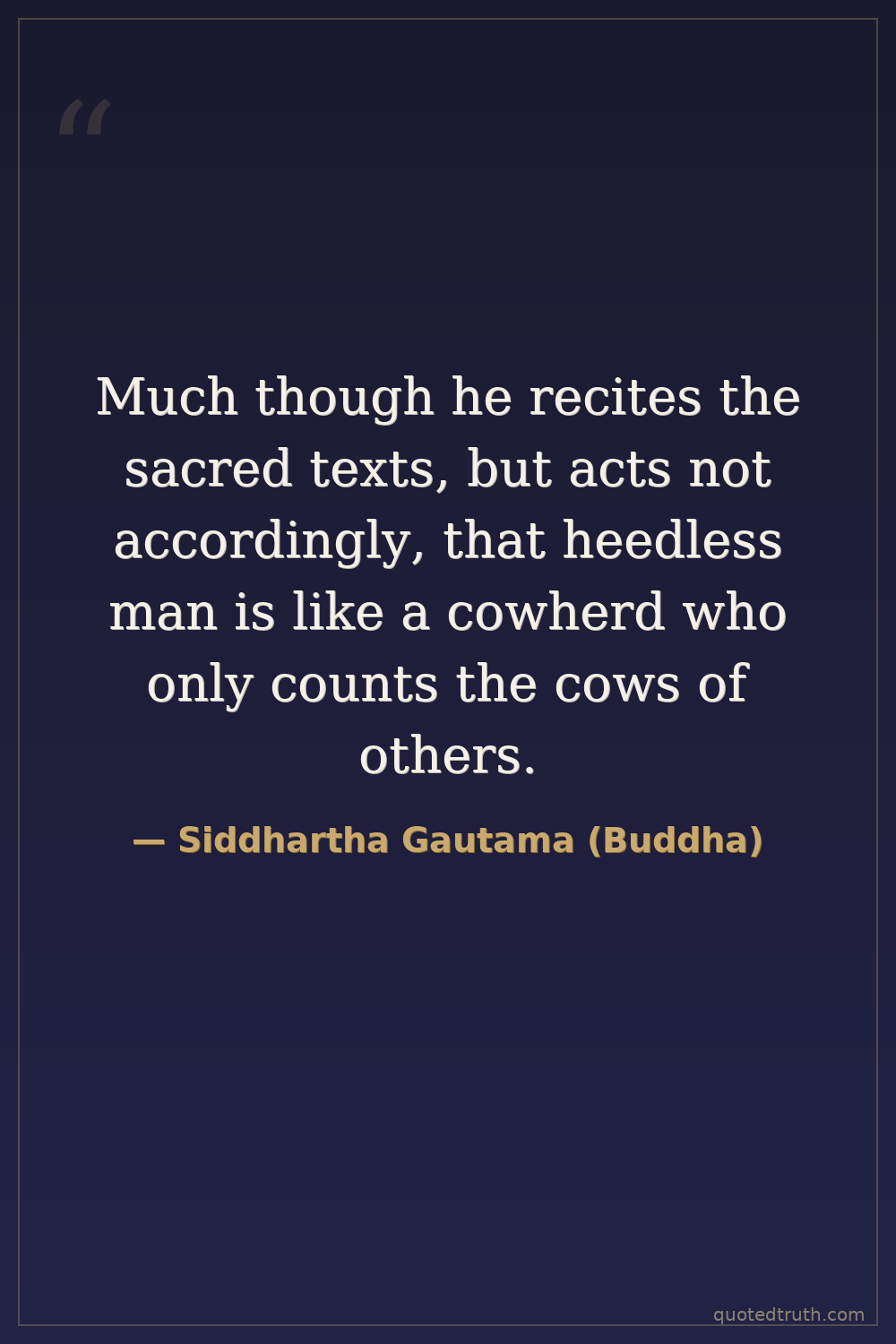
Reading and reciting spiritual or philosophical teachings means nothing if you don't actually live by them. Someone who memorizes sacred words but ignores them in practice is like a hired hand counting another person's cattle: he handles the wealth daily but owns none of it himself. Knowledge without application is empty, belonging to someone else. Real benefit comes only from putting what you learn into action in your own life.
Relevance to Siddhartha Gautama (Buddha)
Siddhartha abandoned the luxurious Shakya palace, years of ascetic practice, and scholarly debate because intellectual mastery alone had not ended his suffering. His awakening under the Bodhi tree came through disciplined meditation and ethical conduct, not recitation. As a teacher he consistently warned monks against treating the Dhamma as doctrine to memorize, insisting the path required personal practice of the Eightfold Way, mindfulness, and moral action to bear fruit.
The era
In 5th-century BCE northern India, Brahmin priests held spiritual authority by memorizing and chanting Vedic hymns in Sanskrit, a language commoners could not understand. Religious status depended on flawless oral recitation, and ritual technicians were paid handsomely for ceremonies. Buddha taught in everyday Pali, rejected the caste-based priesthood, and insisted liberation was available to anyone who practiced, directly undercutting a ritual economy built on sacred texts recited without lived ethical transformation.
AI-generated insights based on extensive research and information for context. Factual errors? Email [email protected].