What it means
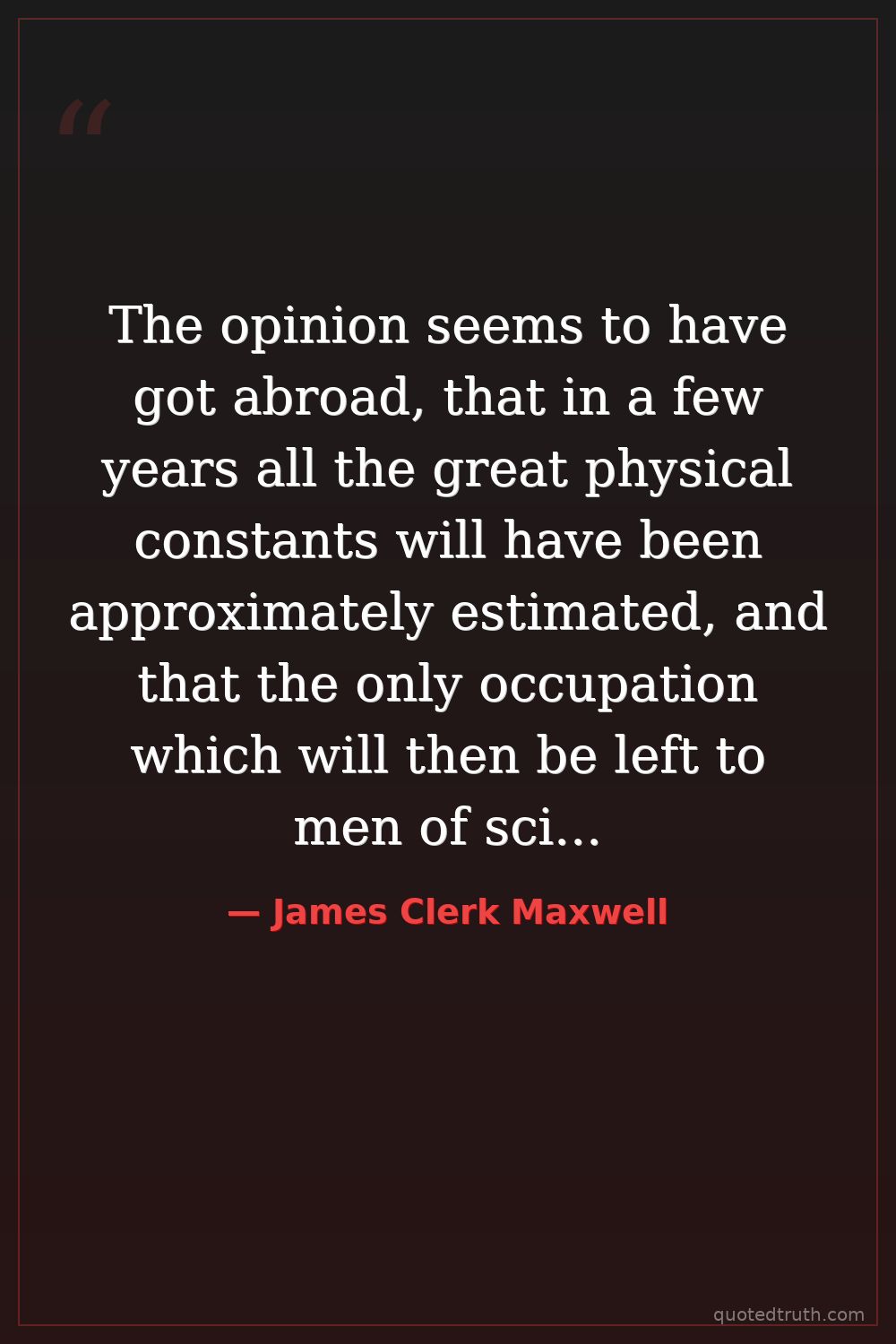
People are starting to believe that science is nearly finished—that we've mostly figured out the fundamental numbers describing reality, and future scientists will just refine those measurements to extra decimal places. The speaker finds this view mistaken or at least worth noting, suggesting that reducing science to mere precision work misunderstands what discovery actually involves and underestimates how much remains unknown beneath the surface of seemingly settled knowledge.
Relevance to James Clerk Maxwell
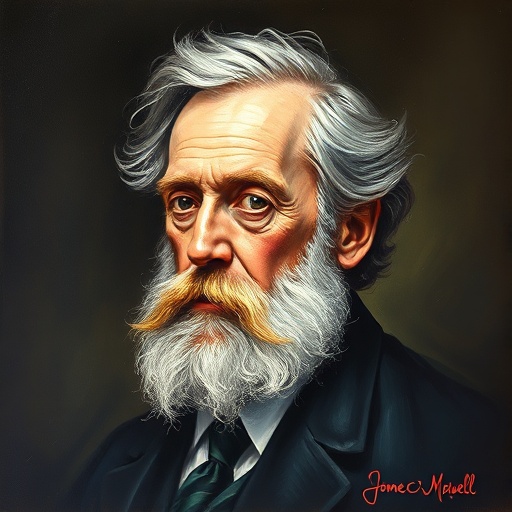
Maxwell spent his career proving this complacency wrong. His unification of electricity, magnetism, and light into electromagnetic theory revealed entire new domains of physics nobody had anticipated. As first director of the Cavendish Laboratory at Cambridge, he shaped experimental physics and trained students to question foundations, not just refine constants. His statistical work on gases and color vision similarly opened fields rather than closing them, embodying his skepticism of scientific finality.
The era
Maxwell worked in the late Victorian era, when industrial confidence and Newtonian mechanics made many believe physics was essentially complete. This attitude peaked near 1900 when Lord Kelvin reportedly suggested only two small clouds remained on the horizon. Those clouds became relativity and quantum mechanics. Maxwell's own equations, published in the 1860s, were already quietly undermining the classical worldview, setting up the revolutions that would demolish the decimal-place complacency he critiqued.
AI-generated insights based on extensive research and information for context. Factual errors? Email [email protected].