What it means
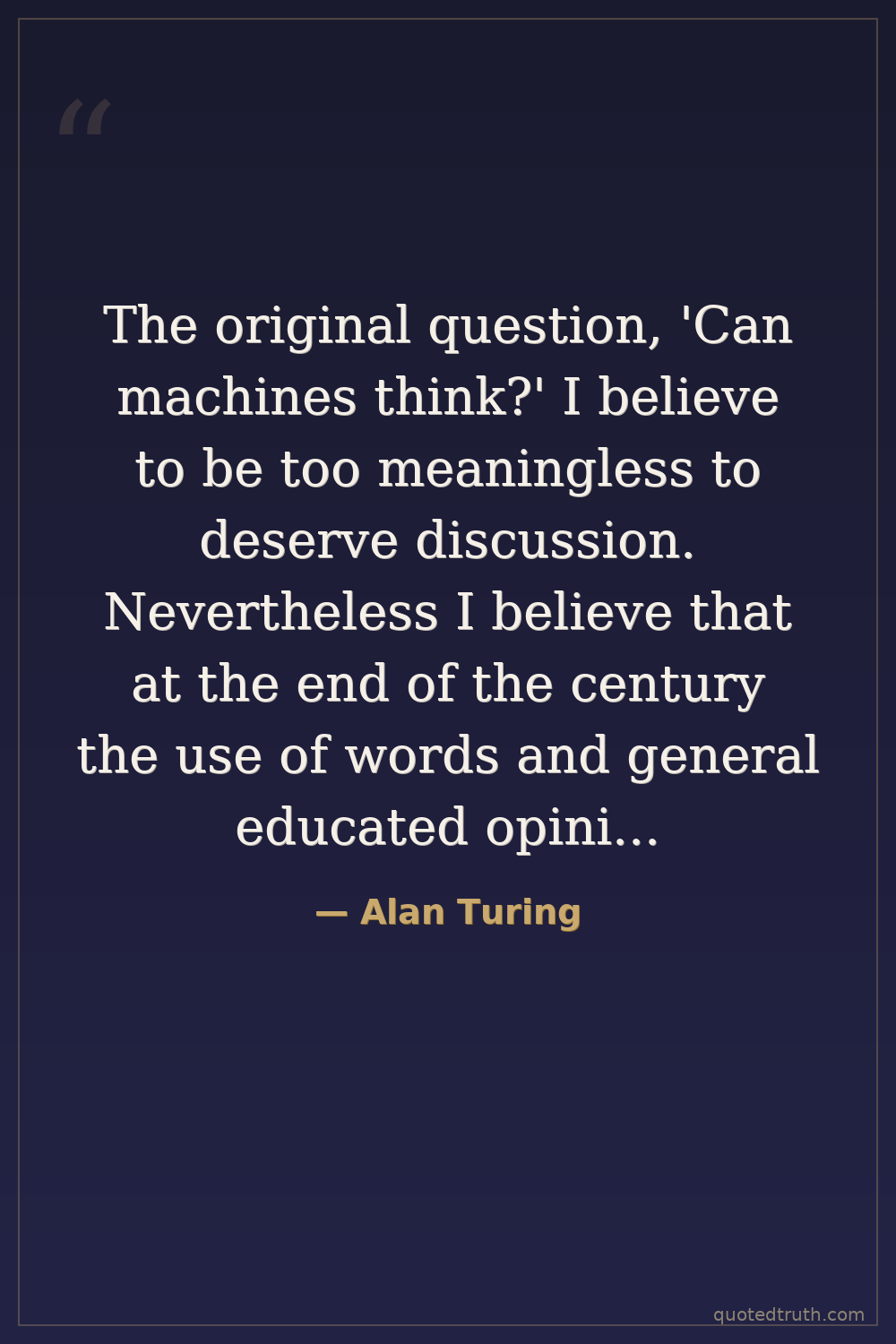
Asking whether machines can truly 'think' is a poorly framed question because the word 'think' lacks a precise definition. Rather than debating semantics, what matters is whether machines can behave in ways indistinguishable from thinking. Over time, language and understanding will shift until attributing thought to machines becomes unremarkable and accepted rather than controversial.
Relevance to Alan Turing
Turing designed the Imitation Game — now called the Turing Test — specifically to sidestep unanswerable philosophical questions about consciousness. As a mathematician and logician, he trusted behavioral evidence over metaphysical debate. Having built Colossus-era computing machinery and conceptualized the universal machine, he had firsthand confidence that mechanical intelligence was not just possible but inevitable.
The era
Written in 1950, this appeared in Turing's landmark paper 'Computing Machinery and Intelligence' during the earliest days of electronic computing. ENIAC was only four years old. Most scientists dismissed machine cognition as absurd. Cold War pressure was accelerating computation research, yet public understanding of computers was near zero, making Turing's century-scale optimism genuinely radical for its time.
AI-generated insights based on extensive research and information for context. Factual errors? Email [email protected].