What it means
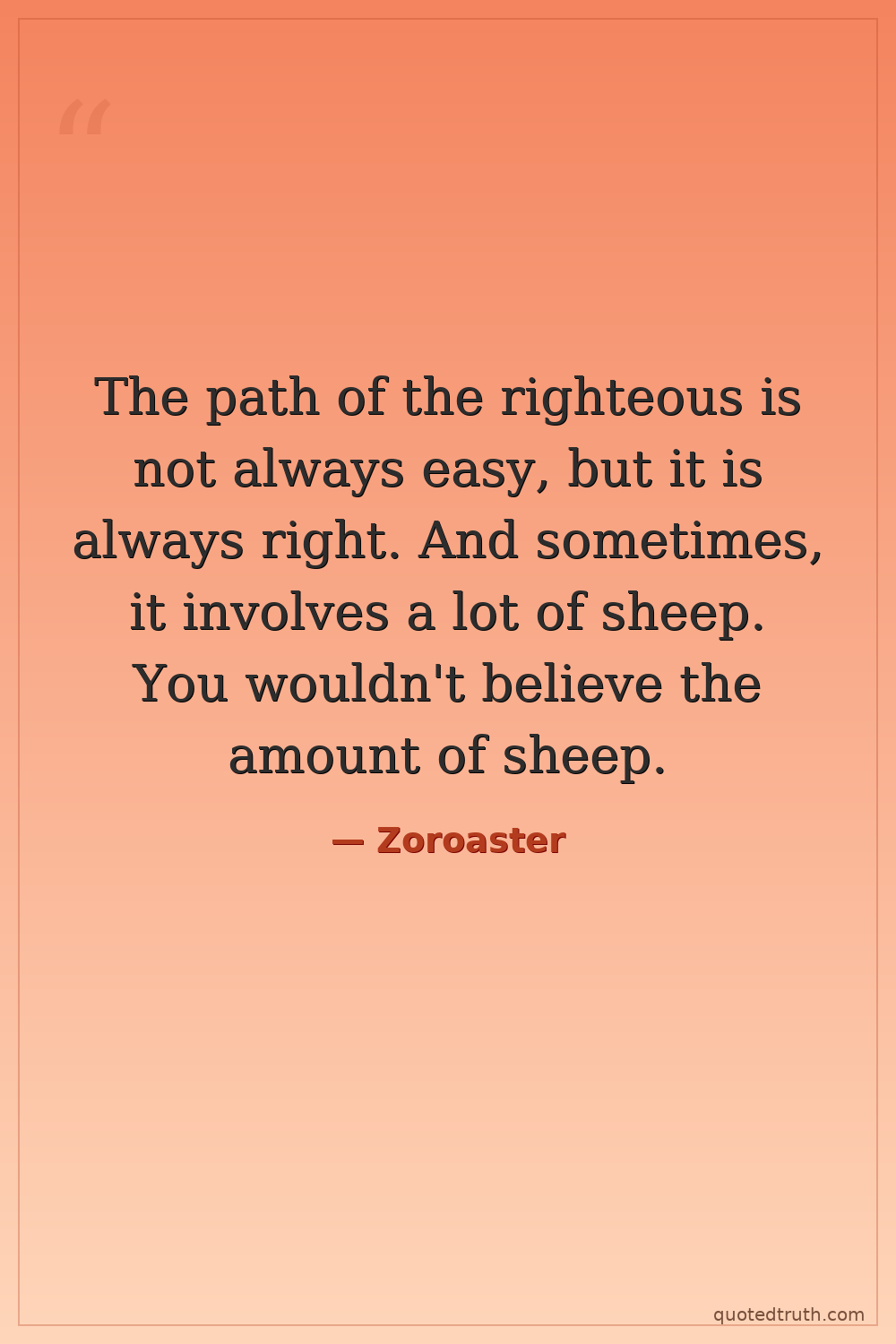
Doing the right thing is rarely the convenient choice, and real virtue usually shows up in unglamorous, repetitive daily work rather than dramatic moments. The quote uses sheep as a comic stand-in for the mundane, tedious responsibilities that come with a principled life. In modern terms: living ethically means accepting hard, boring, hands-on labor, and anyone who has actually tried it knows how much ordinary grind it really demands.
Relevance to Zoroaster
Zoroaster was an ancient Iranian priest and prophet who taught Asha, the cosmic principle of truth and right order, and urged followers to choose good thoughts, words, and deeds over the Lie. He grew up in a pastoralist society where cattle and sheep herding defined daily survival, and his hymns repeatedly praise the diligent herdsman as a model of righteousness, making the image of endless sheep genuinely fitting to his worldview.
The era
Zoroaster lived in Bronze Age eastern Iran, likely between 1500 and 1000 BCE, among semi-nomadic Indo-Iranian tribes whose wealth was measured in livestock. Cattle raiding, pasture disputes, and priestly ritual dominated life, and his reforms challenged older polytheistic sacrifice traditions by demanding ethical conduct and protection of peaceful herders. In that setting, tying righteousness to the hard, patient labor of tending flocks was not metaphorical flourish but a direct description of a good life.
AI-generated insights based on extensive research and information for context. Factual errors? Email [email protected].