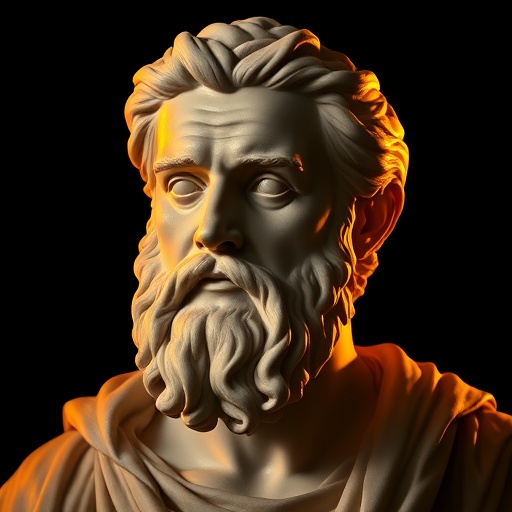
Hippocrates — "The physician must be an anatomist, a botanist, a chemist, and a philosopher."
The physician must be an anatomist, a botanist, a chemist, and a philosopher.
The physician must be an anatomist, a botanist, a chemist, and a philosopher.
Click any product to generate a realistic preview. Up to 3 at a time.
* Initial load can take up to 90 seconds — revising the preview in another color is nearly instant.
"Healing is an art, not a science."
"The powers of drugs are not in the drugs themselves, but in the patient."
"Those by nature overweight, die earlier than the slim."
"The greatest joy in life is to be healthy."
"The physician must be a friend to his patient."
A comprehensive view of the ideal physician's required knowledge.
Date: c. 460-370 BCE
WisdomFound in 1 providers: gemini
1 source checked
A good doctor cannot limit themselves to a single skill—they must understand the body's structure, the healing properties of plants, how substances work within the body, and the deeper principles governing health and disease. True medicine demands integrated, cross-disciplinary knowledge. A physician who masters only one area will inevitably fail patients whose conditions require broader understanding. Breadth of knowledge is not optional; it is the foundation of competent care.
Hippocrates built medicine as a rational discipline by drawing on all available knowledge of his time. He catalogued medicinal plants, studied anatomy through careful observation, analyzed bodily substances via the four humors theory, and grounded everything in philosophical reasoning about nature. His Hippocratic Corpus spans surgery, diet, prognosis, and ethics—proof he practiced exactly the multidisciplinary mastery he preached. The quote is autobiographical as much as prescriptive.
In 5th-century BCE Greece, illness was still widely attributed to divine punishment, and temple priests competed with physicians for authority over healing. Greek natural philosophy was simultaneously revolutionizing how educated people understood the natural world. Botany and early chemistry were emerging as observational sciences. Physicians needed credibility across anatomy, plants, substances, and philosophy to displace religious explanations and earn trust as practitioners of a legitimate, rational discipline.
AI-generated insights based on extensive research and information for context. Factual errors? Email [email protected].
Your cart is empty