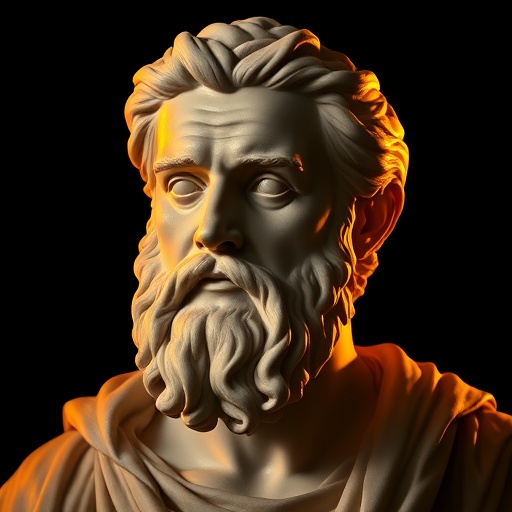
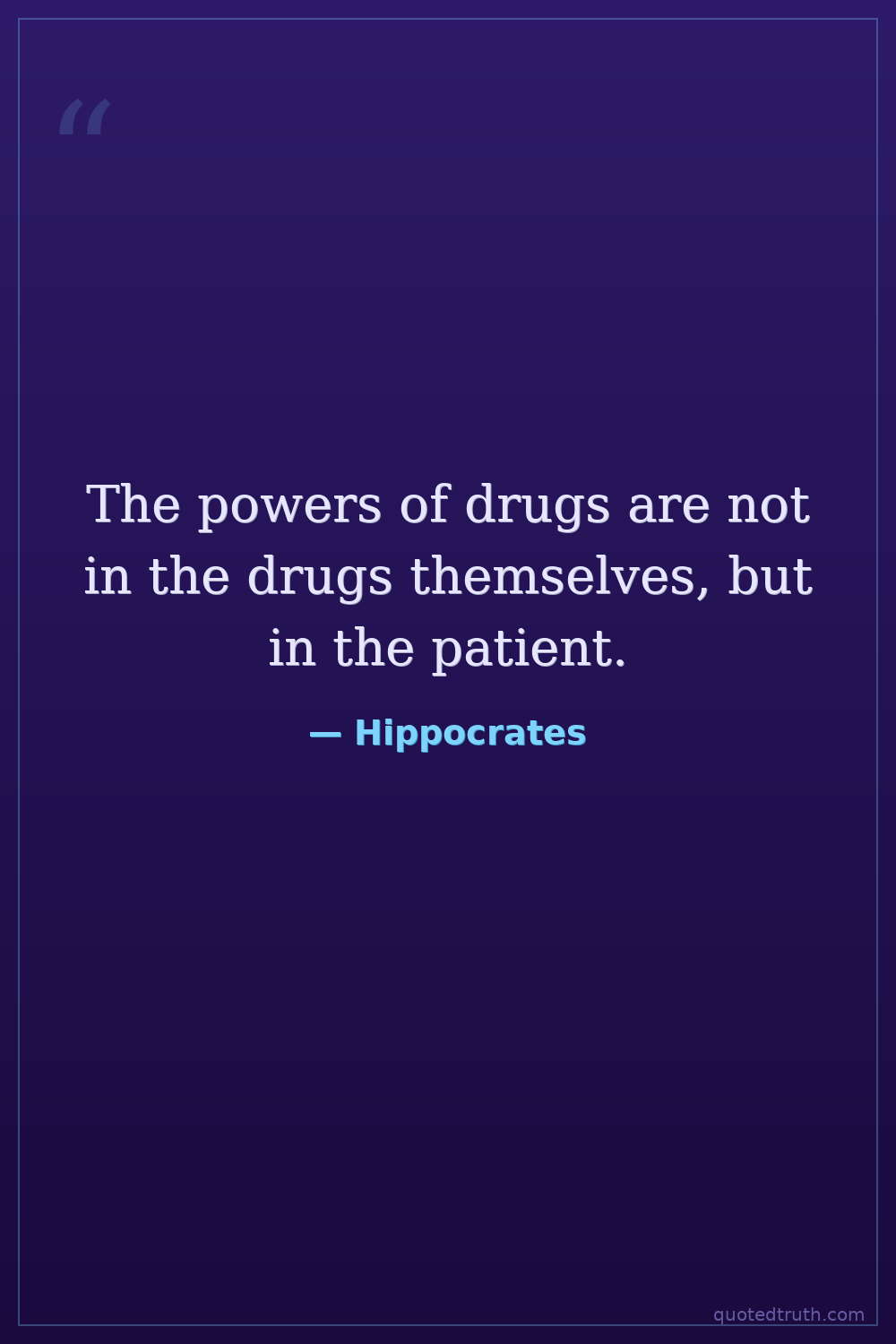
Hippocrates — "The powers of drugs are not in the drugs themselves, but in the patient."
The powers of drugs are not in the drugs themselves, but in the patient.
The powers of drugs are not in the drugs themselves, but in the patient.
Click any product to generate a realistic preview. Up to 3 at a time.
* Initial load can take up to 90 seconds — revising the preview in another color is nearly instant.
"The body is a temple, and the soul is its inhabitant."
"Positive health requires a knowledge of man's primary constitution and of the powers of various foods, both those natural to them and those resulting from human skill. But eating alone is not enough f…"
"The belly is the beginning of all evil."
"The best medicine is love and care."
"A wise man should consider that health is the greatest of human blessings."
A philosophical statement on the patient's constitution and response to treatment.
Date: c. 460-370 BCE
Power & LeadershipFound in 1 providers: gemini
1 source checked
A medicine's effectiveness depends on the individual receiving it—their body, constitution, and condition—not the substance alone. Two patients given the same remedy may respond entirely differently. Healing is personal; the patient's unique physiology, mental state, and health determine whether any treatment works. This challenges a one-size-fits-all approach to medicine and places the individual, not the pill or herb, at the center of the healing process.
Hippocrates built his practice on careful observation of individual patients rather than supernatural explanations. His Hippocratic Corpus emphasizes taking detailed patient histories, studying diet, environment, and constitution. He recognized that the same herb could cure one person and fail another—not because the herb changed, but because patients differ. This quote is the philosophical backbone of his clinical method: know your patient first, then consider your remedy.
In ancient Greece around 460–370 BCE, medicine was dominated by temple priests who attributed illness to divine punishment and prescribed rituals. Hippocrates practiced as naturalistic, rational medicine was only beginning to displace religious healing. Greek philosophers were simultaneously debating individual perception and reality. Declaring that healing power resides in the patient directly challenged priestly authority and the popular belief that certain herbs or substances held fixed, universal curative powers regardless of who consumed them.
AI-generated insights based on extensive research and information for context. Factual errors? Email [email protected].
Your cart is empty