What it means
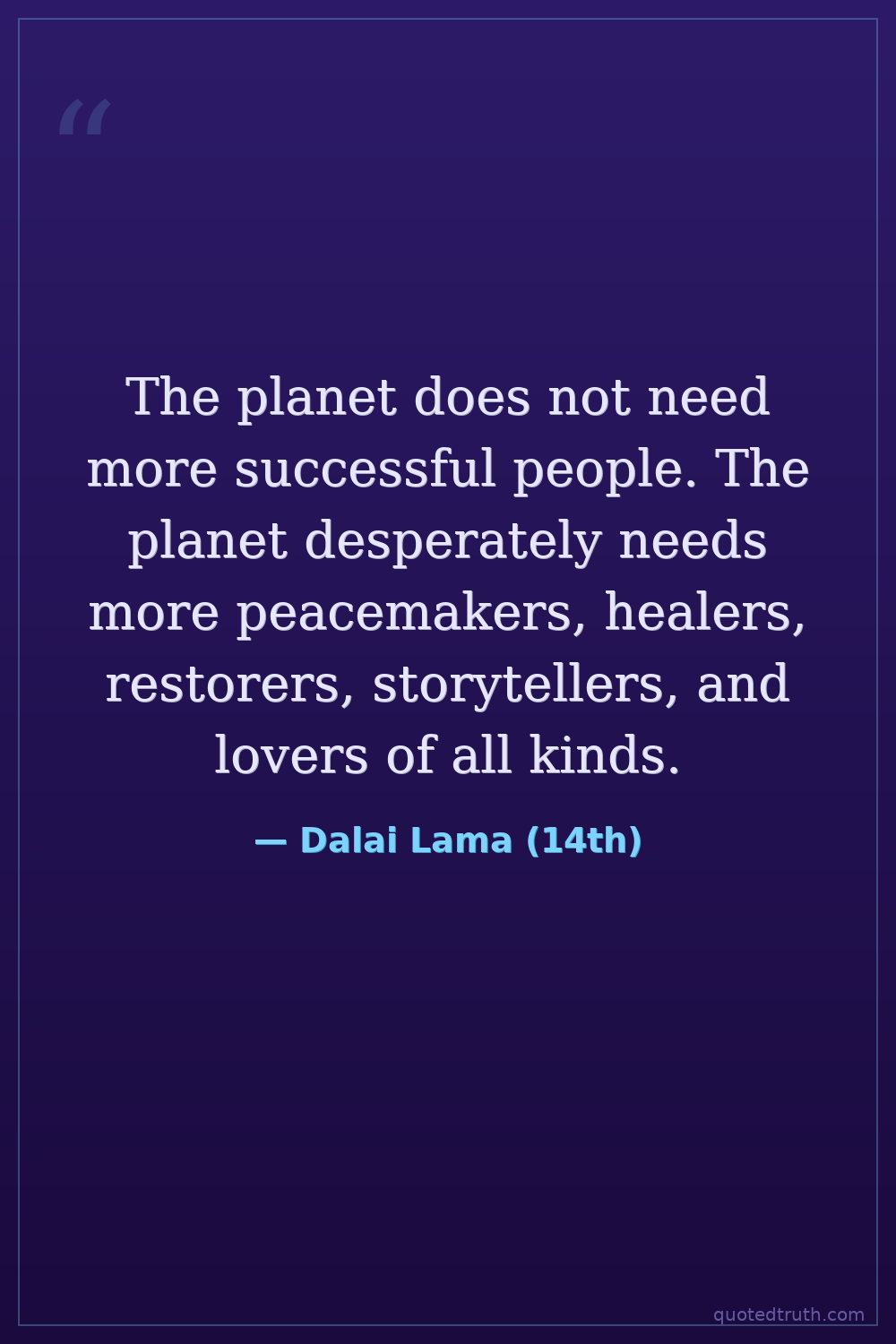
Standard definitions of success—wealth, status, career advancement—have shaped how most people measure their worth. This quote rejects that framing entirely. It argues the world's real problems—conflict, environmental destruction, disconnection, suffering—won't be solved by more high achievers chasing personal gain. What actually moves humanity forward are people committed to building peace, mending wounds, restoring what's broken, sharing meaningful stories, and spreading genuine compassion.
Relevance to Dalai Lama (14th)
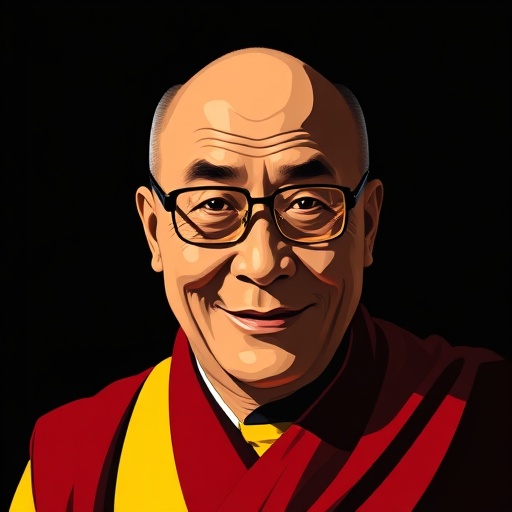
Tenzin Gyatso has spent over six decades in exile after China's 1959 invasion of Tibet, dedicating his life not to power or wealth but to compassion, nonviolence, and reconciliation. His Nobel Peace Prize in 1989 recognized this commitment. Core to his Buddhist teachings is the conviction that personal achievement means nothing without alleviating others' suffering—a direct expression of this quote's call for healers and peacemakers over conventional success.
The era
The late 20th and early 21st centuries saw relentless glorification of wealth and achievement—Silicon Valley disruption culture, CEO celebrity worship, GDP as the sole measure of national health. Meanwhile, climate change accelerated, inequality widened sharply, and decades of armed conflict left millions displaced. The Dalai Lama delivered this message into that cultural moment, where success increasingly meant personal gain at collective expense, making the call for healers and restorers urgent.
AI-generated insights based on extensive research and information for context. Factual errors? Email [email protected].