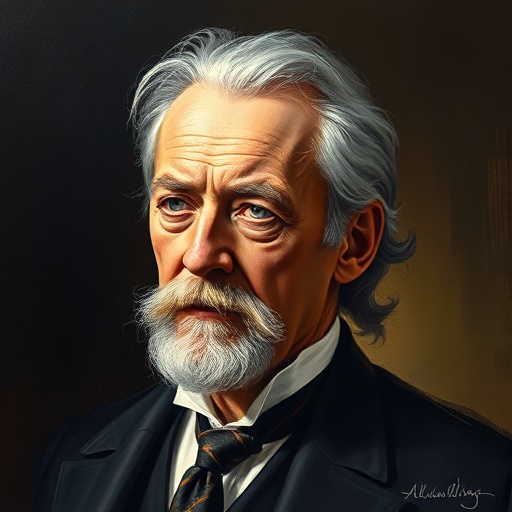
Alexander Fleming — "The public looks for miracles. We scientists look for facts."
The public looks for miracles. We scientists look for facts.
The public looks for miracles. We scientists look for facts.
Click any product to generate a realistic preview. Up to 3 at a time.
* Initial load can take up to 90 seconds — revising the preview in another color is nearly instant.
"It is not difficult to make microbes resistant to penicillin in the laboratory by exposing them to concentrations not sufficient to kill them, and the same thing has occasionally happened in the body."
"I was not looking for penicillin when I discovered it. I was looking for a better antiseptic."
"The discovery of penicillin was a matter of chance, but the application of it was a matter of hard work."
"Nature makes penicillin; I just found it."
"The discovery of penicillin was a stroke of luck, but it was also the result of many years of hard work."
Found in 1 providers: grok
1 source checked
Ordinary people crave dramatic, instant solutions to problems like disease, expecting cures to appear as if by magic. Scientists, by contrast, work patiently with evidence, observation, and verification. The quote draws a sharp line between hope-driven thinking and disciplined inquiry, reminding readers that real progress comes from rigorous testing and reproducible results, not from wishful expectations or sensational headlines about overnight breakthroughs.
Fleming spotted a contaminating mold killing bacteria on a forgotten Petri dish in 1928, but penicillin only became a usable drug after years of unglamorous lab work by Florey and Chain in the 1940s. He repeatedly resisted being cast as a lone miracle-worker, crediting careful observation and chemistry. As a bacteriologist trained at St Mary's, he distrusted hype and stressed that antibiotics were hard-won facts, not gifts.
Fleming spoke as mid-twentieth-century newspapers turned penicillin, streptomycin, and the polio vaccine into front-page miracles, while radio and newsreels fed public hunger for medical wonders after two world wars. Antibiotic mass production during World War II saved countless soldiers, fueling expectations that science could conquer any illness. Fleming, accepting his 1945 Nobel Prize, also warned about misuse and resistance, pushing back against an era eager to celebrate cures rather than understand them.
AI-generated insights based on extensive research and information for context. Factual errors? Email [email protected].
Your cart is empty