Carl Linnaeus — "The purpose of science is to know the works of God."
The purpose of science is to know the works of God.
The purpose of science is to know the works of God.
Click any product to generate a realistic preview. Up to 3 at a time.
* Initial load can take up to 90 seconds — revising the preview in another color is nearly instant.
"The species are the work of the divine hand, the genera are the work of reason."
"The system of nature is a mirror of God's wisdom."
"The stone grows, the plant grows and lives, the animal grows, lives and feels."
"Natural bodies are divided into three kingdoms of nature: viz. the mineral, vegetable, and animal kingdoms. Minerals grow, Plants grow and live, Animals grow, live, and have feeling."
"I saw a monster today: a two-headed calf. It lived for only an hour, but I dissected it to see if God had given it two souls."
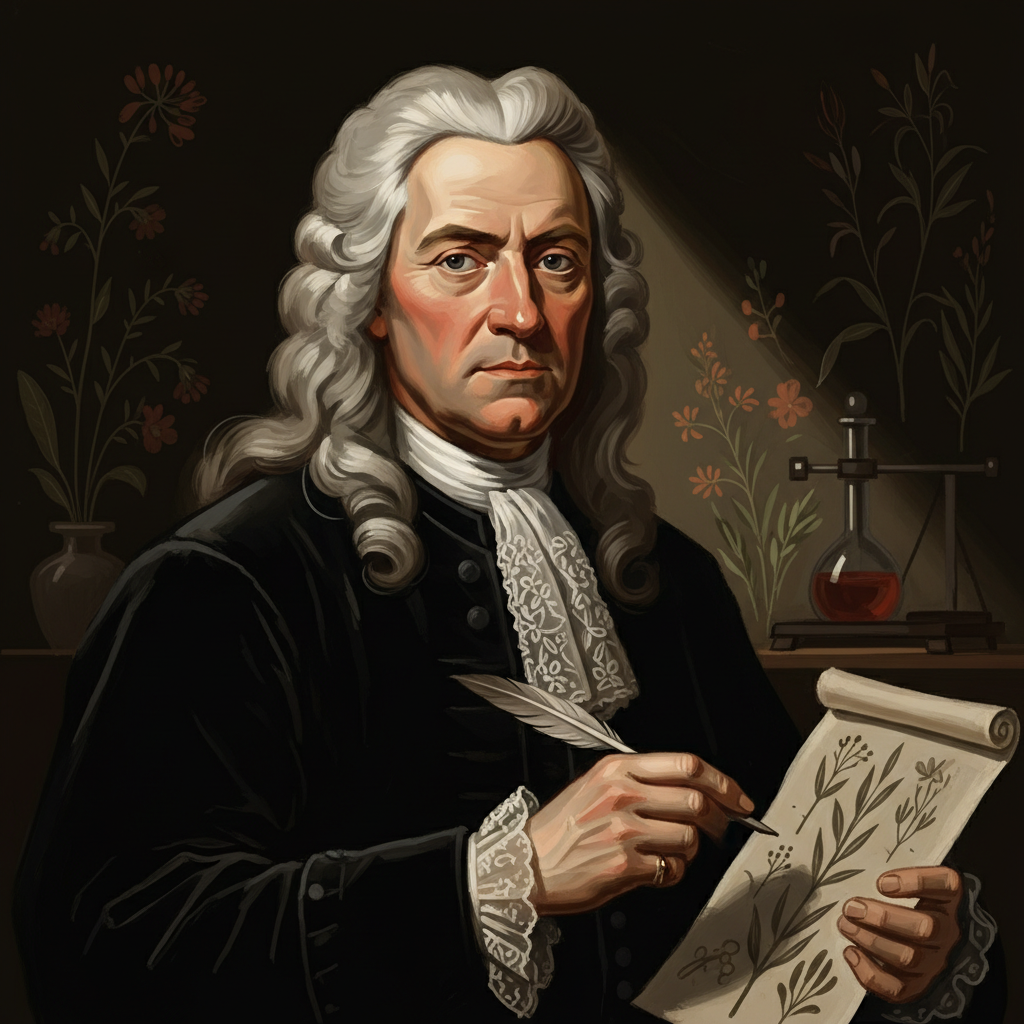
Swedish botanist and the father of modern taxonomy whose Systema Naturae (1735) introduced binomial nomenclature for naming all species. Closely associated with Joseph Banks (British naturalist who carried Linnaean classification on Cook's voyages). For an intellectual contrast, see Comte de Buffon, French naturalist and Histoire Naturelle author (1749-1788) — Buffon explicitly attacked Linnaean fixed-categories taxonomy as artificial and rejected the binomial system; his gradualist, environment-shaped natural history was the explicit alternative. Anticipates the fixed-species-vs-evolution debate Darwin would later resolve.
Found in 1 providers: grok
1 source checked
Science exists not merely for human benefit or intellectual satisfaction, but to understand and document the natural world as divine creation. Knowledge of nature is itself an act of reverence—mapping reality reveals the mind behind it. Understanding how living things are structured, related, and ordered is ultimately understanding something sacred about existence itself.
Linnaeus was a devout Lutheran who saw his taxonomic work—naming and classifying every living organism—as literally reading God's creation. His Systema Naturae was conceived as cataloguing divine order. He famously wrote 'God created, Linnaeus organized,' viewing his binomial nomenclature not as human invention but as uncovering God's own arrangement of nature.
In 18th-century Europe, natural theology dominated scientific thinking. The Enlightenment pursued reason, but most naturalists saw no conflict between science and faith—discovering nature's laws meant discovering God's blueprint. Linnaeus worked before Darwin, when species were considered fixed divine creations. Botanical gardens, natural history collections, and expeditions were framed as pious endeavors revealing providential design.
AI-generated insights based on extensive research and information for context. Factual errors? Email [email protected].
Your cart is empty