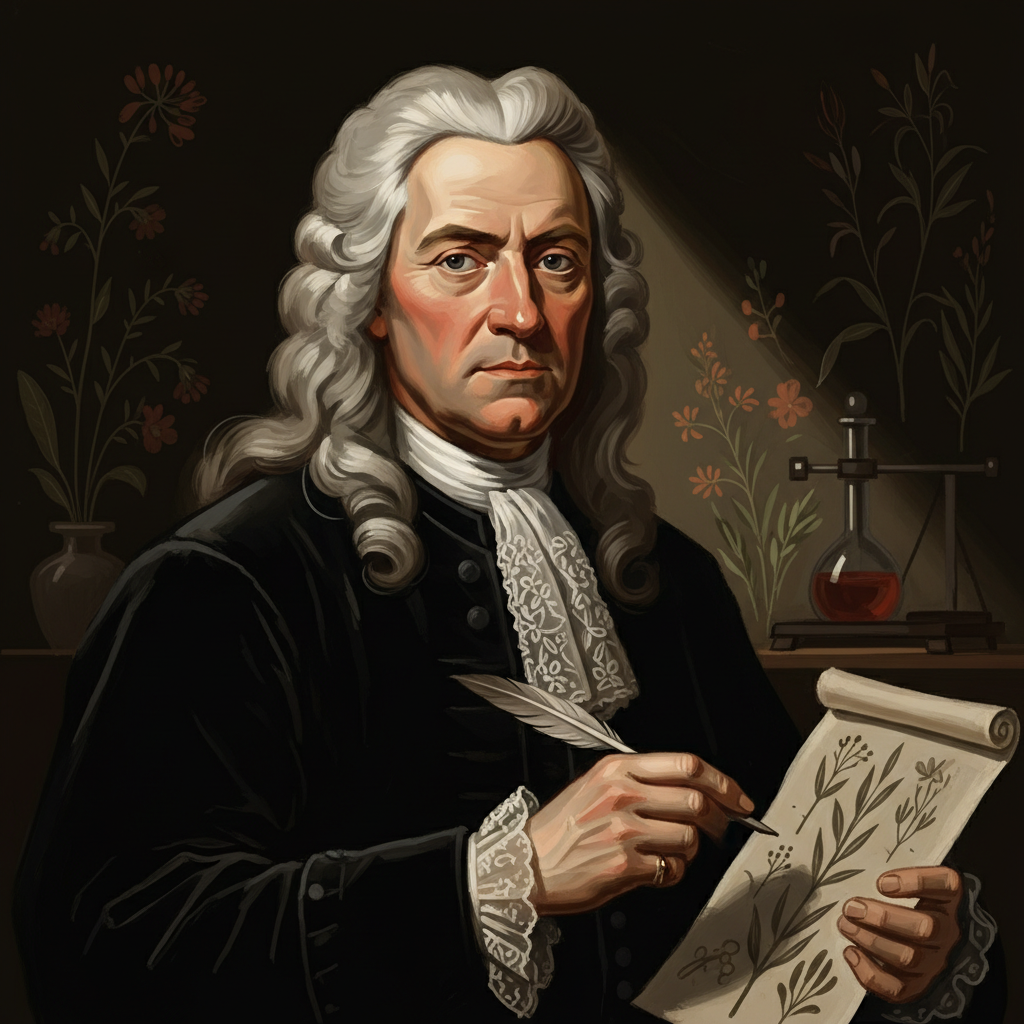
Carl Linnaeus — "The species are the work of the divine hand, the genera are the work of reason."
The species are the work of the divine hand, the genera are the work of reason.
The species are the work of the divine hand, the genera are the work of reason.
Click any product to generate a realistic preview. Up to 3 at a time.
* Initial load can take up to 90 seconds — revising the preview in another color is nearly instant.
"I have been called a second Adam."
"Natura non facit saltus. (Nature makes no leaps.)"
"The Negro is a different species from the European."
"Homo sapiens, nosce te ipsum. (Man, know thyself.)"
"The method is the soul of science."
Swedish botanist and the father of modern taxonomy whose Systema Naturae (1735) introduced binomial nomenclature for naming all species. Closely associated with Joseph Banks (British naturalist who carried Linnaean classification on Cook's voyages). For an intellectual contrast, see Comte de Buffon, French naturalist and Histoire Naturelle author (1749-1788) — Buffon explicitly attacked Linnaean fixed-categories taxonomy as artificial and rejected the binomial system; his gradualist, environment-shaped natural history was the explicit alternative. Anticipates the fixed-species-vs-evolution debate Darwin would later resolve.
A theological and philosophical statement on the origin of species and genera.
Date: c. 1750s
BiblicalFound in 1 providers: gemini
1 source checked
Individual species are real, discrete things that exist in nature — observable organisms shaped by creation or natural forces. But genera, the grouping categories above species, are mental constructs invented by human intelligence to impose order on that diversity. In modern terms: species are the raw biological facts; the higher classification system is the filing structure our minds build to make sense of them.
Linnaeus spent decades naming thousands of organisms in Systema Naturae, creating the binomial nomenclature still used today. Deeply Lutheran, he believed God fixed each species at Creation — they were divinely real. But he recognized genera as his own intellectual constructions. This quote reveals his self-awareness: his greatest achievement, the hierarchical classification system, was human reason organizing God's handiwork, not discovery of divine categories.
Linnaeus worked during the 18th-century Enlightenment, when colonial exploration flooded naturalists with thousands of undescribed species worldwide. Natural theology — the belief that studying creation reveals God's design — was mainstream among scientists. Simultaneously, Enlightenment thinkers championed human reason as knowledge's organizing force. This quote captures that synthesis: divine creation fills the world with species, but human intellect must impose rational order to make that abundance comprehensible.
AI-generated insights based on extensive research and information for context. Factual errors? Email [email protected].
Your cart is empty