Zoroaster — "The soul of the righteous shall go to the Best Existence, the soul of the wicked…"
The soul of the righteous shall go to the Best Existence, the soul of the wicked to the Worst Existence.
The soul of the righteous shall go to the Best Existence, the soul of the wicked to the Worst Existence.
Click any product to generate a realistic preview. Up to 3 at a time.
* Initial load can take up to 90 seconds — revising the preview in another color is nearly instant.
"Choose the truth. And if the truth is inconvenient, choose it anyway. But maybe grumble a little."
"Show me, O Mazda, through Good Mind, how to fulfill this teaching, for which I ask Thee, and through Thy Righteousness, to approach Thee, O Ahura, and to offer praise to Thee."
"Hear with your ears the best things; behold with a clear vision the two choices, deciding each man for himself, before the great consummation."
"Tell me truly, O Ahura, who upholds the earth below and the heavens from falling? Who made the waters and the plants? Who yoked swiftness to the winds and clouds? Who is the creator of Good Thought, O…"
"Seek knowledge. And if you can't find it, at least find something interesting to look at."
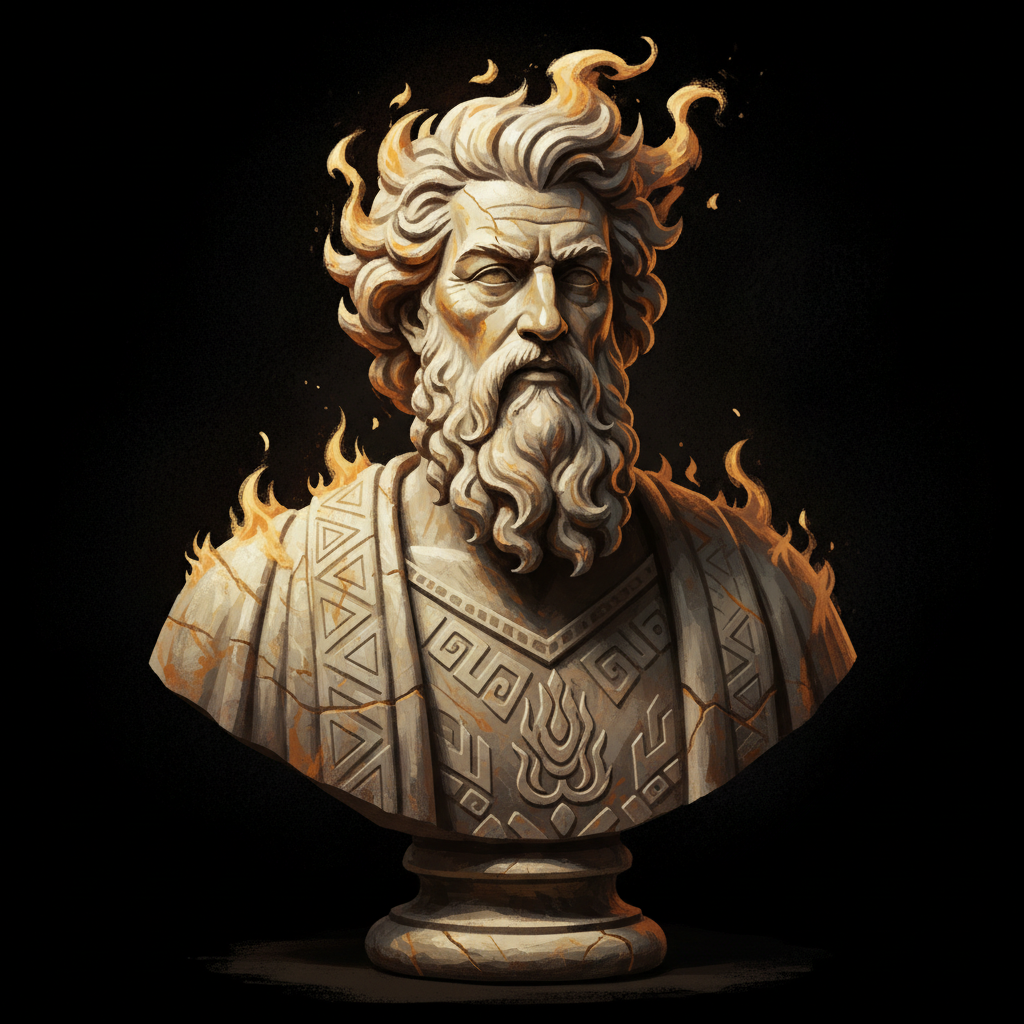
Iranian prophet who founded Zoroastrianism, the first major religion of cosmic dualism between good (Ahura Mazda) and evil (Angra Mainyu). Closely associated with The Buddha (near-contemporary Eastern moral-cosmological revolutionary). For an intellectual contrast, see Friedrich Nietzsche, German philosopher of 'beyond good and evil' — Nietzsche appropriated Zarathustra's name for Thus Spoke Zarathustra (1883) precisely to invert the original's moral cosmology — the historical Zoroaster founded the good-versus-evil framework Nietzsche's character announces the end of.
Found in 1 providers: gemini
1 source checked
After death, your destination depends entirely on the moral quality of your life. People who chose truth, honesty, and good actions end up in a place of light, joy, and reward. People who chose lies, cruelty, and harmful actions end up in a place of darkness and suffering. Your character and choices during life determine where your consciousness goes afterward, making ethics a matter of eternal consequence, not just social convenience.
Zoroaster built his entire teaching around the cosmic struggle between Asha (truth, order) and Druj (deception, chaos), and he was among the first prophets to articulate a clear moral afterlife tied to personal choice. As a priest-reformer who rejected the amoral ritualism of his time, he insisted each individual would cross the Chinvat Bridge and be judged by their own thoughts, words, and deeds. This quote distills his signature doctrine.
Around 1500-1000 BCE in ancient Persia, most regional religions featured capricious gods appeased through sacrifice, with vague or undifferentiated afterlives where everyone shared the same shadowy fate. Zoroaster preached during a violent transition from nomadic raiding culture to settled agricultural life, where lawlessness was common. Introducing a morally accountable afterlife was revolutionary, later shaping Judaism, Christianity, and Islam's concepts of heaven, hell, and final judgment during the Babylonian exile.
AI-generated insights based on extensive research and information for context. Factual errors? Email [email protected].
Your cart is empty