Confucius — "The superior man does not even for the space of a single meal act contrary to vi…"

The superior man does not even for the space of a single meal act contrary to virtue. In moments of haste, he cleaves to it. In seasons of danger, he cleaves to it.
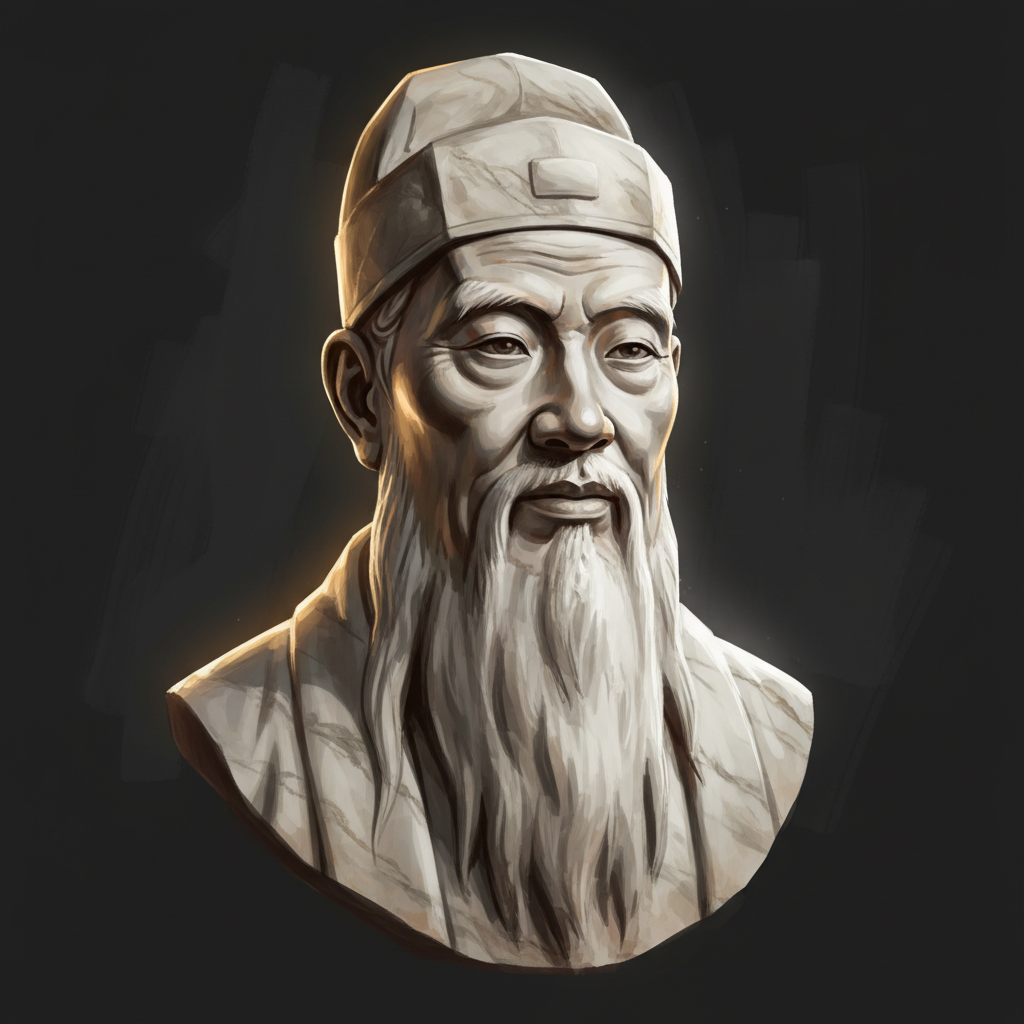
Confucius — Confucius Ancient · Chinese philosopher, founder of Confucianism

Get This Quote & Author's Image Illustrated On:

Click any product to generate a realistic preview. Up to 3 at a time.
* Initial load can take up to 90 seconds — revising the preview in another color is nearly instant.

Kitchen

Apparel

Other

About Confucius (551-479 BCE)

Chinese philosopher and teacher whose teachings (compiled by his students in the Analects) became the foundational ethical framework of East Asian civilization for 2,500 years. Closely associated with Mencius (his most-influential follower a century later). For an intellectual contrast, see Laozi, near-contemporary Chinese sage and Tao Te Ching author — Confucius systematized social order through ritual and family hierarchy; Laozi's Taoist effortless-action philosophy argued such systems were the disease, not the cure. The two founding poles of Chinese moral philosophy — every East Asian moral tradition since has positioned itself between them.

The standard scholarly entry points to Confucius's work: Philip J. Ivanhoe (Georgetown, Chinese philosophy) — Confucian Moral Self Cultivation (2000); Edward Slingerland (UBC, Asian Studies) — Effortless Action: Wu-wei as Conceptual Metaphor (2003); Tu Weiming (Harvard, Confucian scholar) — Confucian Thought: Selfhood as Creative Transformation (1985). These are the works graduate seminars cite when teaching Confucius.

Details

Analects 4.5

Date: c. 5th century BCE

Wisdom

Verification

Unverifiable

Found in 1 providers: grok

1 source checked

Understanding this quote

What it means

A person of genuine character never takes a break from doing the right thing. Even during a quick meal, under pressure, or when facing real danger, they stay committed to their principles. Virtue is not a performance reserved for calm moments or public view. It is a constant habit woven into every action, so tightly held that stress and urgency cannot shake it loose.

Relevance to Confucius

Confucius built his entire teaching around ren (humaneness) and the junzi, the morally cultivated gentleman. He spent years wandering between warring states, often hungry, endangered, and rejected by rulers, yet refused to compromise his ethics for office or safety. This line captures his lived insistence that moral cultivation is unceasing daily practice, not a title, making it a direct summary of how he actually conducted his own turbulent life.

The era

Confucius lived during the late Spring and Autumn period (551-479 BCE), as the Zhou dynasty fractured and feudal lords warred constantly. Assassinations, betrayals, and shifting loyalties were routine, and many officials bent their ethics to survive power struggles. Against that backdrop of opportunism, insisting that a gentleman never abandons virtue, even in haste or danger, was a radical counter-cultural standard aimed at restoring moral order to a collapsing society.

AI-generated insights based on extensive research and information for context. Factual errors? Email [email protected].
Your Cart

Your cart is empty