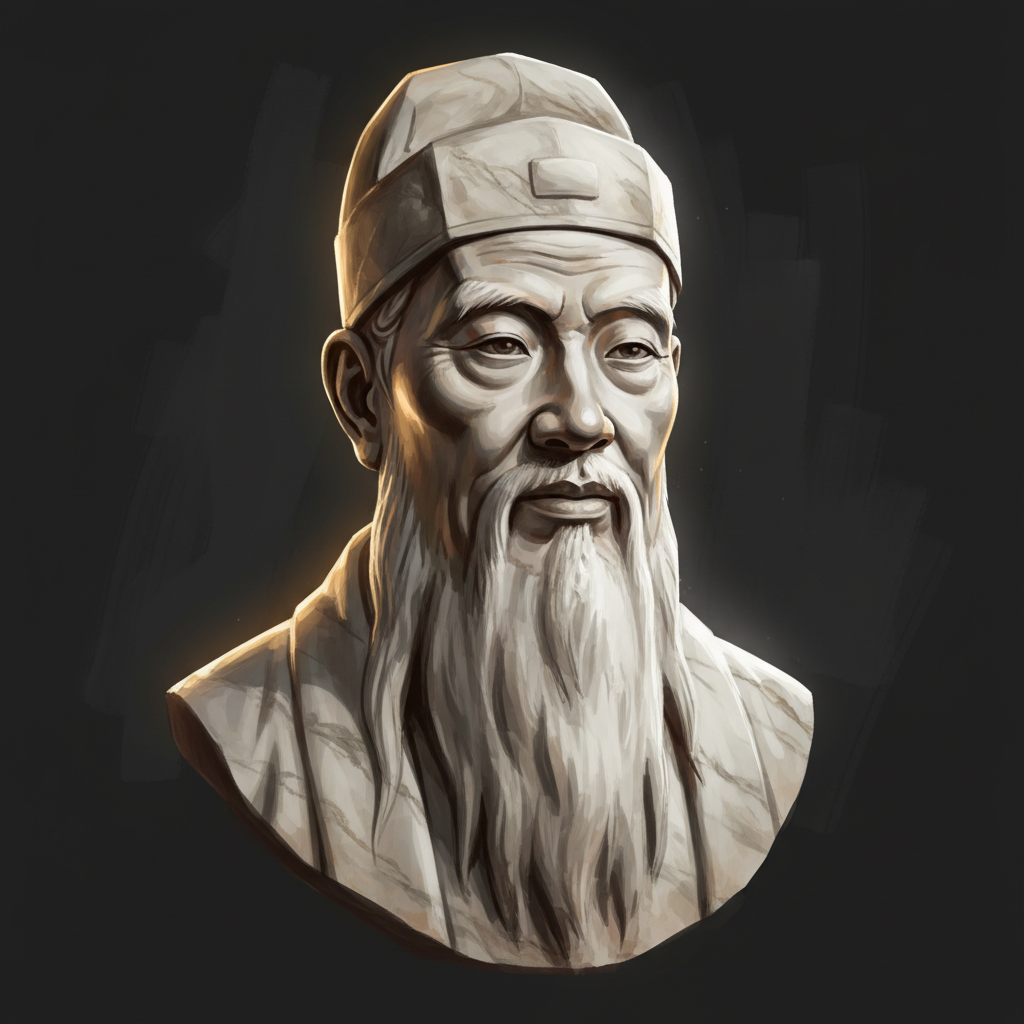
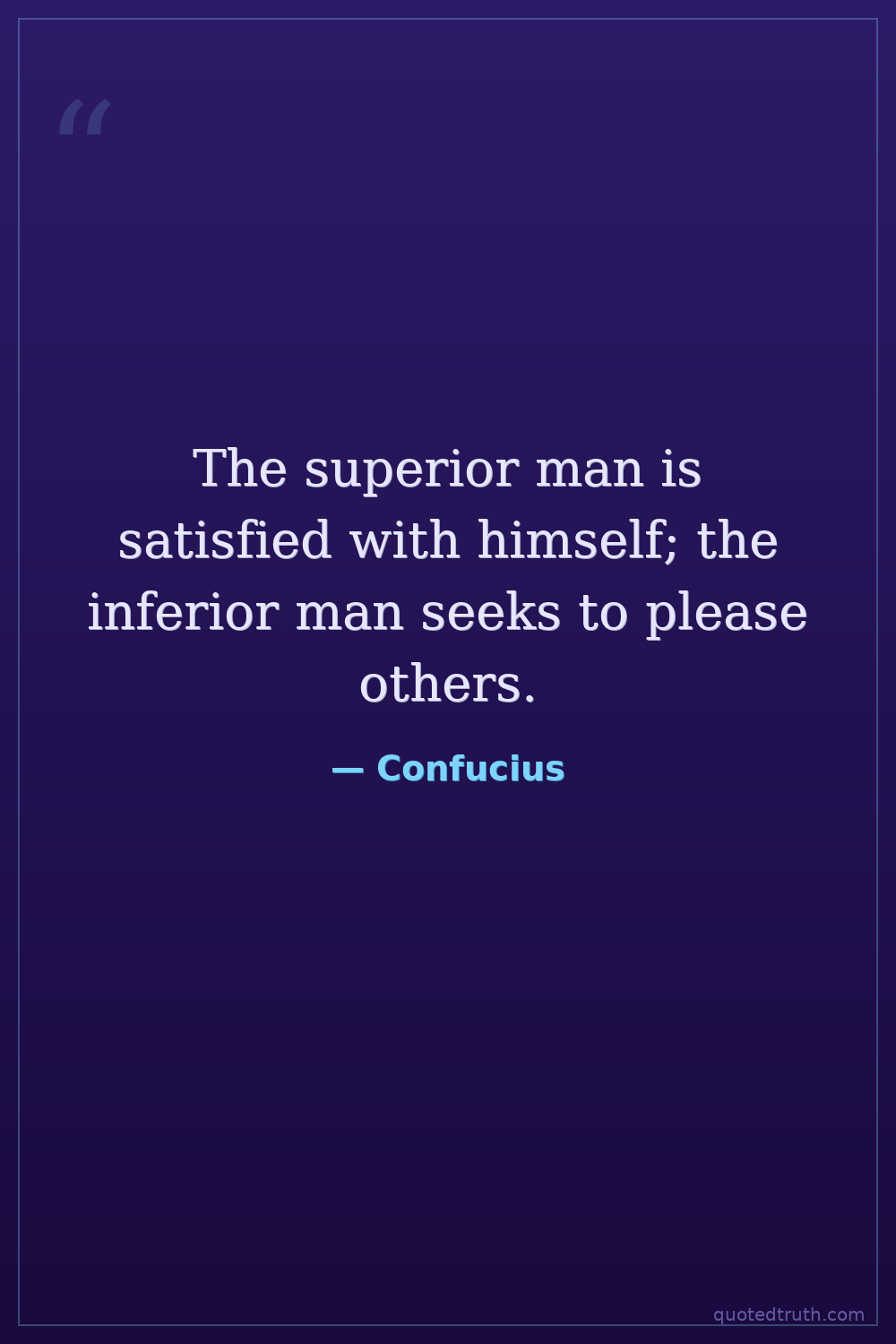
Confucius — "The superior man is satisfied with himself; the inferior man seeks to please oth…"
The superior man is satisfied with himself; the inferior man seeks to please others.
The superior man is satisfied with himself; the inferior man seeks to please others.
Click any product to generate a realistic preview. Up to 3 at a time.
* Initial load can take up to 90 seconds — revising the preview in another color is nearly instant.
"What the superior man seeks is in himself; what the small man seeks is in others."
"The gentleman is calm and at ease; the small man is fretful and ill at ease."
"The Master said, 'The superior man is universally benevolent, and not partisan. The mean man is partisan, and not universally benevolent.'"
"The student of virtue has no time for idleness."
"What the gentleman wants is in himself, what the small man wants is in others."
Chinese philosopher and teacher whose teachings (compiled by his students in the Analects) became the foundational ethical framework of East Asian civilization for 2,500 years. Closely associated with Mencius (his most-influential follower a century later). For an intellectual contrast, see Laozi, near-contemporary Chinese sage and Tao Te Ching author — Confucius systematized social order through ritual and family hierarchy; Laozi's Taoist effortless-action philosophy argued such systems were the disease, not the cure. The two founding poles of Chinese moral philosophy — every East Asian moral tradition since has positioned itself between them.
The standard scholarly entry points to Confucius's work: Philip J. Ivanhoe (Georgetown, Chinese philosophy) — Confucian Moral Self Cultivation (2000); Edward Slingerland (UBC, Asian Studies) — Effortless Action: Wu-wei as Conceptual Metaphor (2003); Tu Weiming (Harvard, Confucian scholar) — Confucian Thought: Selfhood as Creative Transformation (1985). These are the works graduate seminars cite when teaching Confucius.
Found in 1 providers: deepseek
1 source checked
True maturity comes from being at peace with who you are rather than constantly shaping yourself to win approval. A grounded person measures success by their own principles and character, while an insecure person adjusts behavior to match whatever crowd surrounds them. The first builds a stable identity; the second lives as a reflection of other people's opinions, always performing and never truly at rest within themselves.
Confucius spent decades traveling between warring states, often rejected by rulers who preferred flatterers over his demanding moral teachings. He valued the junzi, the cultivated gentleman who refines inner virtue regardless of recognition. Having held minor offices and lost them for refusing to compromise, he lived this distinction personally, prizing self-examination, ritual propriety, and integrity over court favor or popular applause throughout his long career as a teacher.
During the late Spring and Autumn period around 500 BCE, the Zhou dynasty was fracturing as feudal lords schemed for power through flattery, betrayal, and shifting alliances. Court life rewarded sycophants who told rulers what they wanted to hear, while honest advisors were exiled or executed. Confucius offered a radical counter-ideal: social order rebuilt through individuals cultivating inner virtue rather than chasing patronage, a message aimed squarely at a culture drowning in opportunism.
AI-generated insights based on extensive research and information for context. Factual errors? Email [email protected].
Your cart is empty