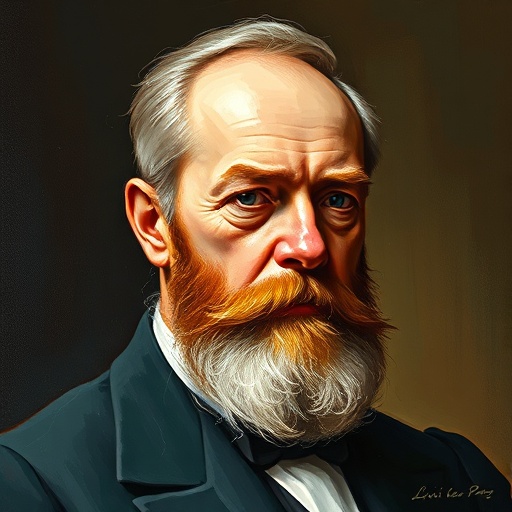
Louis Pasteur — "The true scientist is a man of faith, for he believes in the order and harmony o…"
The true scientist is a man of faith, for he believes in the order and harmony of the universe.
The true scientist is a man of faith, for he believes in the order and harmony of the universe.
Click any product to generate a realistic preview. Up to 3 at a time.
* Initial load can take up to 90 seconds — revising the preview in another color is nearly instant.
"It is by observation and experimentation that we discover the laws of nature."
"The more I study nature, the more I stand amazed at the work of the Creator."
"You have not succeeded in your experiments, that is all there is to it."
"One must have a certain amount of daring to embark on a scientific career."
"The greatest error is to believe that one knows everything."
Attributed, linking science and religious belief.
Date: Late 19th Century (approx.)
InspirationalFound in 1 providers: grok
1 source checked
Real scientific work depends on trusting that nature follows consistent, discoverable rules. A scientist assumes the universe is not random chaos but operates by patterns that careful observation and experiment can reveal. This trust functions like faith because it cannot be proven before the work begins, yet without it no one would bother investigating. Science and belief in order are partners, not opposites.
Pasteur was a devout Catholic who saw no conflict between his laboratory work and religious conviction. His breakthroughs in germ theory, vaccination, and pasteurization required stubborn faith that invisible microbes followed predictable rules, even when colleagues mocked the idea. He spent years patiently testing fermentation and disease transmission, trusting consistent natural laws would reward rigorous method with reproducible answers that saved millions of lives.
In 19th-century France, Darwin's evolution and rising materialism pushed many scientists toward explicit atheism, framing faith and science as enemies. Pasteur worked amid fierce debates over spontaneous generation, miasma theory, and the role of God in nature. His public insistence that disciplined science and religious belief reinforced each other was a deliberate counter to both dogmatic clergy and militantly secular peers who wanted to claim science exclusively for their camp.
AI-generated insights based on extensive research and information for context. Factual errors? Email [email protected].
Your cart is empty