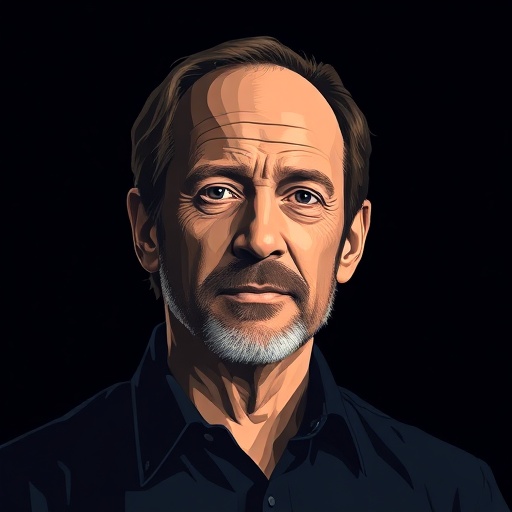
Tim Berners-Lee — "The web is a tool for creativity, for innovation, for change."
The web is a tool for creativity, for innovation, for change.
The web is a tool for creativity, for innovation, for change.
Click any product to generate a realistic preview. Up to 3 at a time.
* Initial load can take up to 90 seconds — revising the preview in another color is nearly instant.
"The web is a public resource, and it needs to be protected."
"The web is more a social creation than a technical one."
"I'm worried about the fragmentation of the web, the way it's being broken up into different services."
"We must ensure that the web remains open and accessible to all."
"We need to break up the monopolies that control the web. They are too powerful."
British computer scientist who invented the World Wide Web at CERN in 1989 and founded the W3C, championing open web standards. Closely associated with Vint Cerf (TCP/IP co-creator and 'father of the internet') and Marc Andreessen (Mosaic browser creator and Netscape co-founder). For an intellectual contrast, see Mark Zuckerberg, Facebook (Meta) founder — Zuckerberg's walled-garden Facebook is the canonical contemporary opposite of Berners-Lee's open-web vision; Berners-Lee's Solid project and 'recapture the web' essays are explicitly written as a rebuttal to the platform-monopoly model Facebook pioneered.
Found in 1 providers: grok
1 source checked
The web isn't just a way to look things up or send messages. It's a space where people build new things, try new ideas, and reshape how society works. Treating it as a passive medium underestimates it. Its real value is in giving anyone the power to make, publish, and transform, turning ordinary users into creators and reformers who can push culture, business, and politics in new directions.
Berners-Lee built the Web at CERN in 1989 and gave it away royalty-free in 1993, refusing to patent HTTP, HTML, or URLs. That choice was driven by a belief that open infrastructure sparks creativity. Through the W3C and later the Solid project and Contract for the Web, he has fought to keep the platform generative rather than locked down by corporations, reflecting exactly the creative, change-making role he describes.
When Berners-Lee proposed the Web, information was trapped in incompatible systems and mainframes run by specialists. The 1990s dot-com surge, open-source movement, and Wikipedia proved his point, letting garage startups challenge giants and letting citizens publish without gatekeepers. By the 2010s social platforms and mobile access accelerated protest movements, remix culture, and citizen journalism, making the web's role as an engine of innovation and social change unmistakable.
AI-generated insights based on extensive research and information for context. Factual errors? Email [email protected].
Your cart is empty