Tim Berners-Lee — "I'm worried about the fragmentation of the web, the way it's being broken up int…"
I'm worried about the fragmentation of the web, the way it's being broken up into different services.
I'm worried about the fragmentation of the web, the way it's being broken up into different services.
Click any product to generate a realistic preview. Up to 3 at a time.
* Initial load can take up to 90 seconds — revising the preview in another color is nearly instant.
"The web is under attack from governments and corporations. We need to fight back."
"Solid is a platform that will allow users to store their data in a personal online data store, and then grant access to that data to different applications."
"I don't think I'm a visionary. I just saw a problem and tried to solve it."
"The web was designed to be a decentralized platform, but it has become increasingly centralized. This is a problem."
"I wanted the web to be a universal space, but I didn’t expect it to become so commercialized."
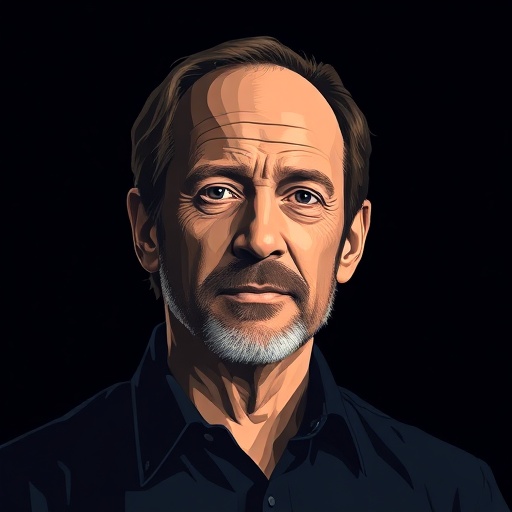
British computer scientist who invented the World Wide Web at CERN in 1989 and founded the W3C, championing open web standards. Closely associated with Vint Cerf (TCP/IP co-creator and 'father of the internet') and Marc Andreessen (Mosaic browser creator and Netscape co-founder). For an intellectual contrast, see Mark Zuckerberg, Facebook (Meta) founder — Zuckerberg's walled-garden Facebook is the canonical contemporary opposite of Berners-Lee's open-web vision; Berners-Lee's Solid project and 'recapture the web' essays are explicitly written as a rebuttal to the platform-monopoly model Facebook pioneered.
Found in 1 providers: grok
1 source checked
The web was originally designed as one open, interconnected space where any page could link to any other. This statement expresses concern that it is increasingly splitting into walled-off platforms, apps, and proprietary ecosystems that don't share data or links freely. Instead of a single universal network, users hop between isolated services like social media silos, streaming apps, and gated content, losing the seamless connectivity that made the web powerful.
Berners-Lee invented the World Wide Web in 1989 at CERN, deliberately giving away the protocols royalty-free to keep it open and universal. He founded the W3C to maintain open standards and later launched the Solid project and the Contract for the Web to fight centralization. Watching corporate platforms enclose what he built as a public commons strikes at his foundational principle: a single, decentralized, interoperable information space accessible to everyone.
By the 2010s and 2020s, a handful of giants—Facebook, Google, Apple, Amazon—captured most online activity inside closed apps and algorithmic feeds. Mobile shifted users from open browsers to proprietary apps, hyperlinks decayed, and data lived behind login walls. Cambridge Analytica, platform deplatforming debates, and AI scraping intensified worry about gatekeepers. Movements around data sovereignty, the fediverse, Mastodon, and decentralized protocols emerged precisely as a counterweight to the consolidation Berners-Lee was warning against.
AI-generated insights based on extensive research and information for context. Factual errors? Email [email protected].
Your cart is empty