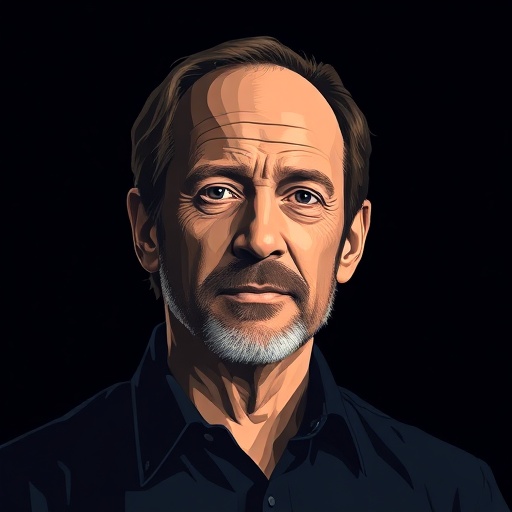
Tim Berners-Lee — "The web is a tool for empowerment. It gives a voice to the voiceless."
The web is a tool for empowerment. It gives a voice to the voiceless.
The web is a tool for empowerment. It gives a voice to the voiceless.
Click any product to generate a realistic preview. Up to 3 at a time.
* Initial load can take up to 90 seconds — revising the preview in another color is nearly instant.
"Surveillance is a threat to democracy."
"The web is a platform for innovation."
"The web is too important to be left in the hands of a few powerful companies. We need to democratize it."
"The Web does not just connect machines, it connects people."
"I’m not happy with the way some companies use the web to exploit people."
British computer scientist who invented the World Wide Web at CERN in 1989 and founded the W3C, championing open web standards. Closely associated with Vint Cerf (TCP/IP co-creator and 'father of the internet') and Marc Andreessen (Mosaic browser creator and Netscape co-founder). For an intellectual contrast, see Mark Zuckerberg, Facebook (Meta) founder — Zuckerberg's walled-garden Facebook is the canonical contemporary opposite of Berners-Lee's open-web vision; Berners-Lee's Solid project and 'recapture the web' essays are explicitly written as a rebuttal to the platform-monopoly model Facebook pioneered.
Found in 1 providers: grok
1 source checked
The internet acts as a leveling force, giving ordinary people — those historically ignored by mainstream media, governments, or powerful institutions — the ability to speak, share, organize, and be heard on equal footing with anyone else. Access to a platform is no longer gatekept by wealth, status, or geography.
Berners-Lee invented the Web in 1989 at CERN, deliberately making it royalty-free so no single entity could own it. He consistently championed open access, co-founding the World Wide Web Consortium and later the Web Foundation to fight digital inequality. This quote reflects his founding conviction that the Web belong to humanity, not corporations.
Berners-Lee built the Web during the early 1990s Cold War aftermath, when information was still controlled by broadcast media and state institutions. The mid-90s internet explosion coincided with pro-democracy movements globally. For activists, dissidents, and marginalized communities, suddenly having a global publishing platform without gatekeepers was historically unprecedented and politically transformative.
AI-generated insights based on extensive research and information for context. Factual errors? Email [email protected].
Your cart is empty