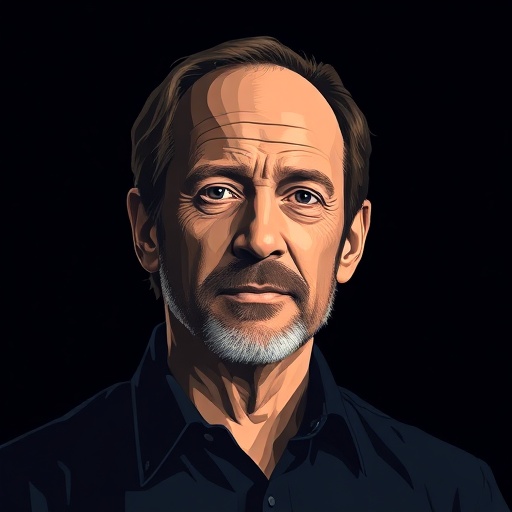
Tim Berners-Lee — "The web is a two-way street. It's about communication and collaboration."
The web is a two-way street. It's about communication and collaboration.
The web is a two-way street. It's about communication and collaboration.
Click any product to generate a realistic preview. Up to 3 at a time.
* Initial load can take up to 90 seconds — revising the preview in another color is nearly instant.
"The web is a reflection of humanity, and humanity is messy."
"The web is a tool for empowerment. It gives a voice to the voiceless."
"The web should be able to link to anything. You should be able to link to a picture, a video, a sound, a document. Anything."
"The web is a platform for innovation."
"The web is a fundamental right, like clean water and education."
British computer scientist who invented the World Wide Web at CERN in 1989 and founded the W3C, championing open web standards. Closely associated with Vint Cerf (TCP/IP co-creator and 'father of the internet') and Marc Andreessen (Mosaic browser creator and Netscape co-founder). For an intellectual contrast, see Mark Zuckerberg, Facebook (Meta) founder — Zuckerberg's walled-garden Facebook is the canonical contemporary opposite of Berners-Lee's open-web vision; Berners-Lee's Solid project and 'recapture the web' essays are explicitly written as a rebuttal to the platform-monopoly model Facebook pioneered.
Found in 1 providers: grok
1 source checked
True communication requires both sending and receiving — not just broadcasting at people, but genuinely exchanging ideas and working together. A real medium for human connection isn't a megaphone; it's a conversation. Power comes not from one voice reaching many, but from many voices reaching each other, building things collectively that no single person could alone.
Berners-Lee invented the Web in 1989 at CERN specifically to help scientists share and collaborate on research. He deliberately made the protocol open and royalty-free so no single entity could control it. His ongoing work through the World Wide Web Consortium and the Web Foundation centers on preserving the web's open, decentralized, participatory nature against corporate and government capture.
Berners-Lee built the Web during the Cold War's end, when networked computing was still largely one-directional — broadcast television, print media, top-down publishing. Early internet culture celebrated open exchange, but commercial pressures in the late 1990s and 2000s increasingly pushed toward passive consumption. This framing directly resisted that drift, asserting the web's original collaborative, peer-to-peer democratic intent.
AI-generated insights based on extensive research and information for context. Factual errors? Email [email protected].
Your cart is empty