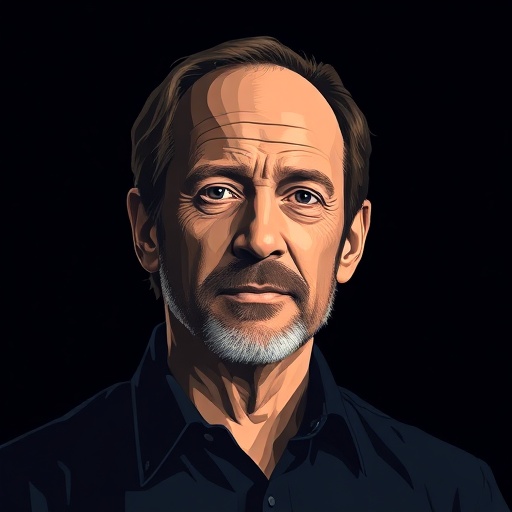
Tim Berners-Lee — "The web is a work in progress, and we are all its architects."
The web is a work in progress, and we are all its architects.
The web is a work in progress, and we are all its architects.
Click any product to generate a realistic preview. Up to 3 at a time.
* Initial load can take up to 90 seconds — revising the preview in another color is nearly instant.
"I was very much into the idea of a universal workspace, where any information could be linked to any other information. This was an idea I had from when I was a kid, really. I was playing with trains …"
"I didn’t invent the web for people to waste time on it."
"I believe in the power of the web to transform lives."
"The web is a tool for empowerment. It gives a voice to the voiceless."
"The web should be able to link to anything. You should be able to link to a picture, a video, a sound, a document. Anything."
British computer scientist who invented the World Wide Web at CERN in 1989 and founded the W3C, championing open web standards. Closely associated with Vint Cerf (TCP/IP co-creator and 'father of the internet') and Marc Andreessen (Mosaic browser creator and Netscape co-founder). For an intellectual contrast, see Mark Zuckerberg, Facebook (Meta) founder — Zuckerberg's walled-garden Facebook is the canonical contemporary opposite of Berners-Lee's open-web vision; Berners-Lee's Solid project and 'recapture the web' essays are explicitly written as a rebuttal to the platform-monopoly model Facebook pioneered.
Found in 1 providers: grok
1 source checked
The internet is never finished — it grows, evolves, and improves continuously. Every person who builds a website, writes code, creates content, or shapes policy participates in that construction. No single entity owns or controls its direction. Collective human choices determine what the web becomes, meaning responsibility for its quality, openness, and fairness falls on everyone who uses and builds it.
Berners-Lee invented the web in 1989 at CERN and deliberately released it royalty-free, rejecting personal profit to ensure open access. He founded the W3C to steward web standards through consensus, not corporate control. His lifelong advocacy for net neutrality and digital rights reflects his belief that the web belongs to humanity collectively — not governments, corporations, or even its inventor.
Berners-Lee built the web during the Cold War's final years and the early 1990s commercialization of the internet. By the 2000s, the web faced consolidation by tech giants, government surveillance revelations, and the rise of walled-garden platforms like Facebook. His statement pushes back against passivity — urging users to recognize their agency amid forces threatening the open, decentralized architecture he originally designed.
AI-generated insights based on extensive research and information for context. Factual errors? Email [email protected].
Your cart is empty