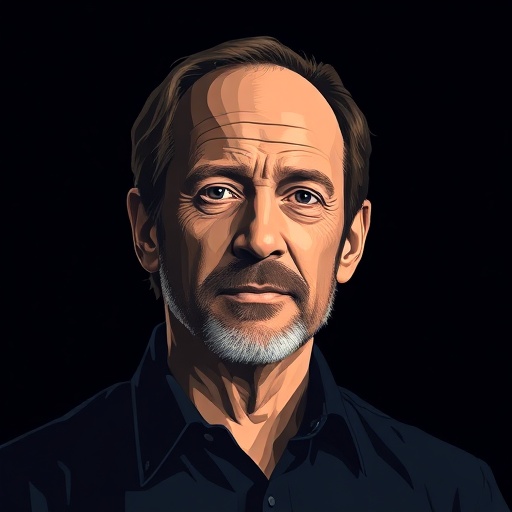
Tim Berners-Lee — "The web is a global public good. We need to protect it."
The web is a global public good. We need to protect it.
The web is a global public good. We need to protect it.
Click any product to generate a realistic preview. Up to 3 at a time.
* Initial load can take up to 90 seconds — revising the preview in another color is nearly instant.
"Solid is a platform that will allow users to store their data in a personal online data store, and then grant access to that data to different applications."
"We need to fight for the right to privacy online. It's a fundamental human right."
"The web is a tool for empowerment. It gives a voice to the voiceless."
"I'm still optimistic about the future of the web. I believe we can fix it."
"The web is a tool for empowerment, but it can also be used for oppression."
British computer scientist who invented the World Wide Web at CERN in 1989 and founded the W3C, championing open web standards. Closely associated with Vint Cerf (TCP/IP co-creator and 'father of the internet') and Marc Andreessen (Mosaic browser creator and Netscape co-founder). For an intellectual contrast, see Mark Zuckerberg, Facebook (Meta) founder — Zuckerberg's walled-garden Facebook is the canonical contemporary opposite of Berners-Lee's open-web vision; Berners-Lee's Solid project and 'recapture the web' essays are explicitly written as a rebuttal to the platform-monopoly model Facebook pioneered.
Found in 1 providers: grok
1 source checked
The internet belongs to everyone, not to corporations or governments. Keeping it open, neutral, and accessible requires active effort—it won't stay that way by default. People must push back against surveillance, monopolization, censorship, and paywalls that fragment or weaponize what was built as a shared commons for human knowledge and communication.
Berners-Lee invented the Web in 1989 and deliberately gave it away for free, refusing to patent it. He founded the World Wide Web Consortium and later the Web Foundation to defend openness. Watching corporations monetize and governments censor his creation drove him to campaign for a digital Bill of Rights and later the Contract for the Web.
Berners-Lee issued this warning as surveillance capitalism matured—Facebook's Cambridge Analytica scandal broke in 2018, GDPR passed in Europe, net neutrality was gutted in the US, and authoritarian states built national internet firewalls. The open web he envisioned was fragmenting into walled gardens, making his call to protect it urgent and politically charged.
AI-generated insights based on extensive research and information for context. Factual errors? Email [email protected].
Your cart is empty