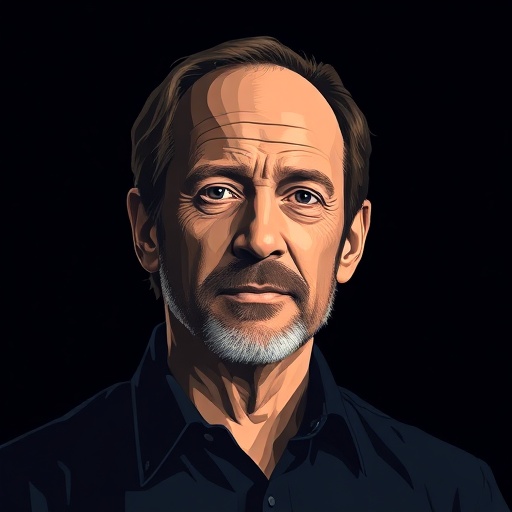
Tim Berners-Lee — "The web is not just for the rich; it's for everyone, everywhere."
The web is not just for the rich; it's for everyone, everywhere.
The web is not just for the rich; it's for everyone, everywhere.
Click any product to generate a realistic preview. Up to 3 at a time.
* Initial load can take up to 90 seconds — revising the preview in another color is nearly instant.
"The power of the Web is in its universality. Access by everyone regardless of disability is an essential aspect."
"The web is a reflection of humanity. It can be beautiful, and it can be ugly."
"I was devastated when I saw how the web was being misused."
"The web is a tool for empowerment, but it can also be used for oppression."
"The web is not a toy, it’s a tool for change."
British computer scientist who invented the World Wide Web at CERN in 1989 and founded the W3C, championing open web standards. Closely associated with Vint Cerf (TCP/IP co-creator and 'father of the internet') and Marc Andreessen (Mosaic browser creator and Netscape co-founder). For an intellectual contrast, see Mark Zuckerberg, Facebook (Meta) founder — Zuckerberg's walled-garden Facebook is the canonical contemporary opposite of Berners-Lee's open-web vision; Berners-Lee's Solid project and 'recapture the web' essays are explicitly written as a rebuttal to the platform-monopoly model Facebook pioneered.
Found in 1 providers: grok
1 source checked
Access to the web should not be a privilege reserved for wealthy people or developed nations. It belongs to all of humanity, regardless of income, geography, language, or background. The internet's value comes from being a shared, universal resource that every person can reach, contribute to, and benefit from. Excluding anyone weakens the whole system and betrays the medium's fundamental purpose as a global commons.
Berners-Lee invented the World Wide Web in 1989 at CERN and gave it away royalty-free, refusing to patent or monetize it. He founded the World Wide Web Consortium to keep open standards, launched the World Wide Web Foundation to close the digital divide, and started the Solid project to return data ownership to users. His Contract for the Web explicitly demands universal, affordable access as a human right.
When Berners-Lee released the web in 1991, fewer than 3 million people were online, mostly Western academics and military researchers. Throughout his career, the digital divide widened as broadband enriched developed nations while billions in the Global South remained offline. Surveillance capitalism, walled-garden platforms, telecom monopolies, and government censorship threatened the open web he envisioned, prompting his ongoing advocacy for net neutrality, affordable connectivity, and user-controlled data.
AI-generated insights based on extensive research and information for context. Factual errors? Email [email protected].
Your cart is empty