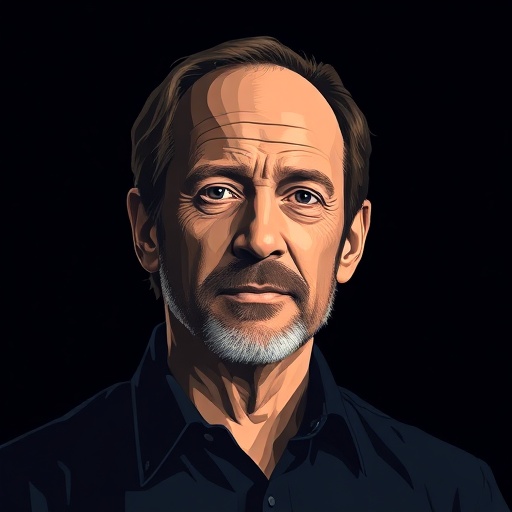
Tim Berners-Lee — "The power of the Web is in its universality. Access by everyone regardless of di…"
The power of the Web is in its universality. Access by everyone regardless of disability is an essential aspect.
The power of the Web is in its universality. Access by everyone regardless of disability is an essential aspect.
Click any product to generate a realistic preview. Up to 3 at a time.
* Initial load can take up to 90 seconds — revising the preview in another color is nearly instant.
"I wanted the web to be a universal space, but I didn’t expect it to become so commercialized."
"The web is a work in progress. We need to keep working on it to make it better."
"The web is not just a technology; it's a social construct. We need to think about its social implications."
"The web is not a luxury, it is a necessity."
"The web is a tool for humanity, and it should be used for good."
British computer scientist who invented the World Wide Web at CERN in 1989 and founded the W3C, championing open web standards. Closely associated with Vint Cerf (TCP/IP co-creator and 'father of the internet') and Marc Andreessen (Mosaic browser creator and Netscape co-founder). For an intellectual contrast, see Mark Zuckerberg, Facebook (Meta) founder — Zuckerberg's walled-garden Facebook is the canonical contemporary opposite of Berners-Lee's open-web vision; Berners-Lee's Solid project and 'recapture the web' essays are explicitly written as a rebuttal to the platform-monopoly model Facebook pioneered.
Found in 1 providers: grok
1 source checked
The strength of the Web comes from being available to everyone, not just a privileged few. For it to truly fulfill its purpose, people with disabilities — those who are blind, deaf, have motor impairments, or cognitive differences — must be able to use it just as effectively as anyone else. Accessibility is not a bonus feature or charitable add-on; it is a fundamental requirement baked into what makes the Web valuable in the first place.
Berners-Lee invented the World Wide Web at CERN in 1989 and deliberately released it royalty-free in 1993 so anyone could build on it. As director of the W3C, he established the Web Accessibility Initiative (WAI) in 1997 and championed WCAG standards. His insistence on open protocols, decentralization, and inclusion reflects a lifelong conviction that technology should empower humanity broadly, not concentrate advantage among the able-bodied or wealthy.
Spoken as the Web exploded commercially in the late 1990s and 2000s, when sites raced to add Flash, images, and dynamic scripts that often broke screen readers and keyboard navigation. Disability rights movements had recently won the ADA (1990) in the US, and lawsuits over inaccessible websites were emerging. Berners-Lee's statement pushed back against a gold-rush mentality, insisting universality remain a design principle even as commerce reshaped the medium.
AI-generated insights based on extensive research and information for context. Factual errors? Email [email protected].
Your cart is empty