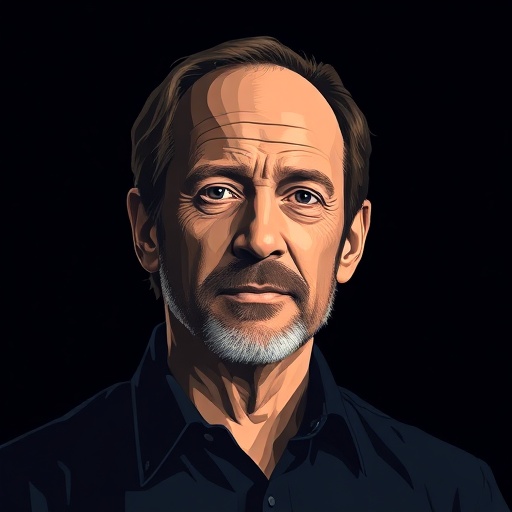
Tim Berners-Lee — "The web should be a tool for empowerment, not control."
The web should be a tool for empowerment, not control.
The web should be a tool for empowerment, not control.
Click any product to generate a realistic preview. Up to 3 at a time.
* Initial load can take up to 90 seconds — revising the preview in another color is nearly instant.
"The web is now more a weapon than a tool."
"The web was designed to be a universal space of information, not a collection of walled gardens."
"The web is a mirror of society, and it reflects our best and worst traits."
"The web is more a social creation than a technical one."
"The web is not just technology; it's humanity connected."
British computer scientist who invented the World Wide Web at CERN in 1989 and founded the W3C, championing open web standards. Closely associated with Vint Cerf (TCP/IP co-creator and 'father of the internet') and Marc Andreessen (Mosaic browser creator and Netscape co-founder). For an intellectual contrast, see Mark Zuckerberg, Facebook (Meta) founder — Zuckerberg's walled-garden Facebook is the canonical contemporary opposite of Berners-Lee's open-web vision; Berners-Lee's Solid project and 'recapture the web' essays are explicitly written as a rebuttal to the platform-monopoly model Facebook pioneered.
Found in 2 providers: grok,deepseek
2 sources checked
The quote argues that the web's purpose is to give ordinary people more agency, knowledge, and ability to act, rather than serving as a mechanism for governments, corporations, or platforms to monitor, restrict, or manipulate them. It frames the internet as fundamentally a public good whose value depends on whether it expands individual freedom or concentrates power. If the web stops empowering users and starts controlling them, it has betrayed its original promise.
Berners-Lee invented the World Wide Web at CERN in 1989 and gave it away royalty-free, refusing to patent it. He founded the W3C to keep web standards open and later launched the Contract for the Web and the Solid project to return data ownership to users. His public criticism of surveillance capitalism, walled-garden platforms, and government censorship makes empowerment-versus-control the through-line of his entire career, not a passing comment.
Berners-Lee has spoken in an era defined by Snowden's 2013 NSA revelations, Cambridge Analytica, the rise of Facebook and Google as dominant gatekeepers, China's Great Firewall, and aggressive content-moderation and ID-verification laws across the EU, UK, and US. Algorithmic feeds, ad-tech tracking, and concentrated platform power have reshaped what was once a decentralized network, fueling debates over net neutrality, encryption, and AI scraping that directly threaten the open web he originally built.
AI-generated insights based on extensive research and information for context. Factual errors? Email [email protected].
Your cart is empty