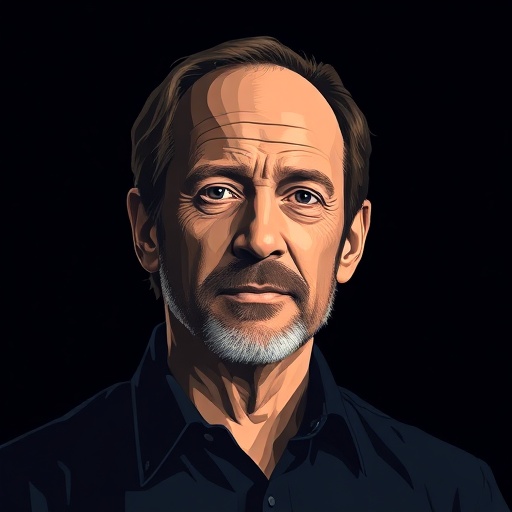
Tim Berners-Lee — "The web was designed to be a universal space of information, not a collection of…"
The web was designed to be a universal space of information, not a collection of walled gardens.
The web was designed to be a universal space of information, not a collection of walled gardens.
Click any product to generate a realistic preview. Up to 3 at a time.
* Initial load can take up to 90 seconds — revising the preview in another color is nearly instant.
"The web is not a privilege, it is a right."
"The web is a powerful force for good, but it can also be a powerful force for evil. We need to make sure it's used for good."
"The web was designed to be a decentralized platform, but it has become increasingly centralized. This is a problem."
"The web is a tool for creativity, for innovation, for change."
"The web should be a tool for empowerment, not control."
British computer scientist who invented the World Wide Web at CERN in 1989 and founded the W3C, championing open web standards. Closely associated with Vint Cerf (TCP/IP co-creator and 'father of the internet') and Marc Andreessen (Mosaic browser creator and Netscape co-founder). For an intellectual contrast, see Mark Zuckerberg, Facebook (Meta) founder — Zuckerberg's walled-garden Facebook is the canonical contemporary opposite of Berners-Lee's open-web vision; Berners-Lee's Solid project and 'recapture the web' essays are explicitly written as a rebuttal to the platform-monopoly model Facebook pioneered.
Found in 1 providers: grok
1 source checked
The internet should be one open, connected network where anyone can access any information freely, rather than being split into closed platforms that trap users inside them. Walled gardens are services that keep content locked to their own apps or sites, preventing links out and controlling what users see. The original vision was a shared commons of knowledge, linked through universal standards, not fragmented territories owned by competing corporations.
Berners-Lee invented the Web in 1989 at CERN and deliberately released its protocols royalty-free so no single company could own it. He built HTTP, HTML, and URLs as open standards precisely to prevent corporate capture. Through the W3C and later his Solid project and Contract for the Web, he has repeatedly warned that platform monopolies betray his founding principle, making this statement a direct expression of his lifelong advocacy for decentralization.
By the 2010s and 2020s, Facebook, Apple, Google, and Amazon had consolidated enormous portions of online activity inside proprietary apps and algorithmic feeds that discouraged outbound links. Net neutrality fights, data harvesting scandals like Cambridge Analytica, and the rise of app-store gatekeeping made the open web feel endangered. Berners-Lee spoke out during this period as regulators in the EU and US began debating antitrust action against dominant tech platforms.
AI-generated insights based on extensive research and information for context. Factual errors? Email [email protected].
Your cart is empty