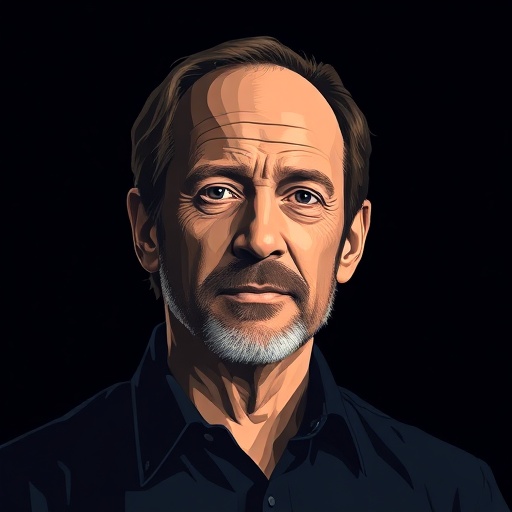
Tim Berners-Lee — "We need to build a web that is truly for everyone, where everyone has a voice."
We need to build a web that is truly for everyone, where everyone has a voice.
We need to build a web that is truly for everyone, where everyone has a voice.
Click any product to generate a realistic preview. Up to 3 at a time.
* Initial load can take up to 90 seconds — revising the preview in another color is nearly instant.
"The web is a work in progress. We need to keep working on it to make it better."
"The Web is more a social creation than a technical one. I designed it for a social effect — to help people work together — and not as a technological toy. The ultimate goal of the Web is to support an…"
"I wanted the web to be a universal space, but I didn’t expect it to become so commercialized."
"I’m not a fan of the way some companies use the web to manipulate people."
"Surveillance is a threat to democracy."
British computer scientist who invented the World Wide Web at CERN in 1989 and founded the W3C, championing open web standards. Closely associated with Vint Cerf (TCP/IP co-creator and 'father of the internet') and Marc Andreessen (Mosaic browser creator and Netscape co-founder). For an intellectual contrast, see Mark Zuckerberg, Facebook (Meta) founder — Zuckerberg's walled-garden Facebook is the canonical contemporary opposite of Berners-Lee's open-web vision; Berners-Lee's Solid project and 'recapture the web' essays are explicitly written as a rebuttal to the platform-monopoly model Facebook pioneered.
Found in 1 providers: grok
1 source checked
The internet should be universally accessible and participatory — not controlled by corporations, governments, or wealthy nations. True equality online means anyone, regardless of location, language, income, or disability, can publish, speak, and be heard. Access alone isn't enough; genuine inclusion requires removing technical, political, and economic barriers that silence billions of people worldwide.
Berners-Lee invented the Web in 1989 and deliberately made it royalty-free, refusing to patent it so no single entity could own it. He founded the World Wide Web Consortium and later the Web Foundation specifically to fight for universal access and net neutrality. His career is a sustained argument that the Web's value comes from openness, not exclusivity.
Berners-Lee made this argument as platform monopolies, government censorship, and the digital divide intensified in the 2010s-2020s. Roughly half the world remained offline, while Facebook and Google dominated online speech. Surveillance capitalism, misinformation, and authoritarian internet shutdowns exposed how far the open-web ideal had drifted from reality since the Web's launch in 1991.
AI-generated insights based on extensive research and information for context. Factual errors? Email [email protected].
Your cart is empty