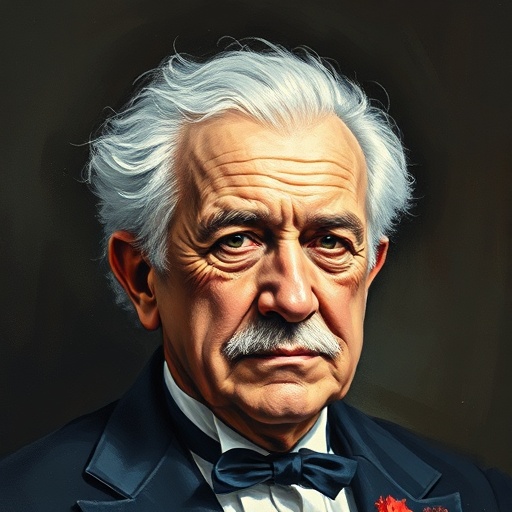
Thomas Edison — "The world is full of people who are always waiting for someone else to do someth…"
The world is full of people who are always waiting for someone else to do something about their problems.
The world is full of people who are always waiting for someone else to do something about their problems.
Click any product to generate a realistic preview. Up to 3 at a time.
* Initial load can take up to 90 seconds — revising the preview in another color is nearly instant.
"I make more mistakes than anyone I know, and sooner or later, I patent them all."
"My life has been a series of experiments."
"I have friends in the electrical industry who would be very happy to see me dead."
"I have friends in the other world. I have had very pleasant conversations with them. I am rather unorthodox in this matter. I believe that they are still alive and that we can communicate with them."
"The chief function of the body is to carry the brain around."
Found in 1 providers: grok
1 source checked
Most people complain about their circumstances but expect others to fix things for them. They sit passively, hoping a government, boss, neighbor, or stroke of luck will solve what troubles them. The quote calls out this habit of outsourcing responsibility and challenges readers to stop waiting for rescue. Progress, it suggests, belongs to those who take initiative instead of delegating their own struggles to somebody else who may never arrive.
Edison built his career on relentless self-driven effort, famously testing thousands of filament materials before landing on one that worked for the light bulb. He founded his own Menlo Park laboratory rather than waiting for patrons, filed over 1,000 patents, and treated failure as iteration. This saying mirrors his trademark grit: genius as ninety-nine percent perspiration. He had little patience for passive thinkers and built an empire by acting on problems others merely described.
Edison worked during the late 1800s and early 1900s, a period of explosive American industrialization, urbanization, and self-made-man mythology. Electrification, railroads, and mass production were reshaping daily life, and inventors like Edison, Bell, and Ford were celebrated as heroes of individual initiative. The Gilded Age prized hustle, entrepreneurship, and Horatio Alger bootstrap narratives. Against that backdrop, complaining without acting seemed almost un-American, and Edison's jab at passive people fit squarely within the era's worship of personal enterprise.
AI-generated insights based on extensive research and information for context. Factual errors? Email [email protected].
Your cart is empty