What it means
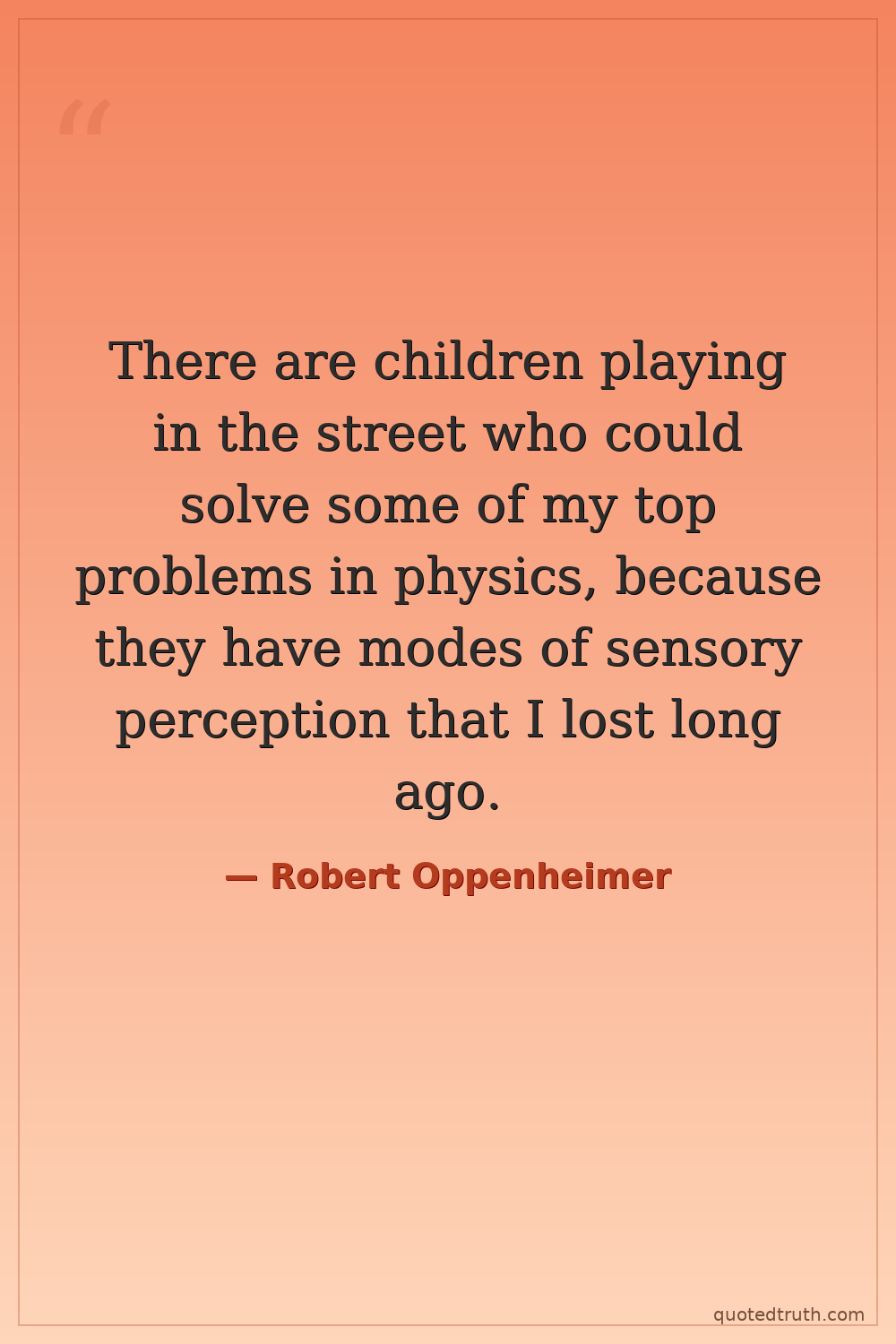
Children possess an intuitive, unfiltered way of perceiving and interacting with the world that adults lose through education and specialization. Oppenheimer suggests that raw, sensory-based curiosity and openness can unlock insights that years of formal training actually obscure. Deep expertise creates mental rigidity, while children approach problems with fresh eyes, unbound by entrenched assumptions or inherited frameworks that constrain how questions are even asked.
Relevance to Robert Oppenheimer
Oppenheimer led the Manhattan Project, creating the first atomic bomb, but was equally known for philosophical breadth—reading Sanskrit, quoting Hindu scripture after Trinity's test. He later lamented the destruction his physics enabled. This quote reflects his recurring self-examination about knowledge's limits and costs. After his 1954 security clearance hearing stripped his status, he understood firsthand how institutional power punishes minds that perceive beyond narrow, approved frameworks.
The era
Oppenheimer worked during the Cold War's dawn, when quantum mechanics had already dismantled classical physics, demanding scientists abandon intuitive perception for abstract mathematics. The Manhattan Project era saw hyper-specialization overtake science, and Hiroshima forced physicists to confront the moral weight of their work. McCarthyism then targeted unconventional thinkers. In this climate—where expertise meant narrowing perception—his longing for a child's unencumbered sensory openness carried profound weight.
AI-generated insights based on extensive research and information for context. Factual errors? Email [email protected].