Hippocrates — "There are in fact two things, science and opinion; the former begets knowledge, …"
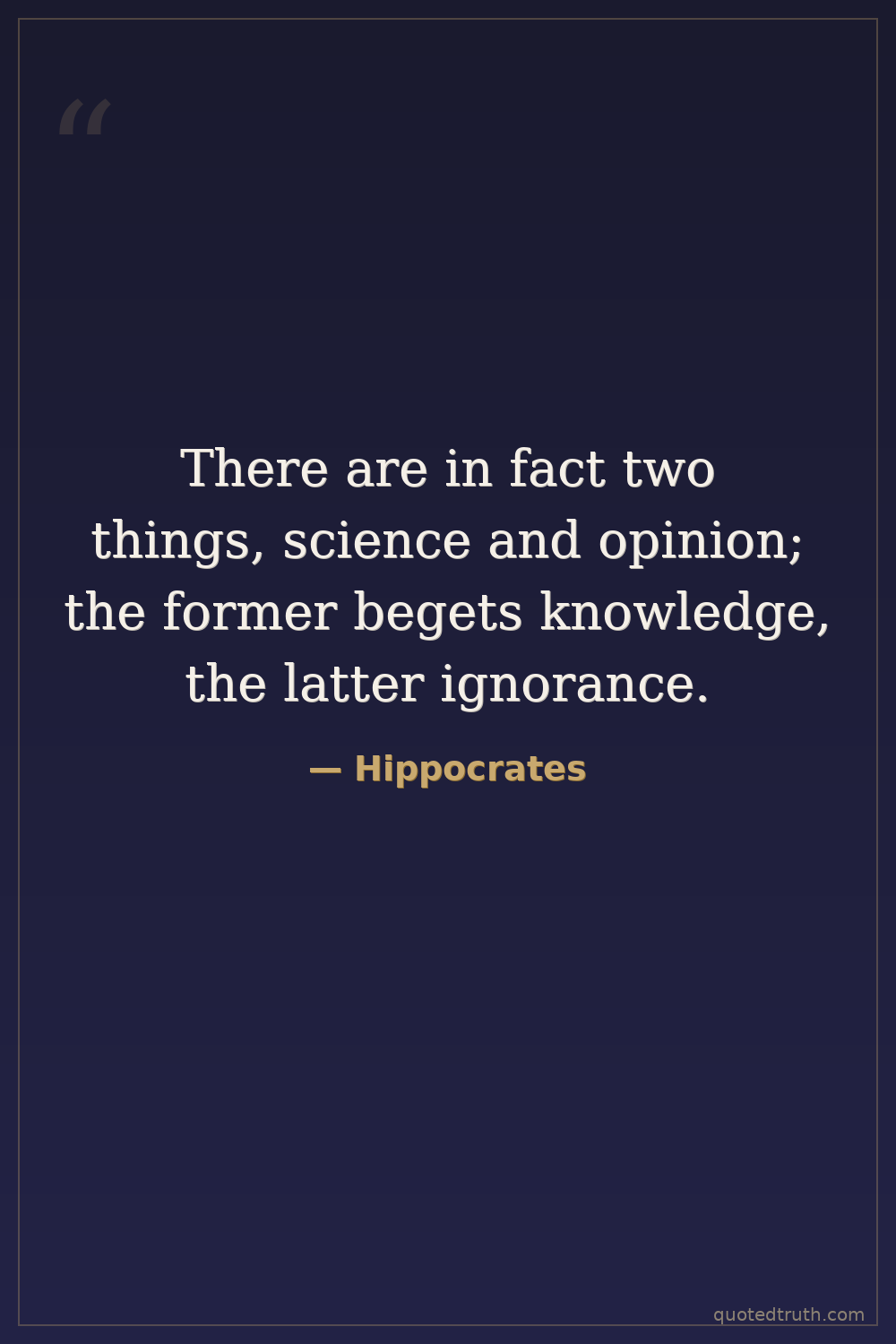
There are in fact two things, science and opinion; the former begets knowledge, the latter ignorance.
There are in fact two things, science and opinion; the former begets knowledge, the latter ignorance.
Click any product to generate a realistic preview. Up to 3 at a time.
* Initial load can take up to 90 seconds — revising the preview in another color is nearly instant.
"Everything in excess is opposed to nature."
"Conclusions which are merely verbal cannot bear fruit, only those do which are based on demonstrated fact. For affirmation and talk are deceptive and treacherous. Wherefore one must hold fast to facts…"
"The physician treats, but nature heals."
"Into whatsoever houses I enter, I will go into them for the benefit of the sick, and will abstain from every voluntary act of mischief and corruption."
"The way to health is to have an aromatic bath and a scented massage every day."
From 'Precepts', distinguishing empirical knowledge from mere belief.
Date: c. 5th Century BCE
PhilosophicalFound in 1 providers: gemini
1 source checked
Knowledge and belief are fundamentally different. Science involves rigorous observation and reasoning that produces genuine understanding. Opinion is merely assumption or guesswork, which breeds ignorance by masquerading as knowledge. Accepting unexamined beliefs as truth leaves you more confused than if you knew nothing at all. Real understanding requires systematic inquiry, not inherited assumptions or popular consensus.
Hippocrates built medicine on observable evidence rather than supernatural explanation. He rejected the prevailing view that illness was divine punishment, insisting physicians must observe symptoms, document patterns, and reason from evidence. This quote captures his foundational commitment: medicine advances only through disciplined inquiry, not inherited folklore or priestly pronouncement about the body.
In ancient Greece, disease was routinely attributed to gods, demons, or cosmic imbalance. Temple priests and religious healers dominated medical practice. Hippocrates worked during the 5th–4th centuries BCE when philosophy and natural inquiry were just beginning to challenge mythological explanations. His insistence on separating verified knowledge from mere opinion was a radical intellectual rebellion against centuries of superstition-based healing.
AI-generated insights based on extensive research and information for context. Factual errors? Email [email protected].
Your cart is empty