Siddhartha Gautama (Buddha) — "There are only two mistakes one can make along the road to truth; not going all …"
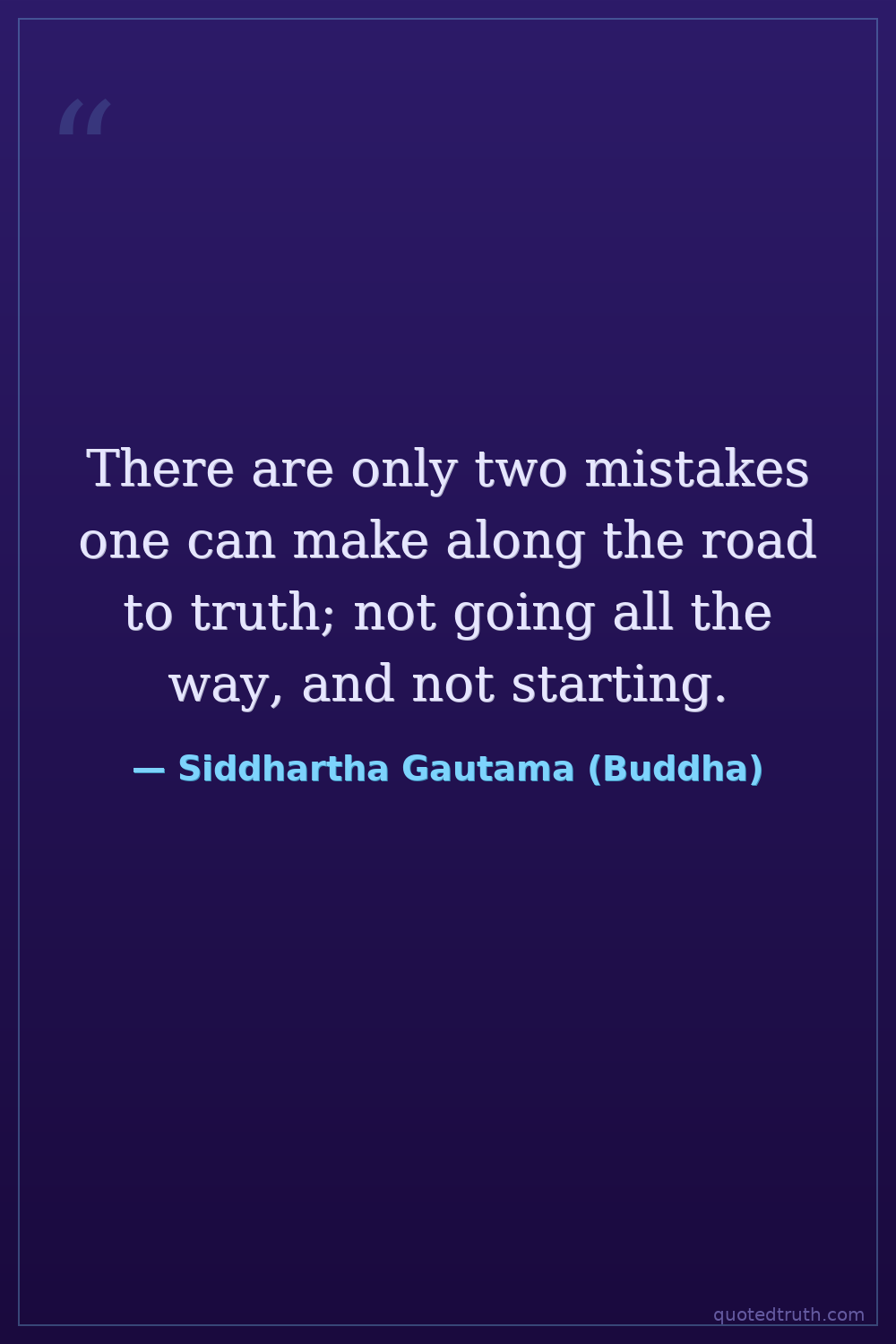
There are only two mistakes one can make along the road to truth; not going all the way, and not starting.
There are only two mistakes one can make along the road to truth; not going all the way, and not starting.
Click any product to generate a realistic preview. Up to 3 at a time.
* Initial load can take up to 90 seconds — revising the preview in another color is nearly instant.
"Whatever a monk keeps pursuing with his thinking and pondering, that becomes the inclination of his awareness."
"Perform those actions you will never regret: actions that will ripen into future joy and delight."
"Three things can not hide for long: the Moon, the Sun, and the Truth."
"Nothing can harm you as much as your own thoughts unguarded."
"Let him not despise what he has received, nor should he envy others. He who envies others does not obtain peace of mind."
Attributed, often cited in various Buddhist texts and teachings.
Date: c. 5th century BCE
WisdomFound in 1 providers: grok
1 source checked
The path to understanding truth has just two ways to fail. You can refuse to begin, staying comfortable in ignorance because starting feels too hard. Or you can start strong then stop partway, settling for half-answers when the real insight lies further on. Both failures share the same root: incomplete effort. Truth rewards those who commit fully and keep going, not those who hesitate at the threshold or quit before arrival.
Siddhartha abandoned his royal palace, wife, and son at 29 to seek truth about suffering, refusing to stop at comfortable half-answers. He tried extreme asceticism for six years, then rejected it when it failed, continuing until enlightenment under the Bodhi tree. His teaching of the Noble Eightfold Path treats awakening as a complete road, not a partial practice. The quote mirrors his own refusal to either stay home or settle for the first teacher's shallow system.
In 5th-century BCE northern India, the Shramana movement was exploding with wandering seekers challenging rigid Vedic ritualism. Dozens of competing teachers offered partial systems, and many students drifted between them without committing. Caste-bound society discouraged lower-born people from even starting a spiritual search. Siddhartha's era prized either hereditary priestly knowledge or extreme bodily austerity, and his middle-way insistence on full, personal investigation broke both molds during a volatile age of philosophical experimentation.
AI-generated insights based on extensive research and information for context. Factual errors? Email [email protected].
Your cart is empty