What it means
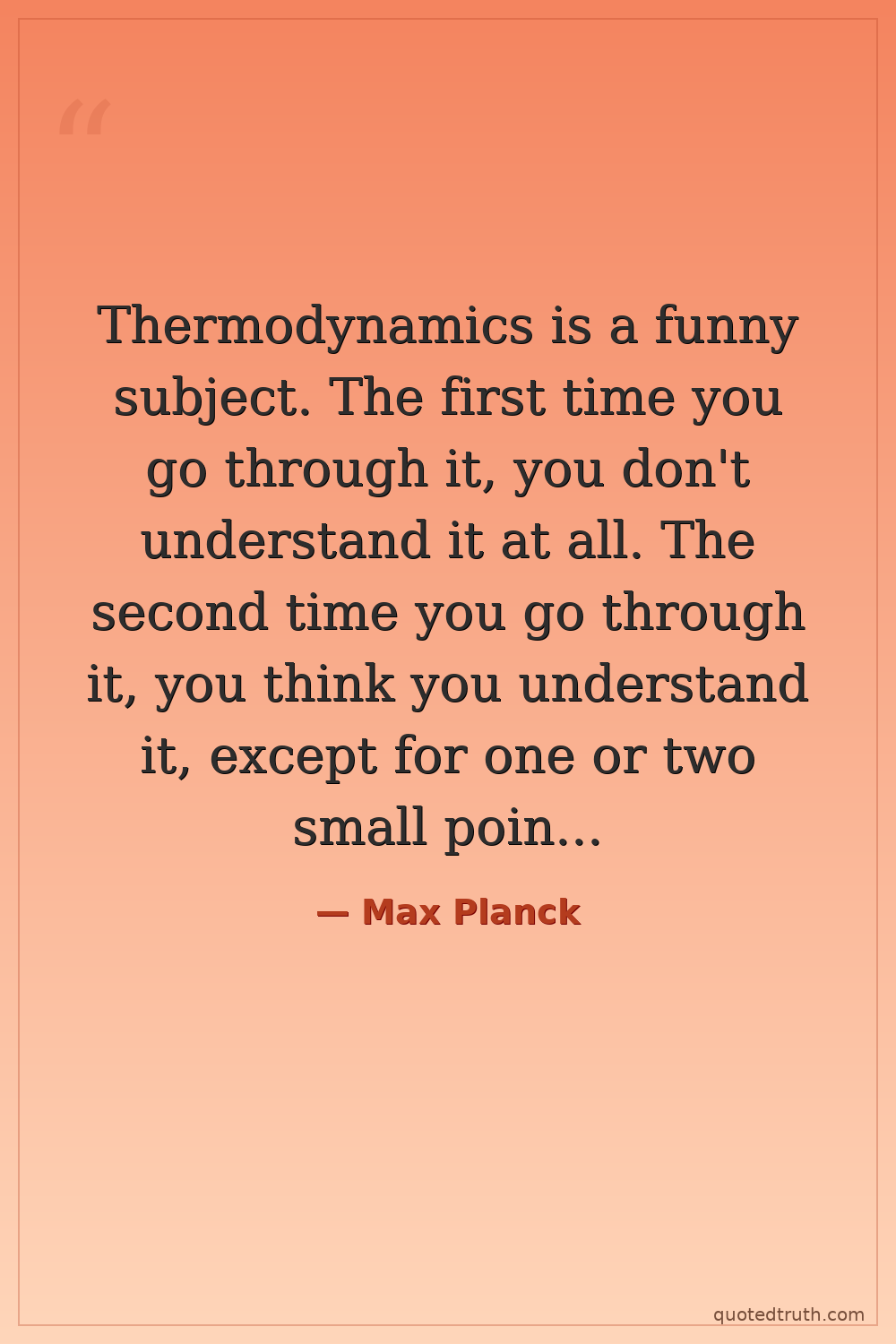
Thermodynamics is so counterintuitive that learning it happens in stages of false confidence. At first it makes no sense. Later you feel you've mastered it, aside from nagging gaps. Eventually you realize you never truly understood it, but familiarity has replaced comprehension and you've stopped worrying about the gap. Deep understanding gives way to comfortable acceptance.
Relevance to Max Planck
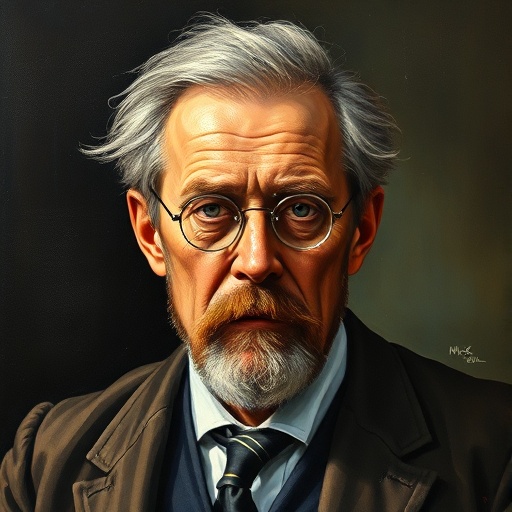
Planck spent his career wrestling with thermodynamics, which drove his 1900 black-body work and the quantum hypothesis. Trained as a thermodynamicist under Kirchhoff, he reluctantly broke classical physics to solve the ultraviolet catastrophe. His honesty about confusion matches his character: a cautious, methodical thinker who distrusted his own quantum result for years and only embraced it after Einstein and Bohr validated it.
The era
Around 1900, physics seemed nearly complete, yet thermodynamics and radiation harbored paradoxes classical mechanics couldn't resolve. Planck's era saw the old deterministic worldview crumble into quantum and relativistic physics. Universities treated thermodynamics as foundational but notoriously difficult, and entropy debates between Boltzmann, Mach, and Ostwald roiled German science. Planck's quip captures a generation of physicists confronting a subject whose statistical foundations kept shifting beneath them.
AI-generated insights based on extensive research and information for context. Factual errors? Email [email protected].