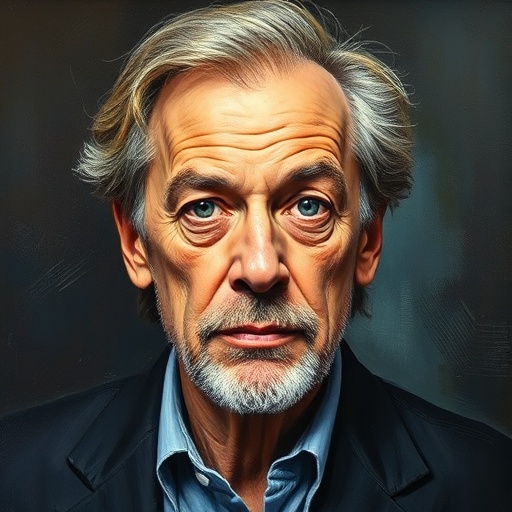
Richard Feynman — "This dying is boring."
This dying is boring.
This dying is boring.
Click any product to generate a realistic preview. Up to 3 at a time.
* Initial load can take up to 90 seconds — revising the preview in another color is nearly instant.
"Nature uses only the longest threads to weave her patterns, so each small piece of her fabric reveals the organization of the entire tapestry."
"There is no way to learn anything, except by making mistakes."
"I don't need a theory, I just want to know what the hell is going on."
"I don't know what's the matter with people: they don't learn by understanding; they learn by some other way — by rote or something. Their knowledge is so fragile!"
"If you're going to be a scientist, you don't need to be a genius. You just need to be able to work hard and be curious."
American theoretical physicist who shared the 1965 Nobel for QED, developed Feynman diagrams, and wrote the Feynman Lectures on Physics. Closely associated with Julian Schwinger (co-Nobelist for QED) and Murray Gell-Mann (Caltech rival and Eightfold-Way physicist). For an intellectual contrast, see Deepak Chopra, physician and quantum-mysticism author — Feynman's Caltech 'cargo cult science' commencement address is the precise template for what he saw as misuse of physics terminology — Chopra-style appropriation of quantum vocabulary for metaphysical claims is the canonical example of what Feynman called 'fooling yourself'.
Found in 1 providers: gemini
1 source checked
Death is dull and uninteresting — even the experience of dying itself lacks the spark and engagement that makes life worth living. The speaker refuses to grant mortality dramatic weight or poetic significance, cutting through sentimentality to note that the process is simply tedious, unremarkable, and beneath the level of intellectual stimulation they demand from existence.
Feynman reportedly said this on his deathbed, which perfectly captures his character: irreverent, anti-pretentious, allergic to false profundity. A man who decoded quantum electrodynamics and played bongo drums, who exposed the Challenger disaster with a rubber band, would naturally find the slow mechanics of dying frustratingly mundane compared to the electric engagement of solving real problems.
Feynman died in 1988, a period when physicists had recently grappled with Challenger, cold fusion controversies, and the dawn of quantum computing. American culture romanticized scientist-heroes, expecting grand final words. Feynman's dismissal of his own death as boring was a final act of intellectual honesty — rejecting the theatrical death-bed narrative Americans expected from their celebrated geniuses.
AI-generated insights based on extensive research and information for context. Factual errors? Email [email protected].
Your cart is empty