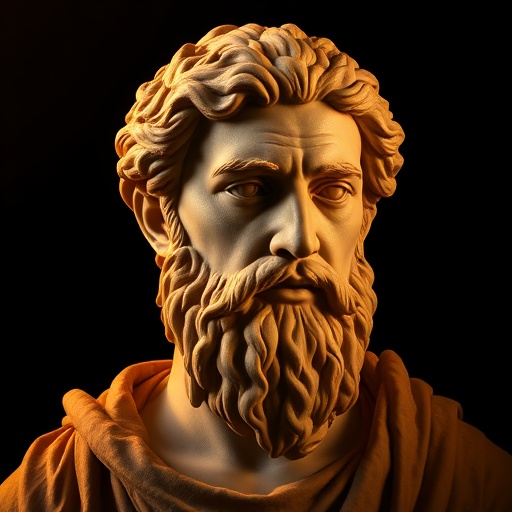
Euclid — "To construct a square on a given straight line."
To construct a square on a given straight line.
To construct a square on a given straight line.
Click any product to generate a realistic preview. Up to 3 at a time.
* Initial load can take up to 90 seconds — revising the preview in another color is nearly instant.
"A straight line is a line which lies evenly with the points on itself."
"A semicircle is the figure contained by the diameter and the circumference cut off by it. And the center of the semicircle is the same as that of the circle."
"An obtuse angle is an angle greater than a right angle."
"Let it be granted that a circle may be described with any center and any radius."
"To apply a given parallelogram to a given straight line in a given rectilinear angle."
Found in 1 providers: grok
1 source checked
Take any straight line and build a perfect square using it as one side. Using only a compass and straightedge, you can produce a square with exact dimensions from any length. This captures geometry's core power: a single measurement generates a complete, symmetric shape through pure logical construction — no approximation, no estimation, just reproducible steps anyone can verify and repeat.
This is Proposition 46 from Euclid's Elements, his foundational treatise written around 300 BC in Alexandria. It exemplifies Euclid's defining method: break geometry into discrete, provable steps built from axioms. He didn't invent the result — Greeks knew squares existed — but he proved it rigorously. His life's work was organizing mathematical knowledge into an unassailable logical chain, and this proposition is one link in that chain.
Around 300 BC, Alexandria under Ptolemy I was becoming the Mediterranean's intellectual hub. Greek mathematics was shifting from practical land measurement — the word geometry literally means earth measuring — toward abstract proof. Plato's Academy had elevated geometry to a philosophical discipline. Euclid's work systematized this shift, making geometric truth universal and eternal rather than tied to physical objects or empirical measurement.
AI-generated insights based on extensive research and information for context. Factual errors? Email [email protected].
Your cart is empty