What it means
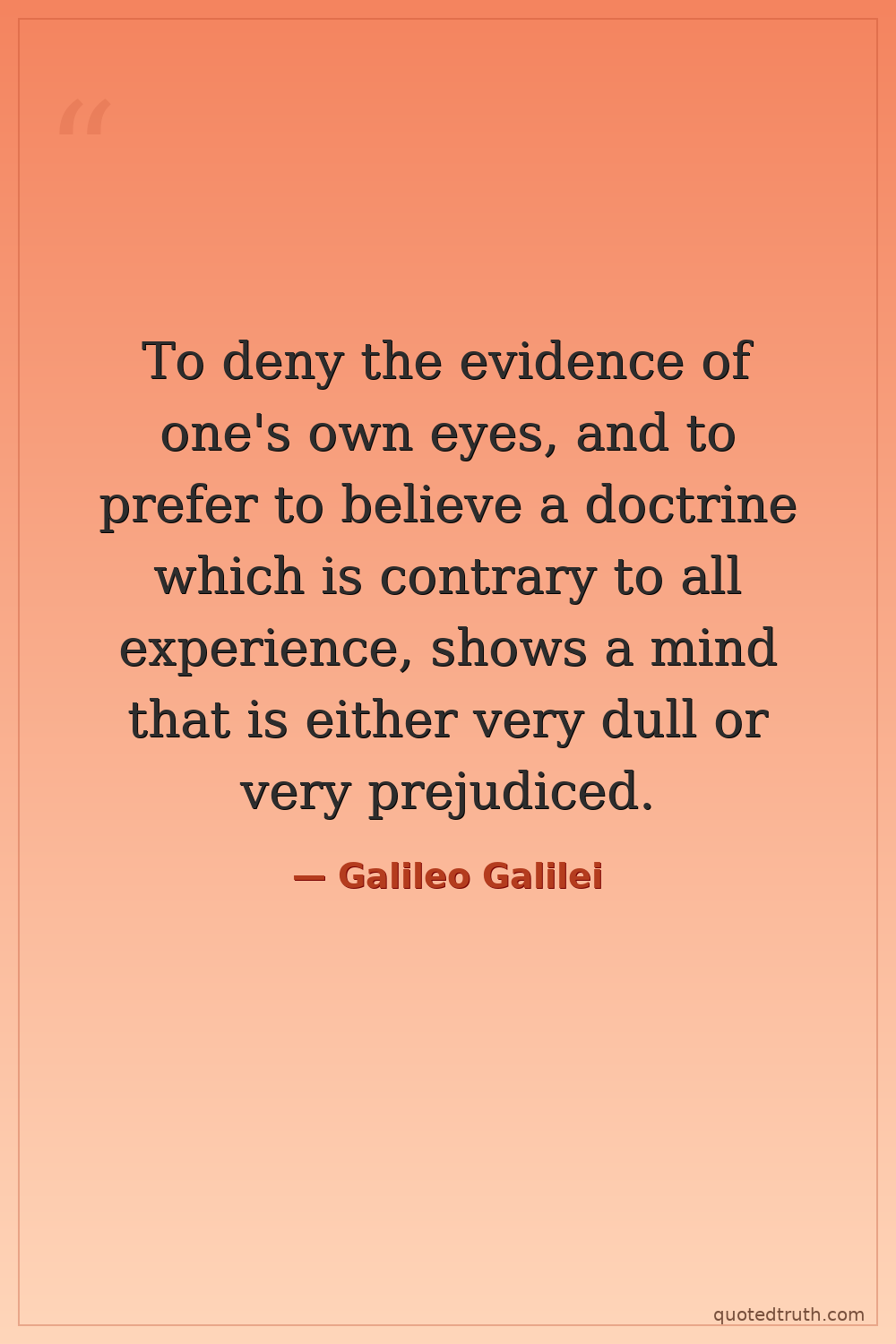
When someone ignores what they can directly observe and instead clings to a belief that contradicts all real-world experience, that person is either incapable of critical thinking or so deeply biased they refuse to accept reality. Genuine understanding requires trusting evidence over inherited doctrine, and dismissing clear proof reveals intellectual failure rather than wisdom or piety.
Relevance to Galileo Galilei
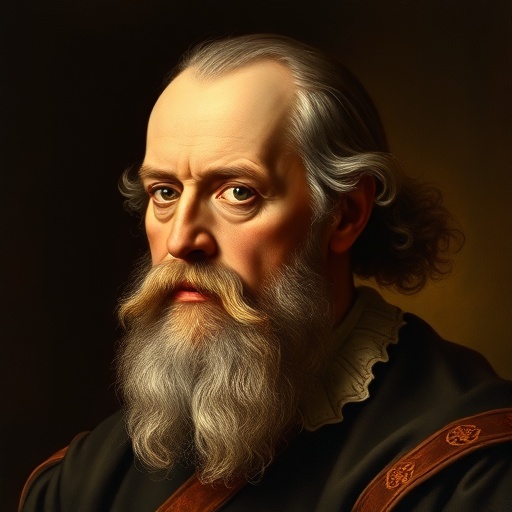
Galileo spent decades under pressure from the Catholic Church to recant his telescopic observations confirming heliocentrism. He observed Jupiter's moons, Venus's phases, and sunspots with his own instruments. The Inquisition forced him to publicly deny what his eyes proved. This quote is essentially his private verdict on those who condemned him: they chose doctrine over demonstrable, repeatable evidence.
The era
In early modern Europe, Church doctrine and Aristotelian natural philosophy held that Earth was the universe's fixed center. Challenging this was not merely academic but heretical. The printing press had spread new ideas, yet institutional authority violently resisted empirical challenge. Galileo's trial in 1633 epitomized the collision between emerging scientific method and entrenched dogma that defined the era's intellectual crisis.
AI-generated insights based on extensive research and information for context. Factual errors? Email [email protected].