Galileo Galilei — "To apply oneself to a search for the truth, without any intent to serve some pre…"
To apply oneself to a search for the truth, without any intent to serve some predetermined end, is the true path to discovery.
To apply oneself to a search for the truth, without any intent to serve some predetermined end, is the true path to discovery.
Click any product to generate a realistic preview. Up to 3 at a time.
* Initial load can take up to 90 seconds — revising the preview in another color is nearly instant.
"I have written up many reasons and refutations on the subject, but I have not dared until now to bring them into the open, being warned by the fortunes of Copernicus himself, our master, who procured …"
"I cannot but be astonished that Sarsi should persist in trying to prove by means of witnesses something that I may see for myself at any time by means of experiment. Witnesses are examined in doubtful…"
"I cannot without great astonishment — I might say without great insult to my intelligence — hear it attributed as a prime perfection and nobility of the natural and integral bodies of the universe tha…"
"The two books from which I draw my knowledge are the book of the created world and the book of the Holy Scripture."
"Who would set a limit to the mind of man? Who would dare assert that we know all there is to be known?"
Found in 1 providers: grok
1 source checked
Genuine discovery requires approaching questions with an open mind, following evidence wherever it leads rather than working backward from a desired conclusion. Intellectual honesty demands separating the search from the outcome — you cannot find truth if you have already decided what it must be. Real inquiry means accepting results that contradict expectations, challenge comfort, or overturn established belief.
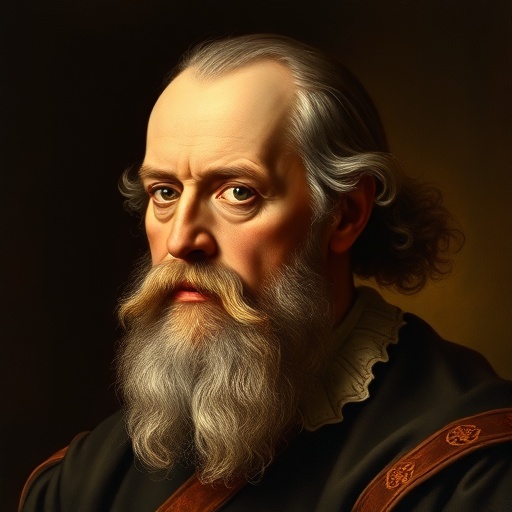
Galileo embodied this principle by following telescopic observations to conclusions that defied Church doctrine and Aristotelian tradition. His heliocentric evidence contradicted the predetermined cosmological truth authorities demanded. Placed under house arrest for refusing to subordinate empirical findings to institutional conclusions, his entire career demonstrated the cost — and necessity — of letting evidence, not doctrine, dictate discovery.
The early modern period was dominated by scholastic tradition, where natural philosophy served theology rather than challenging it. The Inquisition actively enforced predetermined cosmological conclusions as religious truth. Galileo worked during the Scientific Revolution's birth, when empirical observation began competing with scriptural authority — making his insistence on evidence-first inquiry genuinely radical and personally dangerous in a way modern scientists rarely face.
AI-generated insights based on extensive research and information for context. Factual errors? Email [email protected].
Your cart is empty