What it means
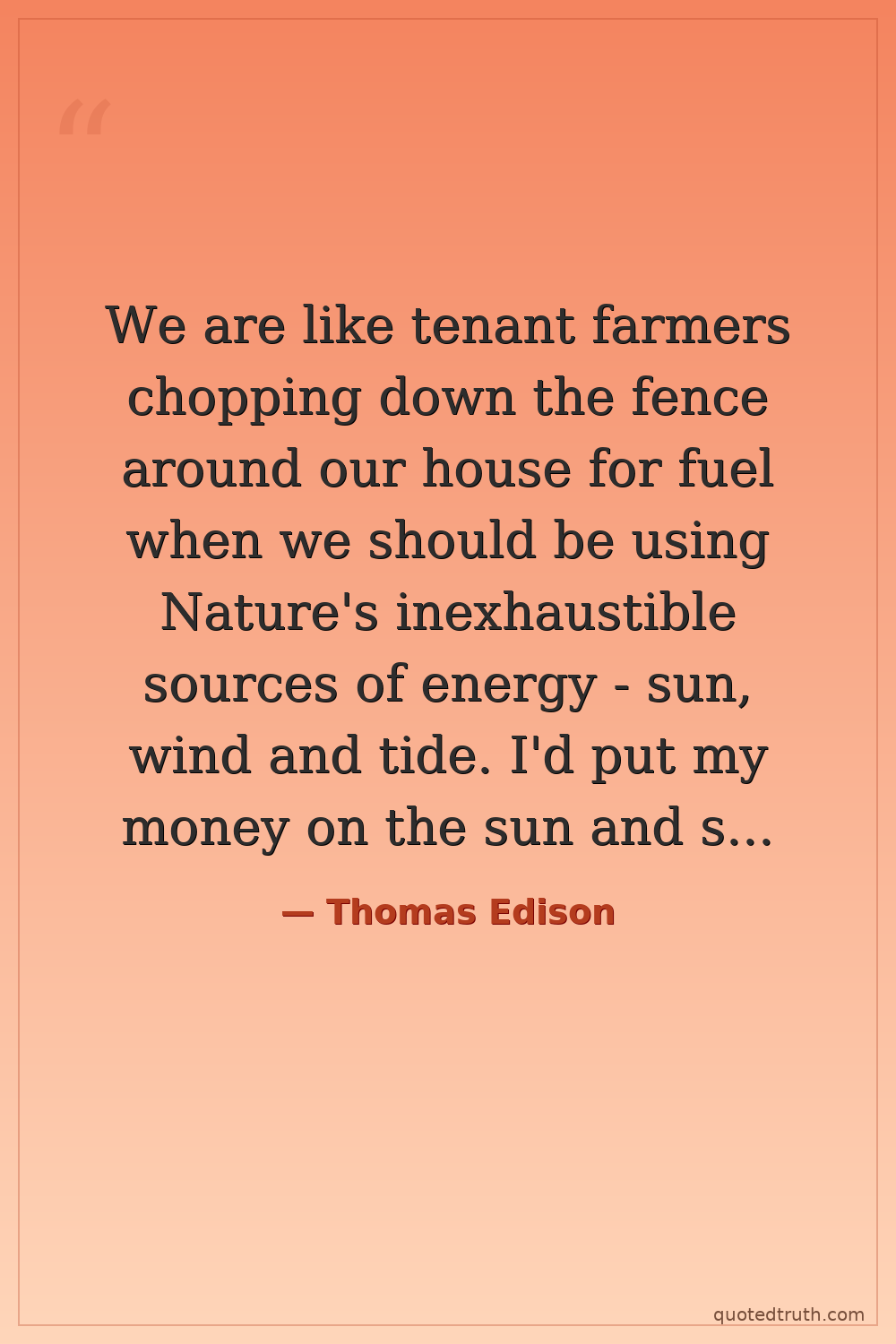
Burning fossil fuels to power our lives is like tearing apart your own property for firewood when free, unlimited energy surrounds you. The speaker urges humanity to harness sunlight, wind, and ocean tides instead of depleting finite resources. He bets on solar as the winning technology and warns against waiting until coal and oil reserves are exhausted before seriously pursuing renewable alternatives, because by then the damage and scramble will be far worse.
Relevance to Thomas Edison
Edison spent his career turning raw natural forces into usable power, from electrifying Manhattan with his Pearl Street Station in 1882 to experimenting with nickel-iron batteries for energy storage. Though he built the coal-fired grid, he also installed one of the first residential solar systems at his Fort Myers lab and collaborated with Ford and Firestone on alternative fuels. His engineer's instinct saw fossil reserves as finite capital being squandered when renewable income was freely available.
The era
This remark, made to Henry Ford and Harvey Firestone around 1931, came as American oil production surged from Texas gushers and coal powered the industrial boom. The Great Depression was exposing resource dependency, while early solar water heaters sold in California and Florida. Conservation was entering public discourse through figures like Gifford Pinchot, yet the automobile and electric grid were locking the nation into hydrocarbons just as Edison warned against that very trajectory.
AI-generated insights based on extensive research and information for context. Factual errors? Email [email protected].