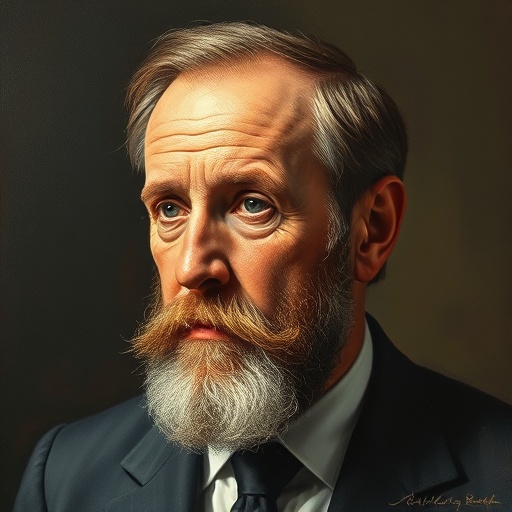
Niels Bohr — "We are not to think of atoms as things, but as connections."
We are not to think of atoms as things, but as connections.
We are not to think of atoms as things, but as connections.
Click any product to generate a realistic preview. Up to 3 at a time.
* Initial load can take up to 90 seconds — revising the preview in another color is nearly instant.
"The meaning of our words depends on the context in which they are uttered."
"The most important thing is to never stop questioning."
"It is not the job of science to tell us how the world is, but what we can say about it."
"We are suspended in language. Our task is to communicate experience and ideas to others."
"The great challenge of quantum theory is not to understand how it works, but to accept that it works."
Attributed, reflects his emphasis on relationships and interactions in quantum mechanics.
Date: c. 1930s
ShockingFound in 1 providers: grok
1 source checked
Physical reality isn't made of fixed, solid objects sitting in isolation. Atoms are better understood as patterns of interaction and relationship — what we observe depends on how things connect and relate to each other. Reality is fundamentally relational, not thing-like. The properties we assign to particles only make sense within the context of measurement, entanglement, and interaction with other systems.
Bohr pioneered complementarity — the principle that quantum entities behave as waves or particles depending on how you observe them. His Copenhagen interpretation rejected classical object-based thinking entirely. He debated Einstein repeatedly over whether quantum mechanics described an objective reality or only relationships between systems and observers. This quote crystallizes his lifelong insistence that quantum physics demands abandoning naive materialism.
The early-to-mid 20th century saw classical Newtonian physics collapse under quantum and relativistic discoveries. As atomic bombs demonstrated devastating power, physicists grappled with what atoms fundamentally are. Bohr's relational ontology emerged amid fierce debates about quantum reality's nature — Einstein vs. Bohr, determinism vs. probability — reshaping how science understood matter itself during a period of profound technological and philosophical upheaval.
AI-generated insights based on extensive research and information for context. Factual errors? Email [email protected].
Your cart is empty