What it means
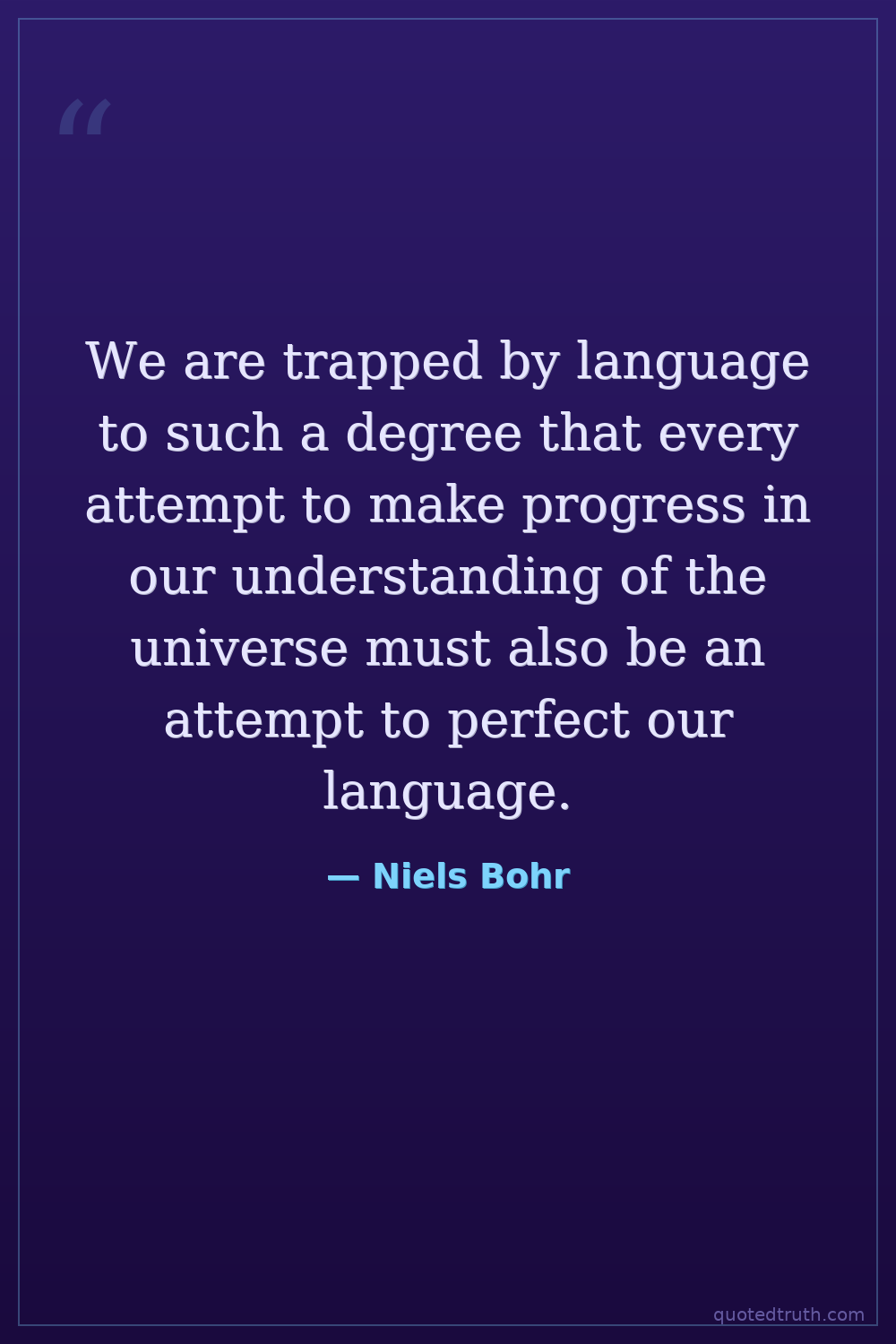
Our thoughts are shaped and limited by the words we have available. When we try to understand something new about reality, we quickly hit the edges of what existing language can describe. Real progress in knowledge therefore demands that we also refine, stretch, or invent new vocabulary and concepts. Understanding the world and improving how we talk about it are not separate tasks, they are the same task done together.
Relevance to Niels Bohr
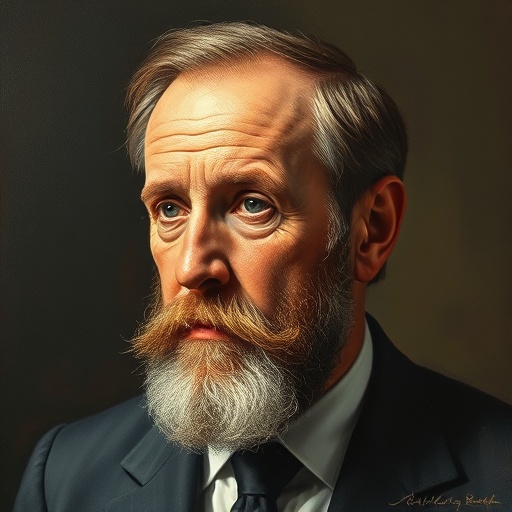
Bohr built his atomic model using classical words like orbit and particle that strained against quantum reality. He spent decades wrestling with how to describe electrons that behave as waves and particles, coining complementarity to capture it. His famous debates with Einstein hinged on what measurement even meant. Bohr believed physicists could only communicate quantum findings through ordinary language stretched carefully, making linguistic precision central to his scientific method and philosophy.
The era
Bohr worked through the early twentieth century quantum revolution, when experiments kept producing results that classical physics vocabulary could not describe. Words like position, momentum, and causality broke down at atomic scales. Meanwhile philosophers like Wittgenstein and the logical positivists in Vienna were arguing that the limits of language set the limits of thought. Bohr's Copenhagen circle absorbed these debates, making the link between physics and linguistic philosophy a defining intellectual theme of his generation.
AI-generated insights based on extensive research and information for context. Factual errors? Email [email protected].