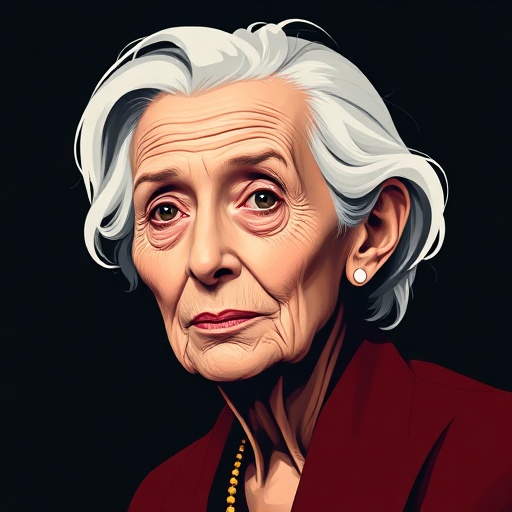
Jane Goodall — "We have to realize that we are part of nature, and not separate from it."
We have to realize that we are part of nature, and not separate from it.
We have to realize that we are part of nature, and not separate from it.
Click any product to generate a realistic preview. Up to 3 at a time.
* Initial load can take up to 90 seconds — revising the preview in another color is nearly instant.
"We have to remember that we are just one species among many, and we need to act accordingly."
"The more I learn about animals, the more I love them."
"I've been fortunate to spend my life among animals, and they've taught me so much about what it means to be human."
"We are all interconnected. What happens to one part of the world affects us all."
"I believe that we can make a difference, if we just try."
British primatologist who in 1960 began the longest-running wild primate study at Gombe Stream, transforming our understanding of chimpanzees. Closely associated with Dian Fossey (mountain-gorilla researcher) and Birutė Galdikas (orangutan researcher; together with Goodall and Fossey one of Louis Leakey's 'Trimates'). For an intellectual contrast, see Walter Palmer, American dentist who killed Cecil the Lion in Zimbabwe in 2015 — Palmer represents the trophy-hunting tradition Goodall's life's work has been organized against — the colonial-era hunter-naturalist worldview that treated primates and big game as specimens or trophies, which Goodall's Roots & Shoots and Jane Goodall Institute exist specifically to displace.
Found in 1 providers: grok
1 source checked
Humans must abandon the illusion of being observers or controllers of nature and recognize themselves as embedded within natural systems. Our survival, health, and wellbeing are inseparable from ecosystem health. Decisions about land use, consumption, and pollution affect us directly because we share the same ecological web as every other organism. Understanding this connection is foundational to making sustainable choices.
Goodall spent decades living among chimpanzees at Gombe Stream, observing them as complex social beings with emotions and family bonds, dissolving the perceived boundary between human and animal. She founded the Jane Goodall Institute and launched Roots & Shoots to teach environmental stewardship. Her evolution from field researcher to global conservation advocate embodies her core conviction that human fate is inseparable from the fate of the natural world.
Goodall rose to global prominence during a period when environmental crises — deforestation, mass extinction, and climate change — were becoming undeniable. The 1992 Rio Earth Summit and growing IPCC reports documented accelerating ecological collapse. Industrial expansion and urbanization had cultivated a cultural assumption of human dominance over nature. Her message arrived as policymakers and scientists confronted the consequences of treating ecosystems as resources to be consumed rather than systems we belong to.
AI-generated insights based on extensive research and information for context. Factual errors? Email [email protected].
Your cart is empty