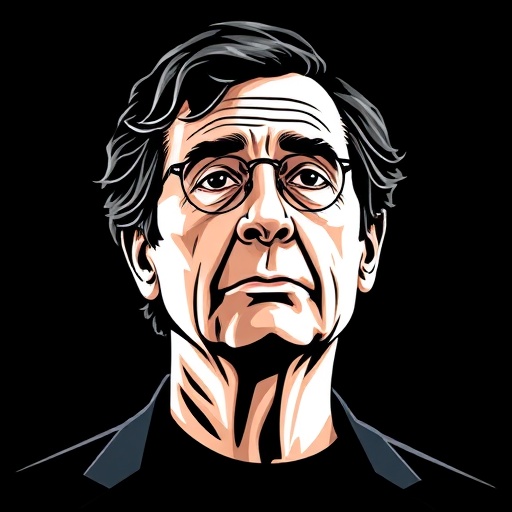
Carl Sagan — "We make our world significant by the courage of our questions and the depth of o…"
We make our world significant by the courage of our questions and the depth of our answers.
We make our world significant by the courage of our questions and the depth of our answers.
Click any product to generate a realistic preview. Up to 3 at a time.
* Initial load can take up to 90 seconds — revising the preview in another color is nearly instant.
"The price of skepticism is that you are occasionally fooled. The price of credulity is that you are often fooled."
"The brain is a very big place in a very small space."
"The total number of stars in the Universe is larger than all the grains of sand on all the beaches of the planet Earth."
"The universe is not only stranger than we imagine, it is stranger than we can imagine."
"We are a way for the cosmos to contemplate itself."
Found in 1 providers: grok
1 source checked
Humans create meaning rather than discover it. Life becomes significant not by accepting easy answers or avoiding hard truths, but by daring to ask difficult questions — about existence, the universe, our place in it — and then pursuing answers with genuine depth and rigor. The act of courageous inquiry, not the comfort of certainty, is what gives human experience its weight and worth.
Sagan built his life around exactly this principle. He asked publicly unfashionable questions — about extraterrestrial intelligence, nuclear winter, the dangers of pseudoscience — at real professional cost. His Cosmos series (1980) and books like The Demon-Haunted World were deliberate attempts to model courageous questioning for mass audiences. He believed science was humanity's candle against the dark, and that intellectual cowardice — accepting comfortable myths — was civilization's greatest threat.
Sagan spoke into a late Cold War world where nuclear arsenals threatened civilization and anti-intellectual movements — creationism, New Age mysticism, uncritical nationalism — were gaining political force. The Space Race had shown science's transformative power, but public understanding of it lagged badly. Sagan's insistence that courageous questions define us was a direct counter to the era's drift toward comfortable ideology over honest inquiry, at a moment when the stakes were existential.
AI-generated insights based on extensive research and information for context. Factual errors? Email [email protected].
Your cart is empty