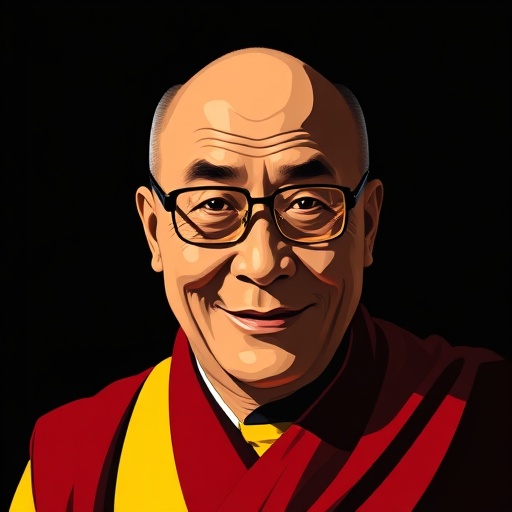
Dalai Lama (14th) — "We need to combine modern education with ancient Indian knowledge."
We need to combine modern education with ancient Indian knowledge.
We need to combine modern education with ancient Indian knowledge.
Click any product to generate a realistic preview. Up to 3 at a time.
* Initial load can take up to 90 seconds — revising the preview in another color is nearly instant.
"When you lose, don’t lose the lesson."
"The more time you spend thinking about yourself, the more suffering you will experience."
"We need to educate people about the importance of inner values."
"Sometimes one creates a dynamic impression by saying something, and sometimes one creates as significant an impression by remaining silent."
"Sometimes I think I am a little bit naughty, a little bit mischievous."
Found in 1 providers: grok
1 source checked
The quote argues that purely technical modern education—focused on science, data, and career skills—leaves out something essential: wisdom about the mind, ethics, and how to live well. Ancient Indian knowledge systems, developed over thousands of years, offer frameworks for understanding consciousness, compassion, and moral reasoning. Combining both creates people who are not only skilled but genuinely wise—capable of using knowledge for human benefit rather than harm.
Tenzin Gyatso, born 1935 in Tibet and exiled since 1959, has spent decades bridging science and spirituality through the Mind and Life Institute, collaborating with neuroscientists at MIT and Stanford. He considers Tibetan Buddhism the living heir of the Nalanda monastic university tradition—ancient India's greatest center of learning. His promotion of secular ethics draws directly from Indian philosophical traditions, making this call for synthesis both personal practice and lifelong mission.
In the contemporary era, STEM-dominated education systems have spread globally while mental health crises, ethical failures in technology, and climate indifference expose gaps in purely technical learning. India's National Education Policy 2020 explicitly attempts reintegrating classical knowledge. The Dalai Lama has repeatedly engaged with neuroscientists studying meditation's effects on the brain, making this synthesis timely—science increasingly validates what ancient Indian traditions mapped about mind and well-being.
AI-generated insights based on extensive research and information for context. Factual errors? Email [email protected].
Your cart is empty