What it means
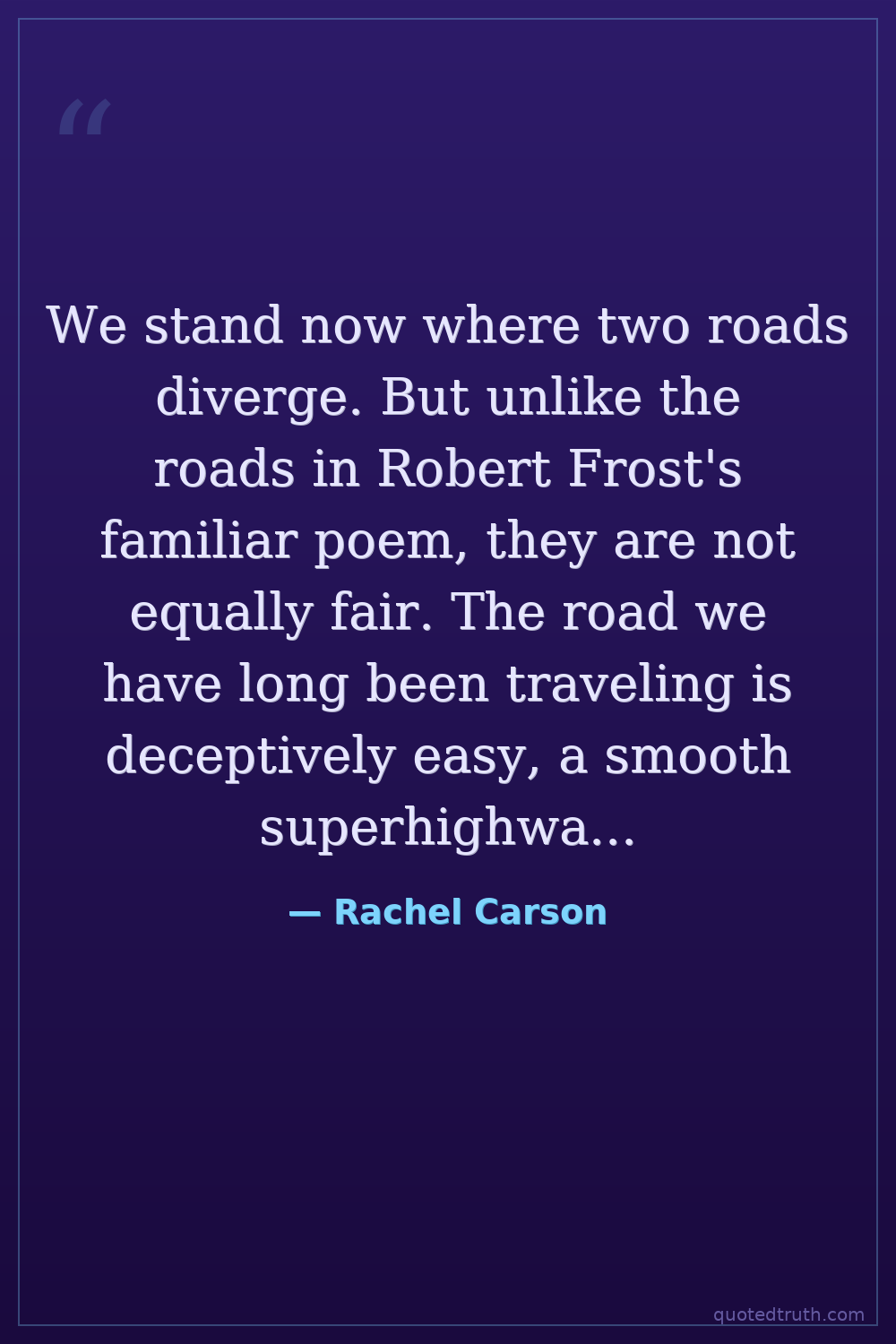
Humanity faces a critical fork: the current path—chemical-intensive industry, technological exploitation of nature—feels fast and easy but quietly accelerates ecological collapse. The alternative, restraint and living within nature's limits, is harder and less popular but offers the only real future. Carson reframes Frost's poem to strip away romanticism: this isn't an aesthetic choice between two equal options. One road ends in catastrophe; only the other leads to a livable earth.
Relevance to Rachel Carson
Carson spent her career as a marine biologist and science writer warning that pesticides—especially DDT—were silently decimating bird populations and poisoning food chains. She wrote Silent Spring while battling breast cancer, facing coordinated attacks from the chemical industry. This quote crystallizes her life's mission: she believed science had outpaced wisdom, and that humanity's survival required consciously choosing ecological restraint over the seductive momentum of industrial progress.
The era
Silent Spring appeared in 1962 at the peak of post-WWII chemical optimism—DDT was a celebrated miracle, and synthetic pesticides were symbols of modern progress. The EPA didn't exist yet; Earth Day was eight years away. Carson wrote against an industry and government apparatus that dismissed ecological concerns as anti-progress. Her choice metaphor was urgent: American culture was racing confidently down a road most assumed was safe.
AI-generated insights based on extensive research and information for context. Factual errors? Email [email protected].