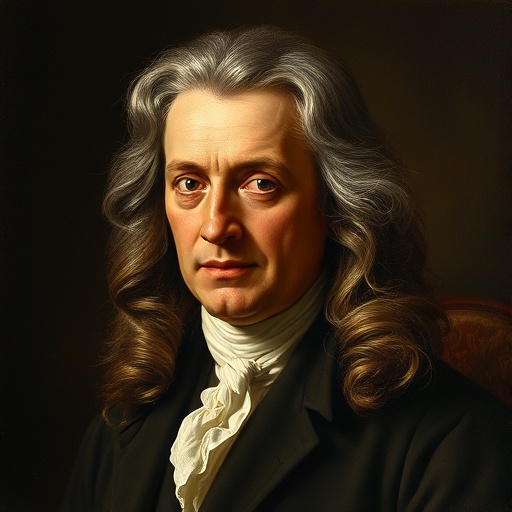
Isaac Newton — "What is it that induces a man to be a philosopher? It is not the love of truth, …"
What is it that induces a man to be a philosopher? It is not the love of truth, but the love of fame, or the love of novelty, or the love of power.
What is it that induces a man to be a philosopher? It is not the love of truth, but the love of fame, or the love of novelty, or the love of power.
Click any product to generate a realistic preview. Up to 3 at a time.
* Initial load can take up to 90 seconds — revising the preview in another color is nearly instant.
"He who thinks half-heartedly will not believe in God; but he who thinks seriously will believe in God, and will not doubt that God is the author of the world."
"I build my philosophy upon the shoulders of giants."
"The greatest challenges to the truth of the Holy Scriptures are not the work of infidels, but of professing Christians."
"God is the same God, always and everywhere. He is omnipresent not virtually only, but also substantially; for virtue cannot subsist without substance."
"What is there in places almost empty of air (such as the space between the planets) to hinder the free motion of bodies?"
Attributed, but specific source is elusive and sounds somewhat cynical for Newton.
Date: Uncertain
RelationshipsFound in 1 providers: grok
1 source checked
This quote argues that intellectuals are rarely driven by pure truth-seeking. The real motivators are desire for reputation, hunger for novelty, and appetite for authority. It strips away the idealized image of the dispassionate scholar, suggesting most who claim to pursue knowledge are actually pursuing recognition, stimulation, or influence — motivations that shape which questions get asked and which answers get accepted or suppressed.
Newton lived this tension firsthand. He withheld his calculus for decades, then waged a vicious priority war against Leibniz through the Royal Society — a body he presided over and used to issue favorable verdicts. His bitter rivalry with Hooke over optics was territorial and personal. He sought and won the powerful post of Master of the Royal Mint. Newton understood what drove philosophers because he recognized those exact drives within himself.
The 17th-century Scientific Revolution transformed natural philosophy into a competitive arena for status and patronage. The Royal Society's founding in 1660 institutionalized priority disputes — being first mattered enormously for reputation and social advancement. Natural philosophers depended on powerful patrons; controlling knowledge meant real political influence. As church authority weakened and empirical methods rose, the question of who discovered what carried enormous weight, making Newton's cynical diagnosis of intellectual motivation historically acute.
AI-generated insights based on extensive research and information for context. Factual errors? Email [email protected].
Your cart is empty