William Harvey — "What remains to be said is of so novel and unheard of a character that I not onl…"

What remains to be said is of so novel and unheard of a character that I not only fear injury to myself from the envy of a few, but I tremble lest I have mankind at large for my enemies, so much to wont and custom that become as another nature, and doctrine once sown that hath struck deep root, and respect for antiquity, influence all men.
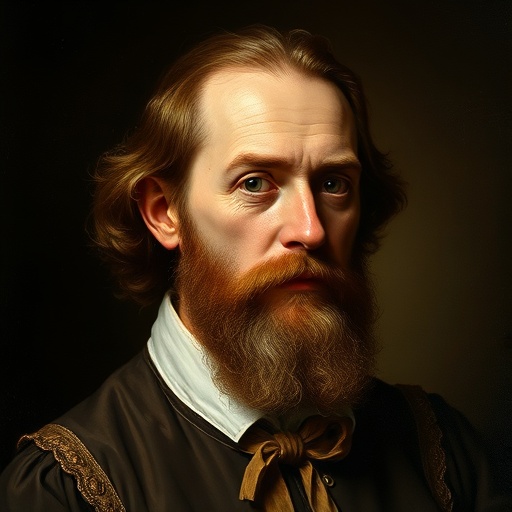
William Harvey — William Harvey Early Modern · Blood circulation

Get This Quote & Author's Image Illustrated On:

Click any product to generate a realistic preview. Up to 3 at a time.
* Initial load can take up to 90 seconds — revising the preview in another color is nearly instant.

Kitchen

Apparel

Other

About William Harvey (1578-1657)

English physician whose On the Motion of the Heart and Blood in Animals (1628) demonstrated blood circulation, overturning 1,400 years of Galenic medicine. Closely associated with Francis Bacon (his contemporary in the new English empiricism). For an intellectual contrast, see Galenic medicine, the 2nd-century Greek medical tradition (humors, blood-as-consumed-fuel) — Harvey calculated that the heart pumps more blood per hour than the body could possibly produce as fuel — a single quantitative observation that demolished the entire Galenic-Aristotelian medical worldview. The cleanest example in medical history of arithmetic disproving 14 centuries of authority.

Details

Introduction to his seminal work 'De Motu Cordis' (On the Motion of the Heart and Blood in Animals), expressing his apprehension about challenging established medical beliefs.

Date: 1628

Shocking

Verification

Unverifiable

Found in 1 providers: gemini

1 source checked

Understanding this quote

What it means

Introducing radical new ideas risks hostility from nearly everyone, because people are deeply attached to familiar beliefs. Long-established teachings feel as natural as instinct, and challenging them provokes not just skepticism but active opposition. The discoverer faces enemies not merely among specialists but among all who find comfort in inherited knowledge — making genuine intellectual courage a prerequisite for revealing uncomfortable truths.

Relevance to William Harvey

Harvey spent decades proving blood circulates continuously through the heart — directly contradicting Galen's 1,400-year-old model that dominated medicine. His 1628 De Motu Cordis was met with ridicule and cost him patients. He knew firsthand that overturning medical orthodoxy meant professional and personal danger, making this admission of fear both honest and prophetic about his own reception.

The era

In early 17th-century Europe, Galenic medicine and Aristotelian natural philosophy were institutional dogma enforced through universities and the Church. The Scientific Revolution was nascent — Galileo faced the Inquisition contemporaneously. Challenging ancient authorities was professionally dangerous and socially transgressive. Harvey wrote amid a culture where 'antiquity' carried near-sacred authority, making any empirical refutation of classical teaching an act requiring exceptional intellectual courage.

AI-generated insights based on extensive research and information for context. Factual errors? Email [email protected].
Your Cart

Your cart is empty