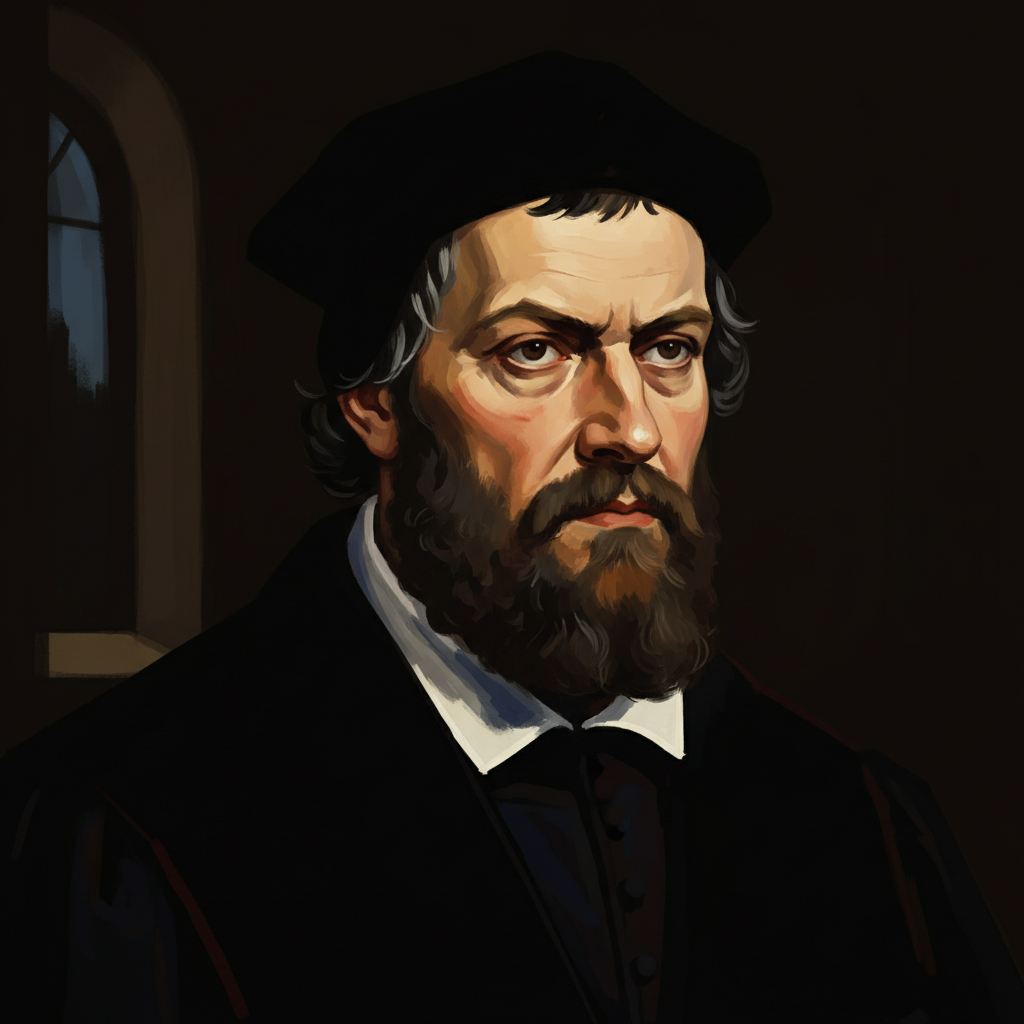
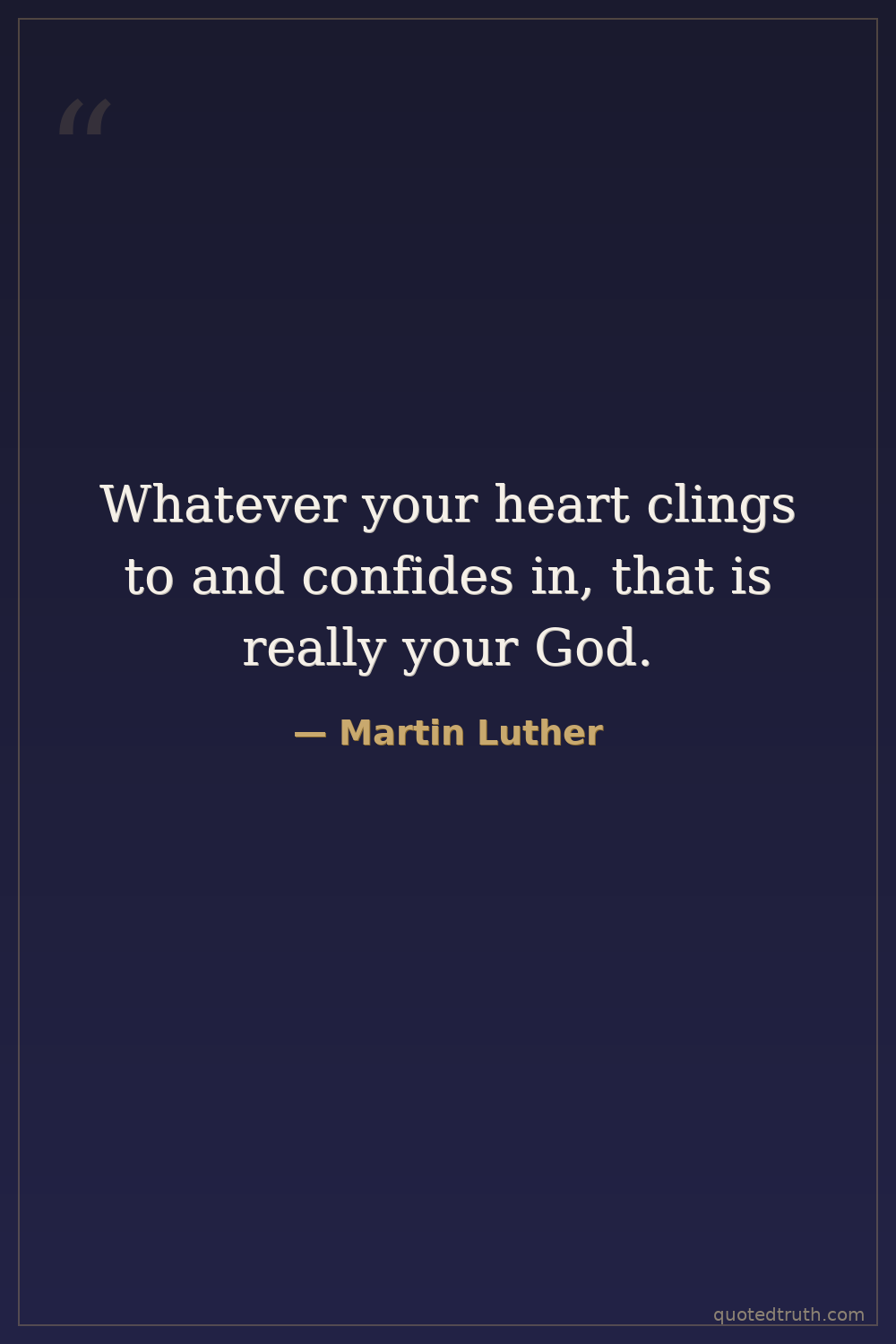
Martin Luther — "Whatever your heart clings to and confides in, that is really your God."
Whatever your heart clings to and confides in, that is really your God.
Whatever your heart clings to and confides in, that is really your God.
Click any product to generate a realistic preview. Up to 3 at a time.
* Initial load can take up to 90 seconds — revising the preview in another color is nearly instant.
"Tomorrow I have to lecture on the drunkenness of Noah [Gen. 9:20-27], so I should drink enough this evening to be able to talk about that wickedness as one who knows by experience."
"The very devil himself would thank you for such an event, and no one but the miserable devil and his devilish scum."
"Where the battle rages, there the loyalty of the soldier is proved."
"Next to the Word of God, the noble art of music is the greatest treasure in the world."
"God created the world, and he gave it to man, and he said, 'Be fruitful and multiply, and fill the earth and subdue it.'"
German theologian whose 95 Theses (1517) launched the Protestant Reformation and broke the Catholic Church's monopoly on Western Christianity. Closely associated with Philipp Melanchthon (Lutheran systematizer) and John Calvin (later Reformer who built on Luther's break). For an intellectual contrast, see Pope Leo X, Renaissance pope (1513-1521) — Leo X's indulgence sales triggered Luther's break and Leo excommunicated him in 1521 — Luther's entire Reformation is structured as a direct answer to the indulgence-funded Vatican Leo represented.
Found in 1 providers: gemini
1 source checked
Your true god is whatever you trust most and depend on for meaning, security, or happiness. It isn't about what you formally claim to believe or the religion listed on paper. If your deepest loyalty goes to money, status, a relationship, or yourself, that thing functions as your god, regardless of what you say. Worship is measured by where your heart actually rests, not by verbal profession.
Luther made this point in his Large Catechism while explaining the First Commandment, reframing idolatry as a matter of inward trust rather than statues or rival deities. As an Augustinian monk turned reformer, he was obsessed with the heart's orientation toward God, insisting salvation came through faith alone. He routinely accused even pious Christians of idolizing wealth, works, or the pope, which fueled his break with Rome.
In early sixteenth-century Europe, religion saturated daily life, yet the Church sold indulgences, venerated relics, and tied salvation to external rituals and payments. Luther's 1517 Ninety-Five Theses ignited the Reformation by challenging these practices, and the printing press spread his ideas rapidly. Redefining idolatry as misplaced trust struck at both medieval Catholic piety and the era's growing commercial greed, making personal conscience, not institutional ceremony, the true measure of faith.
AI-generated insights based on extensive research and information for context. Factual errors? Email [email protected].
Your cart is empty