What it means
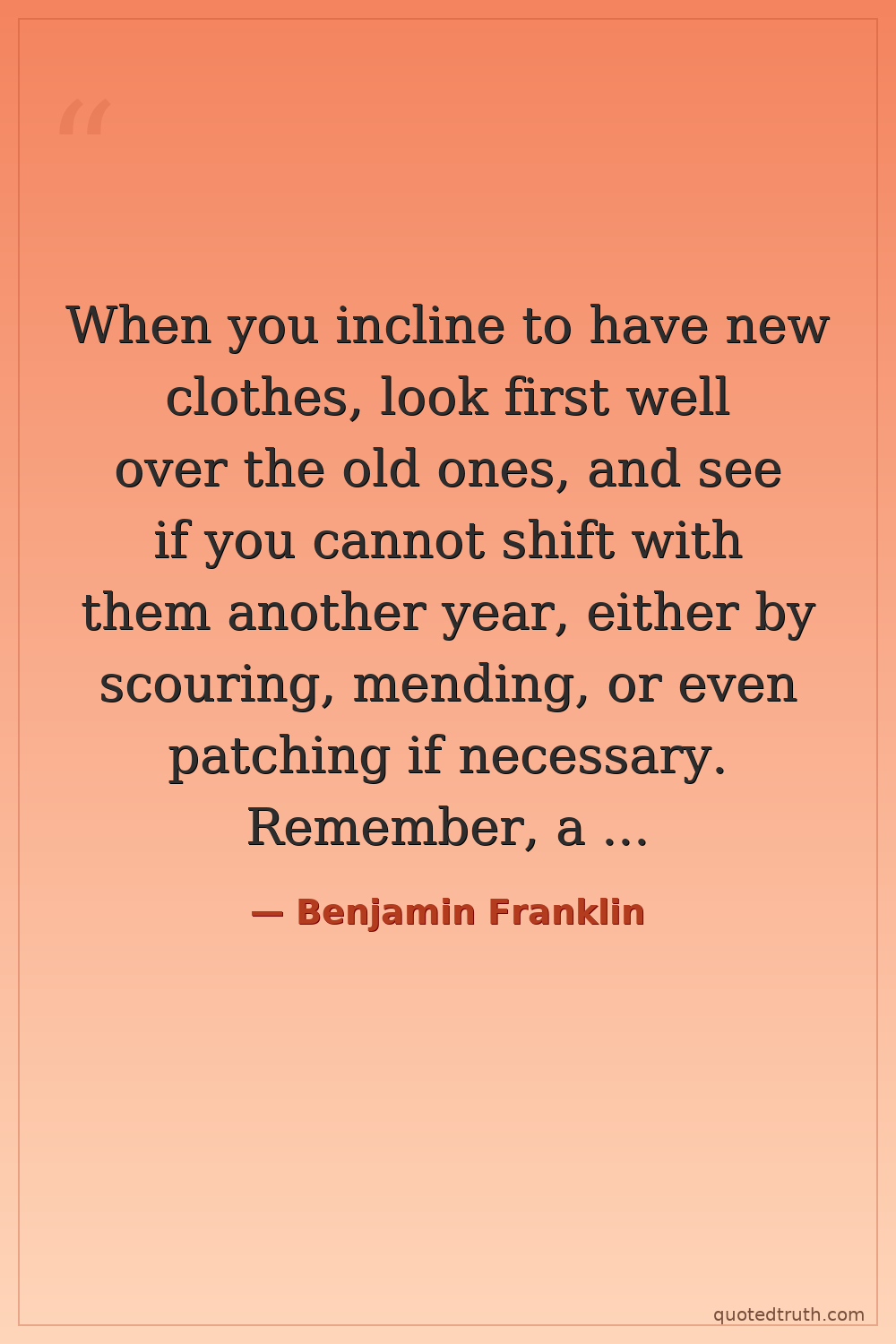
Before buying new clothes, examine what you already own—clean, mend, or patch them to last another year. Financial security matters more than appearances: a patched coat with savings in your pocket beats fashionable clothes purchased on debt. A 'writ on your back' meant a legal debt summons from creditors. Owing money you cannot repay is more shameful than wearing worn clothing. Frugality preserves dignity; debt destroys it.
Relevance to Benjamin Franklin
Franklin grew up in a large, modest Boston household and built his fortune through disciplined thrift as a printer and businessman. He published Poor Richard's Almanack for 25 years, packed with exactly these practical financial maxims. His autobiography carefully documents his habit of tracking expenses and resisting luxury. This quote embodies his core conviction that true creditworthiness and social standing come from financial prudence, not material display—a principle he consistently practiced and preached.
The era
In colonial and early American society, debtors' prisons were real and common—unpaid debts could trigger legal writs and literal imprisonment. Clothing was expensive, often handmade or imported, representing a major household expenditure. Consumer goods were becoming more accessible through merchants, but credit was treacherous without modern bankruptcy protections. Against rising consumerism, Puritan-rooted frugality remained a moral and civic virtue. Debt wasn't merely financial ruin—it meant social disgrace and potential loss of personal freedom.
AI-generated insights based on extensive research and information for context. Factual errors? Email [email protected].