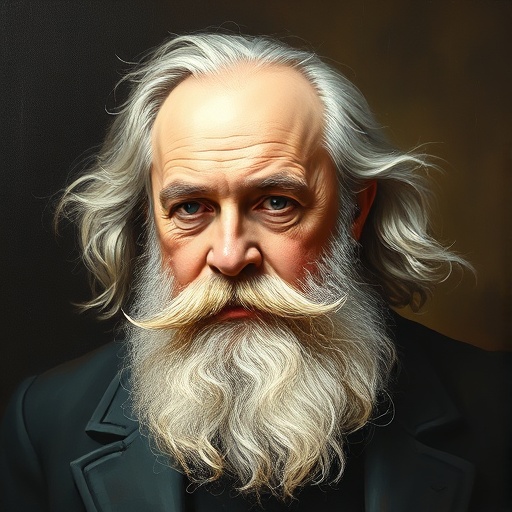
What it means
Mendeleev is asking why America, despite its promise, is full of racial hatred, fraud, and mediocrity instead of great science and art. He concludes the country isn't building something new but copying Europe's worst habits: mob politics, prejudice, and shallow populism. Universal voting and political obsession, he argues, don't produce excellence; they amplify the middling and crude tendencies already present in European society.
Relevance to Dmitri Mendeleev
Mendeleev visited the United States in 1876 to study the Pennsylvania oil industry and came away disillusioned. As a chemist who built the periodic table through rigorous classification and who valued deep Russian cultural tradition, he was repelled by what he saw as American superficiality. His critique reflects his lifelong belief that serious science and culture require patience and depth, not democratic showmanship or commercial hustle.
The era
Post-Civil War America in the 1870s was the Gilded Age: Reconstruction collapsing, Jim Crow rising, Indian Wars on the plains, anti-German and anti-immigrant sentiment, and political scandals like Credit Mobilier. Meanwhile Russia under Alexander II was debating whether to Westernize or follow its own path. Mendeleev's verdict fed the Slavophile argument that importing European-style mass democracy would import its pathologies, not its achievements.
AI-generated insights based on extensive research and information for context. Factual errors? Email [email protected].