Guru Nanak — "Without genuine understanding, observing (Clergy-concocted) fasting, religious r…"
Without genuine understanding, observing (Clergy-concocted) fasting, religious rituals and daily Poojaa lead only to the love of duality.
Without genuine understanding, observing (Clergy-concocted) fasting, religious rituals and daily Poojaa lead only to the love of duality.
Click any product to generate a realistic preview. Up to 3 at a time.
* Initial load can take up to 90 seconds — revising the preview in another color is nearly instant.
"Those who have loved are those that have found God."
"Through suffering, one learns to love God."
"There is but one God. His name is Truth; He is the Creator. He fears none; He is without hate. He never dies; He is beyond the cycle of births and death. He is self-illuminated. He is realized by the …"
"The true Guru is the one who shows the path of truth and righteousness."
"Without fear, there is no love for God."
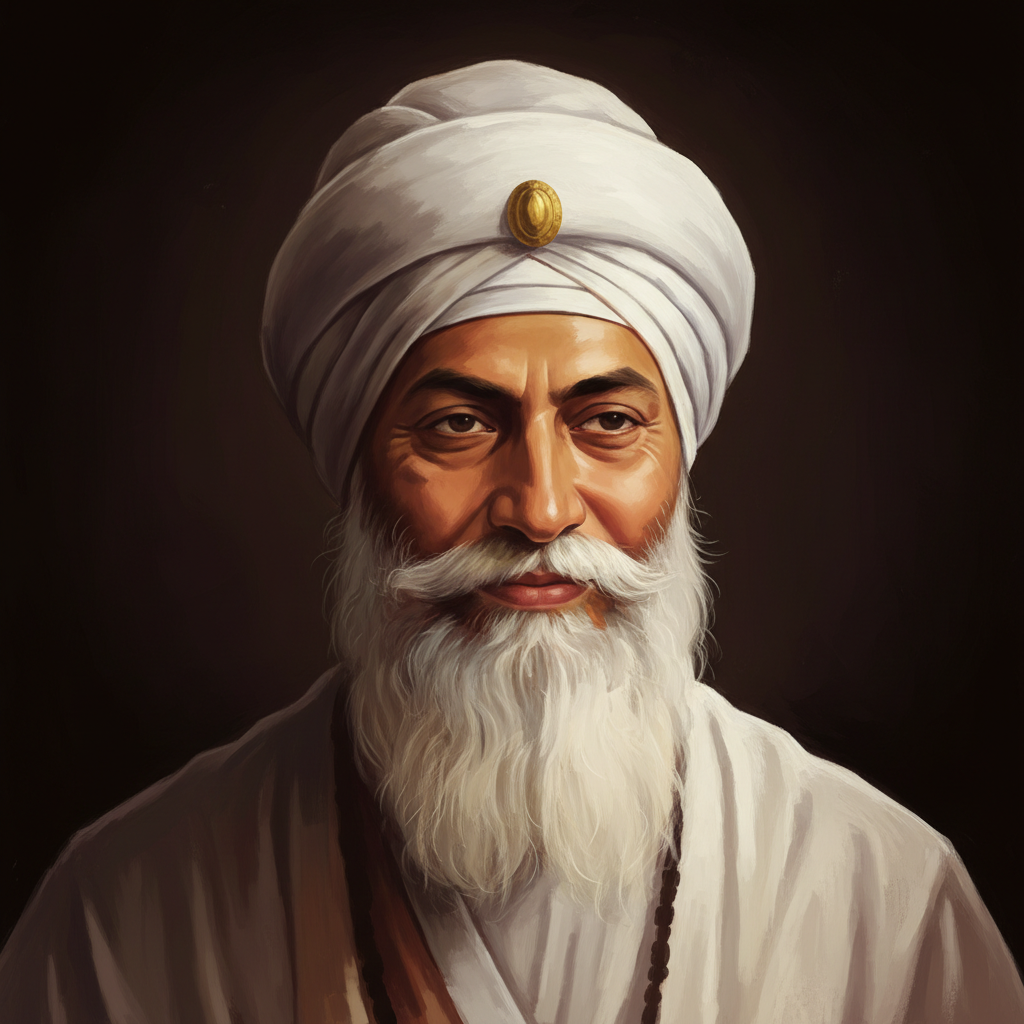
Founder of Sikhism and the first of the Ten Sikh Gurus, whose teachings of one universal God and rejection of caste shaped Punjab. Closely associated with Kabir (mystical poet whose verses appear in the Sikh Guru Granth Sahib). For an intellectual contrast, see Brahmanical orthodoxy, the Hindu caste-and-ritual establishment of his era — Sikhism was founded as a deliberate alternative to both Hindu ritual hierarchy and Islamic exclusivism — Nanak's universalism was a structural rejection of caste and priestly mediation.
Found in 1 providers: gemini
1 source checked
Going through the motions of religious practice—fasting, rituals, daily worship—without real inner understanding doesn't bring you closer to truth. Instead, it pulls you toward duality: the split between outward performance and inner reality, between self and divine, between ego-driven piety and genuine devotion. Rituals performed mechanically become just another form of attachment, reinforcing the very separation from the sacred that spiritual practice is supposed to dissolve.
Guru Nanak openly rejected the ritualism dominating both Hindu and Muslim practice in his time. He famously refused the sacred thread ceremony as a child and criticized priests who profited from empty ceremonies. As Sikhism's founder, he taught that direct devotion to one formless God (Ik Onkar) and honest living (kirat karni) mattered far more than rites. This quote captures his core reformist conviction: understanding over performance.
In late 15th and early 16th century Punjab, Hindu Brahmins and Muslim clerics held enormous social power through gatekeeping rituals, pilgrimages, and caste-bound ceremonies. Ordinary people paid priests for prescribed fasts and poojas while remaining spiritually unfulfilled. The Bhakti and Sufi movements were already challenging this clerical monopoly. Nanak stepped into that ferment, traveling across India and the Middle East, preaching that rote observance without comprehension was spiritually bankrupt.
AI-generated insights based on extensive research and information for context. Factual errors? Email [email protected].
Your cart is empty