What it means
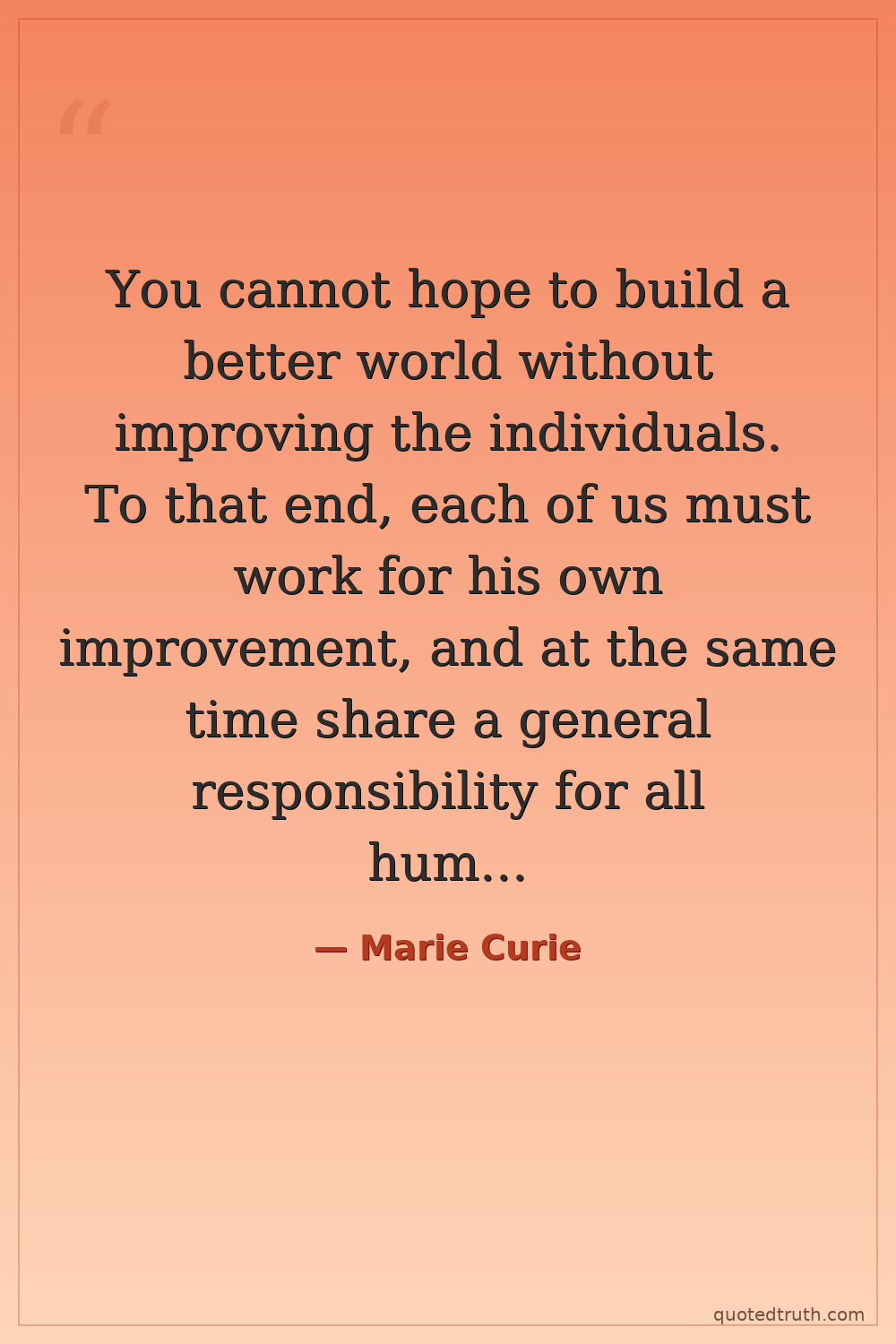
Real change in society starts with personal change. You cannot fix the world without first working on yourself, developing your skills, character, and knowledge. At the same time, self-improvement is not enough on its own. Everyone shares a collective duty to humanity, and each person should focus that duty where they can genuinely help others. Inner growth and outward service are inseparable parts of the same obligation.
Relevance to Marie Curie
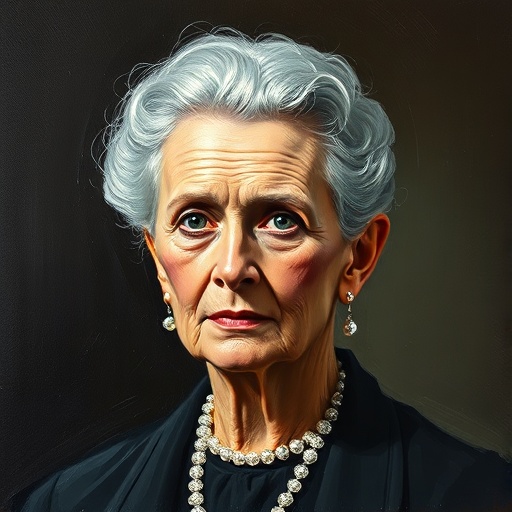
Curie lived this ethic. She relentlessly improved herself, earning physics and chemistry degrees in a hostile academic climate and becoming the first person to win Nobel Prizes in two sciences. Yet she refused to patent radium so the discovery could benefit all medicine, drove mobile X-ray units to treat wounded soldiers in World War I, and trained women scientists. Her life fused rigorous self-discipline with direct, practical service to humanity, especially through medicine.
The era
Curie worked from the 1890s through the 1930s, an era of rapid industrialization, rising nationalism, and two world wars. Science was being weaponized, labor movements demanded dignity, and women were fighting for education and suffrage. Debates raged between individualist capitalism and collective ideologies. Against that backdrop, her call to join self-improvement with shared human responsibility pushed back on both selfish ambition and blind collectivism, offering a humane middle path rooted in competence and care.
AI-generated insights based on extensive research and information for context. Factual errors? Email [email protected].